Showing posts with label Where Are They Now. Show all posts

Monday, August 22, 2016

Birds Are Going Back to School

Ah, late summer. It's that time of the year when it's super hot out, birds are least plentiful, and your Amateurnithologist struggles to get weekly posts out as he adjusts to returning to his full time job in the school system. Yes, school's back in session. But not just for you and me and maybe your kids. No, it's school time for birds as well. As birds return to school, they meet their new teachers for the semester and start to get a sense of what their next year is going to look like. Let's meet them too, since there's nothing better to do.


First Period: Professor Double-crested Cormorant
Subject: English Literature
Personality: Professorial in demeanor, a little stodgy. Think blazer with elbow patches. Believes in the power of learning and in the ability of books to change lives. Often disappointed in his students secretly, but doesn't show it. He's been doing this job for a long time and doesn't show signs of slowing down. Other teachers look up to him.
Teacher Rating: Inspiring


Second Period: Mr. American Crow (slightly leucristic)
Subject: Science
Personality: An eccentric who delights in finding creative ways to reach students. Lives for events like the rocket launch, the egg drop, or putting Mentos in Diet Coke. Very hands on. A little bit silly, gets along well with the kids since he's a bit of a kid-at-heart himself. Don't mention his leucism though, or god help you. He won't be mad, but he's a bit sensitive about it, and it'll hurt his feelings.
Teacher Rating: Fun


Third Period: Dr. Common Loon
Subject: Cooking
Personality: No one knows what her doctorate is in, why she is teaching cooking with a doctorate, or how a Loon acquired a doctorate in the first place. However, she is a good cooking teacher. Loves food, and the students tend to like her class, since it involves cooking and eating. Hints that she enjoys a full and interesting life outside of her job. Keeps these mysteries close to the vest.
Teacher Rating: Enigmatic


Fourth Period: Mrs. House Finch
Subject: History
Personality: Engages in a lot of rituals that shows her dominance over students, making them repeat things over and over or follow meaningless rules. Believes that the most important thing is that students submit to their teachers. Ruthless in her style with co-works as well, doesn't seem to be able to 'turn it off'. This style is successful for some young birds, but mostly leads to a lot of bad feelings.
Teacher Rating: Disliked


Fifth Period: Miss California Quail
Subject: Mathematics
Personality: Honestly not the greatest teacher, but very nice. Relationship-focused in her teaching philosophy. Gives her students a lot of affection and praise, doesn't put too much attention on the quality of the work. Students often come back years after graduating to visit Miss California Quail and give her a big hug. Maybe this is what's most important after all, since most of her students don't use the math very much (being birds).
Teacher Rating: Doting

Well that's all for today. Hopefully you learned a thing or two from these bird teachers, or at least got through your school experience relatively undamaged. Join me in a few days when I try to get back on the normal blog schedule with a common but fun bird that has evaded me for a long time. You won't want to miss it.

Sunday, June 12, 2016

Checking in with Florida Birds

It's been a while since we've visited with our Florida bird friends, but as you might've guessed from last weeks parrots, we took a trip not long ago. While there are some exciting new birds to come, we also caught up with some old favorites. What're they up to now? How's Florida treating them?

Great Blue Heron has gotten really into the art scene. He lives in a studio/work space now, and is very into his new housemates. We're happy for him, but he's actually not very talented. Art has to be more than just provocative, you know Blue Heron? Even worse, he's been sort of ignoring his old interests and friends. It'll all come crashing down eventually.

Brown Pelican is up to some sketchy behavior. After a failed bird of the year bid, he went down to Florida and got involved in some ill-defined business. He lost some weight, probably from sweating so much in the South Beach heat and humidity. Takes a lot of trips down to Cuba. Drugs? Arms deals? Guantanamo? We wouldn't put it past him.


Northern Mockingbird, as the state bird of Florida (among others), is distressed. She worries a lot these days about the state of politics, climate change, growing civil unrest. Really, just the whole thing. She is often seen with a furrowed brow, staring off into the distance. Where have the simpler times gone, she wonders, when her duties as state bird were mostly ceremonial, and she felt like she was making people happy? Nobody told her it was going to end up like this.


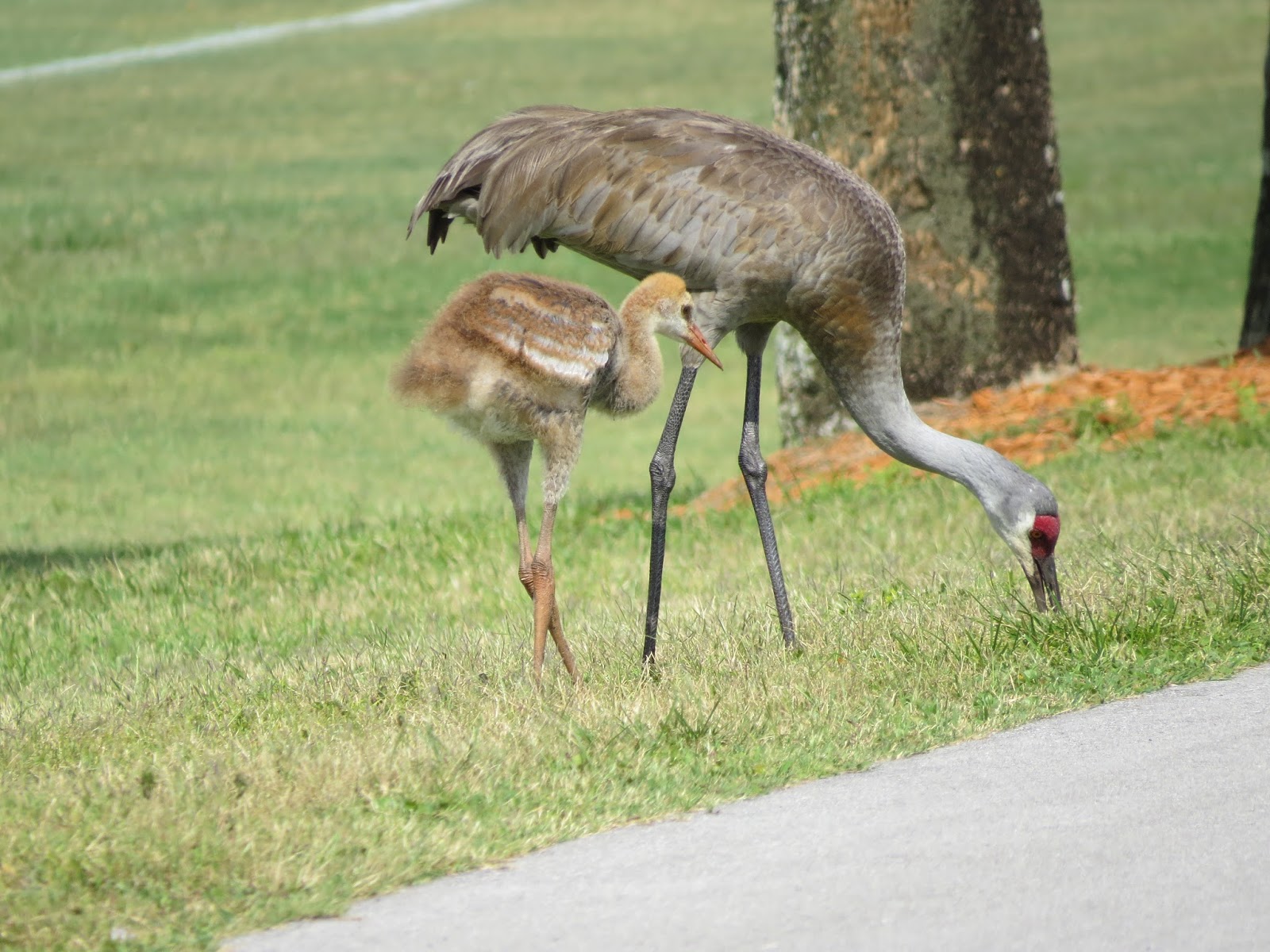
Oh. My. God. Have you guys seen Sandhill Crane's new baby? It is, like, seriously the cutest baby you have ever seen. And so well behaved too. She takes it everywhere and it doesn't make a fuss. Sandhill Crane's really got this mom thing down. Maybe it's easier than we thought to have a baby. Maybe not, Sandhill Crane does look a little tired.

Wednesday, July 8, 2015

Baby Birds in New York City

It's summer and baby birds are on the rise! Well, more like adolescent birds at this point, for the most part. These pictures were all taken in the past week or so in NYC, where your Amatuernithologist took a short vacation. Birding there was.. not spectacular as far as numbers or new species, but I got some good pictures, and there were some pretty neat discoveries that I'm sure you'll all be excited to see whenever they roll onto the blog. What New York did have, however, was an abundance of young birds, which is good news, since our Research shows that blog readers respond most to Cute Baby Animals (followed shortly by Unusual Animal Friends [UAFs]).

American Robin
The High Line, Manhattan, NYC, NY, USA
July 2015


When I saw this guy squabbling with an adult American Robin, I was hoping that I had a cool new bird. A little research confirmed that I was probably just looking at a younger robin. How come it's never a Wood Thrush? This bird listens to rebellious music.


This is American Robin in her adult form (and baby form, if you look closely). Notice how she has become more mature with age, and has settled into adult responsibility. Takes care of herself with small wellness rituals every day.

European Starling
Battery Park, Manhattan, NYC, NY, USA
July 2015

Major sibling rivalry here, these two birds are developing in different directions in order to differentiate themselves and find their own place in the world. Until they are no longer competing, there will be a high amount of stress in the family.


Makes you say "Wow, what a cool bird". I'm so glad some lunatic imported Starlings from Europe. This bird has decided that he doesn't want kids, and is going to seek fulfillment in a different way, perhaps artistically. Likes kids, but would rather be a 'cool uncle'.

Gray Catbird
Brooklyn Bridge Park, Brooklyn, NYC, NY, USA
July 2015

This Gray Catbird is really a baby, and as such has not developed any descernable personality yet. Bares a vaguely concerned and confused look most of the time. Experiences a muted and muffled version of our own reality.

Gray Catbird is really making something of himself. Time is money, show me the numbers, let's reorganize to optimize our marketshare. Might be successful, but has lost track of the ability to see the world as a place of beauty. On auto-pilot, for now. Some things that we knew as a baby, we forget.

Tuesday, April 28, 2015

Bird Sick Day

It's a sad day blog fans, because your amateurnithologist is a bit under the weather. It's ok though, because everyone gets sick sometimes, and maybe we can get through this together. How do some of the birds we've taken a look at in the past deal with it when they get the sniffles?
Brown Pelican (juvenile) lazes about and feels sorry for himself. If you get too close to him he'll start coughing more loudly or moaning about his headache. Best to just give him some space.

Red-winged Black Bird believes in ayurvedic techniques and tries to purge her body of vaguely defined toxins. She goes to hot yoga, drinks tea that makes you sweat, and generally covers herself with lots of blankets. It's very sweaty, but she is dedicated.

There's no polite way to put it, Green Heron is a hypochondriac. He constantly thinks he's getting sick, and when he inevitably does, he approaches it like a job. He takes a ton of over-the-counter medicines, but also goes to the doctor and tries to get anti-biotics even though it's probably just a cold. That doesn't work for a cold, Green Heron! It's going to be worse for you in the long run..

Black-necked Stilt continues to live a party lifestyle and pretends he is not sick. He takes a big gulp of alcohol and laughs and says 'this should kill the germs!' Black-necked Stilt gets a lot of people sick because of his inconsiderate behavior.

Tuesday, February 10, 2015

Bird Relationship Status Update Bulletin

It's almost Valentine's Day and love is in the air for birds. Literally. Because they are birds..
Let's check in on some of our old bird friends and see how their love life is going. Because what else do you want to do on the most romantic day of the year other than e-stalk some birds?

Western Scrub Jay has suffered a bad break-up. He's sleeping little and is turning to food to get him through. He's not looking good. We all feel bad for him, but it's been a long time and he's still experiencing it very intensely. Time to toughen up, Scrub Jay.

Double-Crested Cormorant is young and in love. No one can tell these two what to do and they're on top of the world. We all hope that a tragic car accident or illness doesn't bring all that youthful optimism crashing down around them, but we can't say for sure that it won't happen.

After a long and traditional string of serial monogamy, American Robin is playing the field and taking things as they come. She is going on a lot of dates and just enjoying herself right now. She gets tired of it sometimes, but is also feeling more confident and strong than she ever has before in her life. She figures she'll find what she needs eventually.

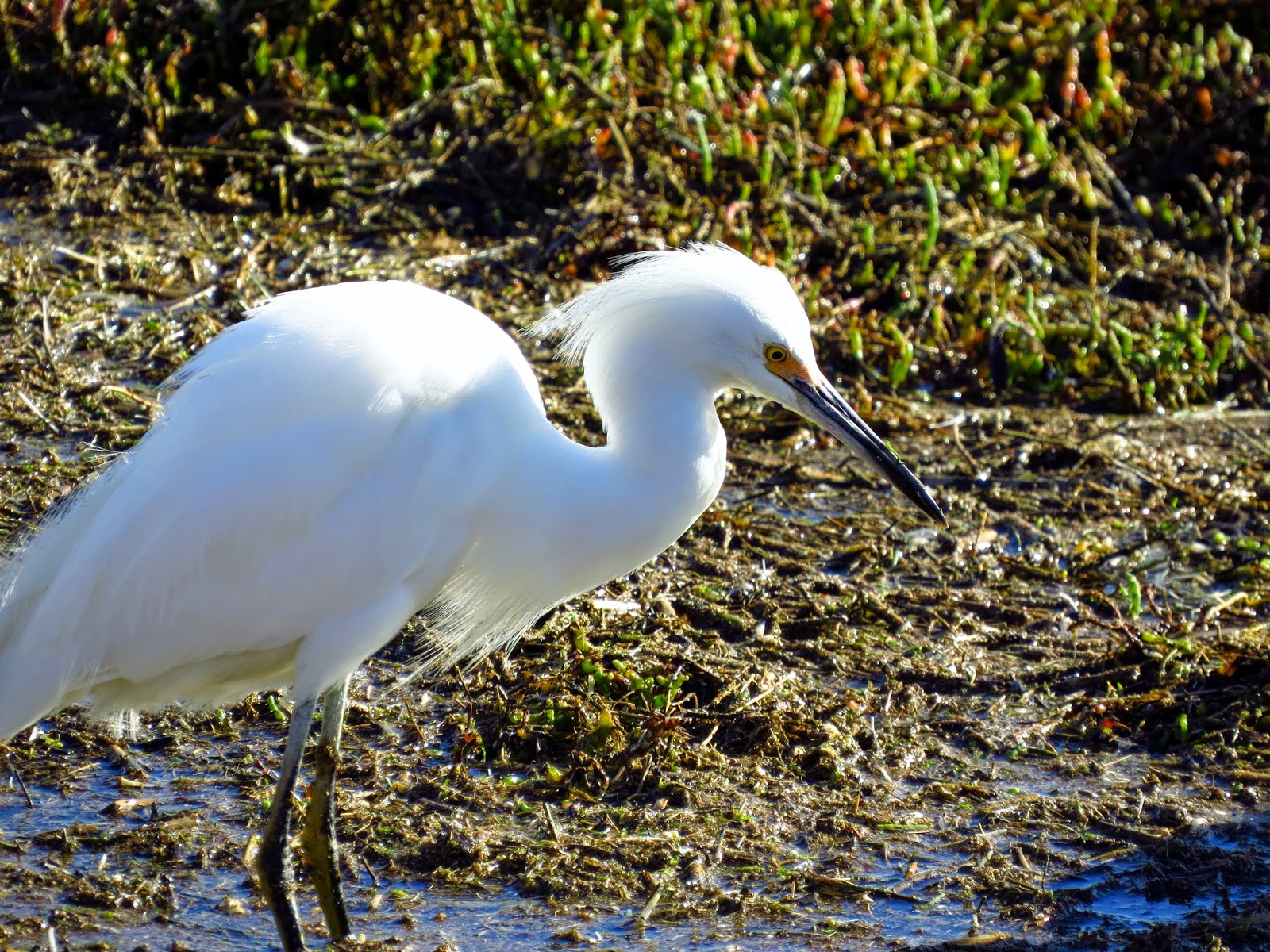
Snowy Egret has a boyfriend. He sounds really great.. almost too great. Almost kind of like Snowy Egret is making up a boyfriend to tell her friends about. Why would Snowy Egret do this? Maybe she is tired of questions about her relationship status. Or maybe it's something else. In any case there is some suspicion but no one is willing to ask her about it. Maybe we'll thrown some kind of party that he will have to come to if he's real.

Tuesday, January 20, 2015

Sora & Martin Luther King Regional Shoreline


Sora aka. Sora Rail, aka. Sora Crake
Arrowhead Marsh, Oakland, California, USA
December 2014
Member of the Rails, Coots, and Gallinules Family
§An Expression of Soras§

~true bird fact~ Soras are the most widely distributed and populous member of the Rail family in North America. They are also the most frequently hunted. Who knows why people do these things, but anyway, their population has remained fairly stable because of their high breeding rate. Good job Soras!

Silent defender of the marsh
Has an air of knowing everything, but really just does a lot of research
Strongly committed to ethical behavior, sometimes to the detriment of his own life
Never really feels like he has done enough

Other denizens of Arrowhead Marsh at MLK Regional Shoreline, In beautiful Oakland, Califonia:

Great Egret
has put a new focus on spending time with the family


American Coots
heard about a really great sale

Black-necked Stilt chronic single-hood is not as fun as it used to be

Burrowing Owl
on sabbatical to write a book

Tuesday, July 15, 2014

Bay Area Birds Calendar 2015

So, like all good birders based in the bay area, your amateurnithologist is a member of the Golden Gate Audubon society (best of the Audubon societies). Recently, they announced that they were looking for photo submissions for an annual calendar they put out- Birds of the San Francisco Bay
 Area. After thinking long and hard, I decided to enter. My logic went something like "I want to be in a calendar!" I reviewed my past few years of birdtography with an eye for things I thought might look ok in a calendar, and actually found quite a couple. The GGAS was only accepting three submissions per person (otherwise it'd just end up being an amateurnithologist calendar natch), but I found a lot more pictures I thought were worth considering. 12 actually, or exactly enough for a calendar. That's what I present to you today- a highly speculative look at what a calendar composed of my bird photos (limited to bay area birds) would look like. Many of these are never-before-seen on this blog, and I tried to choose ones that represented their month appropriately.

January
 
A Western Grebe at Lake Merritt. Many waterbirds winter at this lake, which has become something of a vacation hot-spot for birds. This Grebe is wondering whether all of the hard work and hours he has put into supporting this kind of lifestyle for his family has been worth it. Would they not have been happier, he wonders, if they were poor but closely connected?

February
 
These two Red-masked Parakeets are at Coit Tower in San Francisco. They are very in love and are happy they are legally allowed to marry now. Both Parakeets are from families that they have no contact with any longer, through death, tragedy, or irreconcilable differences. They do not care that no one will be at their wedding; they will create their own family.

March

It is the start of spring and here is a Western Bluebird at Point Pinole. He is responsible for spring starting, and he has to go around to each plant and tree and land on it a certain number of times to ensure it will bloom. He knows the right number and it produces a lot of stress for him if he touches something the wrong number. Is this some kind of compulsion or does it really work this way?

April


Spring Break!!!! This American Avocet has his best breeding colors on at the Berkeley Marina. Factually, this is not the time of year Avocets breed, but he's got to have his swag on. American Avocet has made a lot of new friends lately and really wants to impress them, so it's possible he'll get in over his head during this vacation. It's part of growing up.

May


Love is in the air for these Anna's Hummingbirds at Lake Merritt. Well, maybe. The lady hummingbird is on a reality dating show and she has to decide very quickly whether or not she would like a date with the male hummingbird. He is showboating for her, but it betrays little about him as a long term prospect. She is leaning towards 'no' even though he is very handsome.

June


The Great Blue Heron is glad it's summer. He has gone to the San Pablo Reservoir to go fishing. This is what he does to relax and clear his mind. Great Blue Heron had a hard year, but he doesn't want to talk about it. No, all he wants to do is fish and find some peace and quiet. He will think of his father while he drinks a beer. This is how he liked to relax too.

July


July is this Green Heron's favorite month because it is a very patriotic month. At the Berkeley Aquatic Park he will have no trouble seeing the fireworks. It's the only time of year where people are allowed to show any kind of pride in America any more, he opines. Where has his country gone, he wonders, as he sees a larger and larger number of people from other countries, people who look different from him, moving into his community. Is Green Heron a racist? He doesn't think so. But the answer is yes.

August


It is August and it is so hot out that California Quail can hardly breath, especially since she is wearing her best suit out to Pinnacles National Park. But this is what she has to do, since she is running for office. She is posing for a newspaper picture here and it is taking too long. She has already given up on some of the things she hoped she could change by getting into politics, out of pragmatism. Inside she doesn't even know if she really wants to win. This is what she is thinking as she is smiling and posing in the hot, hot sun.

September

These White Pelicans at Lake Merritt do not know each other very well, but they are family. Their great grandmother, who was something of a matriarch figure to their family, has died and some aunt has organized a huge family gathering in response. There is a big barbeque and someone even made shirts. "Do I have to wear this shirt?" asks a White Pelican. The other White Pelican commiserates and they begin to chat. They find they have more in common than they thought. They will stay in touch after they both go home.

October
 
Acorn Woodpecker is getting ready for the winter at his home in Pinnacles National Park. He works for a tech company, that is getting bought out. He's a low level employee, and he's getting fired, and he's not supposed to know yet, but he does. He has been shoving acorns into everything, now, while he still can. It is Halloween and little Acorn Woodpeckers will come and ask for acorns. He pretends he is not home.

November


Black-capped Chickadee always gets nostalgic around november and he doesn't really know why. He went out for a stroll around Point Pinole and is thinking of places and people he has left behind and is regretting. His life is better now than it has ever been, by any meaningful measurement, but still he thinks about the past sometimes, when he has that luxury. Black-capped Chickadee's melancholy reverie is brief and he will shake it off soon. There is the future to consider.

December

Burrowing Owl has taken up his yearly post at Cesar Chavez Park in Berkeley. He will live there for a few months and during this time other birds will come to him seeking prophecies and advice. Burrowing Owl has visions and a connection to the bird afterlife. His stint here is short, because other places need his gifts as well. Burrowing Owl's connection to the spirit world is taxing, but it is a burden he must bear.

And that is what an Amateurnithologist calendar would look like! I guess that's why they don't give people like me calendars to be responsible for. I will keep you updated on the results of the contest- fingers crossed for a bird picture getting in. Which pictures were your favorites? Sound off in the comments if you want.

Tuesday, January 21, 2014

Different Birds: Cattle Egret vs. Snowy Egret vs. Great Egret

Ready for some birdin' 101? Of course you're not, you are only a casual consumer of bird knowledge. Otherwise you'd be visiting one of those other "more professional" bird blogs where "experts" "know what they're talking about" and aren't "ignorant". But still, wouldn't you like to be the guy or gal who, when out hiking with a group of friends, can confidently point to a cool looking bird and name him? Of course you don't. But our mission statement here at birdateunithologist dot com involves the pursuit of useless knowledge and plenty of it, so we press on.

Today we'll be covering a trio of terrific waterbirds with subtle yet still visible-to-the-naked-eye distinctions from one another.

Cattle Egret

Sarapiqui River, Heredia, Costa Rica
Member of the Herons/Egrets/Bitterns Family
§A Stampede of Cattle Egrets§

~true bird fact~ One of those rare, resourceful birds who have made humanity into an ally rather than a threat, Cattle Egret loves agriculture. Spending most of his time with domesticated farm animals, he gets his daily meal of insects by following the clouds of them kicked up by the activities of larger animals. He is also known to eat the ticks right off of them. What a good friend. In different parts of the world, Cattle Egret preys on the stir-up of camels, elephants, giant tortoises, and airplanes.

Rises to the top when times get hardest.

Snowy Egret (who we already know)
Corte Madera, California, USA
Member of the Herons/Egrets/Bitterns Family
§An RSVP of Egrets§

Secretly reading epic fantasy novels.

Great Egret
Corte Madera, California, USA
Member of the Herons/Egrets/Bitterns Family
§A Wedge of Egrets§
★Symbol of the National Audubon Society★

~true bird fact~ Like many in their family, Great Egret rocks the distinctive s-shaped neck. In there is a very unusual long vertebra that acts like a hinge, enabling him to strike out quickly at far away targets.

Does really have a private life due to his important position. No one knows what he's really like, except through hearsay.

Ok, let's break this down. What differences did you notice? Were they all obvious? They might not be, out in the wild, when there's no one else to contrast them with, though, eh? The first thing you might look to is color of the break, since we are drawn to look at the faces of things as human beings. That'll help you differentiate between the Snowy Egret and they other two. If you want to stay with beaks, you can notice that the Great Egret has a thinner, longer, pointier beak than his Cattlesome brother.

The biggest difference is probably in the physical size of these birds. Next to each other you'd never mistake them. They go smallest to largest Cattle, Snowy, and Great. There is also some difference in general bulkiness vs. slenderness. Of course our great motto of 'always look at the feet' serves you well here too. Cattle Egrets have yellowish-greyish feet and legs, Great Herons have black feet and legs, and Snowy Egrets split the difference by having black legs, and weirdly yellow toes. Of course if the bird is standing in mud, you're out of luck.

Sometimes the sad truth of the matter is the only way to know what bird from what is location. This is where knowledge and research come into play. Cattle Egrets mostly hang out in open fields, while the other two are mostly water's edge types. The other things that's important to note is breeding season, during which all these birds look dramatically different. So good luck with that!

Are you ready for your final test? Ok.. What bird is this-


Click here when you're ready to find out if you got it right!

Tuesday, December 10, 2013

Totally Different Birds: Greater Yellowlegs vs. Willet

Greater Yellowlegs
Berkeley, California, USA
Member of the Sandpiper Family

~true bird fact~ Greater Yellowlegs are notoriously understudied by scientists because they generally live in such inhospitable, mosquito-ridden, and generally unpleasant-to-hang-out-in places. Yup, that's all it takes.

Idiosyncratic taste in music and movies (likes things that are really trash)
Says "woop! woop!" over and over again. No one knows why.
Has his own ideas about morality, which may be confusing to some, but are at least internally consistent
Lives this way because he wants to, not because he must

Willet
Berkeley, California, USA
Member of the Sandpiper Family
Is into scrapbooking now

You remember Willet, don't you? Our very own third bird portraiture subject. My how far we've come, in terms of photography at least. Anyway, your Amateurnithologist was taking a walk at the Berkeley Marina and took what he believed was a nice picture of our friend Willet. Cause you can't have too many pictures of birds, right?

On a whim, I decided to check if there were any other birds that looked like a Willet, and found out about Sir Yellowlegs up there. Care to take a guess about the only visible difference between a Willet and a Greater Yellowlegs? I am left to what has become my mantra of bird identification lately- "always get good light on the feet." So there I was with a new bird to feature on the blog, but I felt like I would be remiss to not tell this story and to point out the at-times ridiculously minor differences that separate one bird from another. I mean really, it's like one of those 'can you spot 5 differences?' puzzles for children. This is what I see as one of the major barriers to entry into the hobby and we here at your bird blog want to do our best to normalize your birding experiences. At amateurnithologist "we're dumb too" is our motto.

Any pair of birds that make me say "C'mon! That is SO not a different bird!" will get featured in this way. Thanks for tuning in birdfans and til' next week- may all your birds be noticeably different looking.

Tuesday, November 5, 2013

Bird of the Year 2013: Meet the Candidates

Hello birdpersons! I had planned a super boring entry about a Northern Flicker, but then I got the news. Audubon California has announced the candidates for Bird of the Year 2013! Obviously I had to stop everything I was doing and write up a voters guide. For birds we've covered before, we'll catch up on their latest accomplishments. New birds will receive a brief, but informative overview. An informed voting public is a societal good!

Black-necked Stilt
On fire since being declared sexiest bird of the year 2012. Has successfully branched out into more sectors than anyone really expected. Resting on his laurels right now, to be honest, but in the eyes of the public this bird can do no wrong.
Chances of winning: GOOD.


Brown Pelican
What did brown pelican do to get his name on the ballot? You don't wanna know. But he's there, and he's made all the right moves this year to position himself for a win. Why does he care? A bid for power? A move towards legitimacy? Simple egotism? No one knows, but he's been racking up endorsements from the business community, and detractors are suspiciously (ominously) silent.
Chances of winning: I'M MORE WORRIED ABOUT WHAT HE'LL DO IF HE DOESN'T WIN

Burrowing Owl
 
Archival Image from Ca. Audubon: Peter LaTourrette
The traditional gesture nomination provided to someone both cute and deserving of recognition, like when a child actor is in an actually good movie. Unlikely to be awarded the title unless the public is in a strange mood. Burrowing Owl himself is pretty 'over' his fifteen minutes and right now is attempting to drive away interest with rude public behavior. Unfortunately this is leading to more attention, and not the positive kind he's used to. Will burrowing owl make it through this rough spot?
Chances of Winning: PROBABLY NOT

Golden Eagle
 
 Archival Image from Ca. Audubon: SigmaEye (??)
Your Amateurnithologist saw a golden eagle once in the wild. He was hiking in the desert and one took off from the ground just a few dozen feet from him. Honestly, the experience was too awing for him to even try with the camera. He seemed aloof and perfect, like some kind of bird god-king. A mighty and remote competitor, golden eagle is pretty much ignoring that the contest exists, but is still commanding respect from all commentators.
Chances of Winning: HOW COULD HE NOT?

Loggerhead Shrike

Archival Image from Ca. Audubon: Patricia R. Pierce
Loggerhead shrike's positioning in this contest is mostly that of a spoiler for the more serious competitors. He's a third party candidate, in essence. He appeals to bird purists with his straightforward approach and no-drama attitude. He seems to say: I am a bird, I have wings, I have a tail, I have a beak. What more could you want?
Chances of Winning: VERY LOW

Western Yellow-billed Cuckoo

 Archival Image from Ca. Audubon: Laura Frazier
When's the last time western yellow-billed cuckoo did anything worth mentioning? Truly a nomination out of left field for the struggling bird. Perhaps a bone throw from the academy so that people will say 'hey, remember western yellow-billed cuckoo'. Retains his charms in a technical way, but to those who know him well, it is like seeing a ghost.
Chances of Winning: ACTUALLY ZERO

I hope this guide prepares you for election day and the celebratory gala afterwards. This amateurnithologist knows he will be there with bells on, live blogging the ceremony. Best of luck to all the competitors.