Showing posts with label Florida. Show all posts

Friday, December 1, 2023

Good Birds, Bad Pics: Florida edition

For a lot of reasons, it's looking like I probably won't be going back to my home state of Florida for quite some time. Although I have a complicated relationship with the place, I increasingly enjoyed my regular visits, and was able to develop an appreciation for the things that make it special. Arguable (and certainly for the purposes of this blog) the best thing about Florida is the birds. A great state for birds in general, but also, one where there is relatively little overlap with my adoptive home state of California. 

So every time I've gone back I've tried to get a bit of birding done, despite how little time I actually get to spend there. This past April was my last trip, and while it produced some good bird pictures (to be posted at the usual rate that things go around here), it also produced some real stinkers. However, given that this was my last trip for a while, I'm going to go ahead and say 'still counts'! So here, without further equivocating, are some really terrific and cool birds that I was so happy to see, but that I was unable to get anything but the #WorstBirdPics of.


Caspian Tern
Arthur R. Marshall Loxahatchee National Wildlife Refuge, Boynton Beach, Florida, USA
April 2023
Member of the Gull, Tern, and Skimmer Family
§A Committee of Terns§
★The World's Largest Tern★

{Etymology Corner} Yes, they are named after the Caspian sea. And yes, a lot of these terns do live there. They really get around, huh?

What went wrong? Man, you know how these things fly around. It's hard to get a picture of them in flight, and they weren't landing. Also, the light was getting a little tough by this point.


Cape May Warbler
Arthur R. Marshall Loxahatchee National Wildlife Refuge, Boynton Beach, Florida, USA
April 2023
Member of the Wood Warbler Family
§A Confusion of Warblers§

{Etymology Corner} Yes, they are named after Cape May, New Jersey, which was where the bird was first collected by European colonizer types. However, unlike the Caspian Tern (above), they do not actually really live in Cape May. In fact, it took a hundred years for another Cape May Warbler to be sited there, although today it's recognized as an uncommon visitor. Maybe don't go for just your first idea on these things, when you're naming birds. And yet, still better than being named after some guy..  Shoutout to the Bird Names for Birds movement on their recent victory.

~True Bird Fact~ They have a curled semi-tubular tongue, which is unique among warblers, and enables their seasonally varied diets. In the summer, they're up North, mostly eating bugs, but in the Winter, they live in the Caribbean, where flower nectar and fruit end up being a large part of their diet. I wonder if they like the winter better. I know which of those two diets sounds more appetizing to me.

What went wrong? This guy was hoping around everywhere, going nuts. Also, I get reluctant to hold other people up when I'm trying to take a picture of a bird around other people. Maybe my camera settings were funky? I think the light was also starting to go a little here as well.


Worm-eating Warbler

Lantana Nature Preserve, Florida, USA
April 2023
Member of the Wood Warbler Family
§A Confusion of Warblers§

{Etymology Corner} They don't eat worms! Not even a little. They do eat caterpillars, but not more than any other warbler. The reaction to this information across the bird internet is muted, sort of a 'eh, what are you gonna do?' vibe. I find this distressing information. To make matters worse, the Worm-eating Warbler has a range that includes Cape May much more regularly than the Cape May Warbler, and the Cape May Warbler is known for it's favored food source to be an insect called the Spruce Budworms, to the point where Cape May populations increase when there's a Budworm outbreak. Who is naming these things? We need to shut this whole thing down.

What went wrong? I saw this guy out in the open for about 5 seconds before he completely disappeared. I followed his chirping around for a bit, but he never came out in the open again. Also, it was raining


And lastly, a very special welcome back to the American Redstart in his unprecedented second appearance in the Good Birds, Bad Pics series. Go to hell American Redstart.

What went wrong? Personal hatred for me, I'm assuming

Saturday, July 30, 2022

Black-bellied Whistling Duck


Black-bellied Whistling Duck, fka Black-bellied Tree Duck

Green Cay Nature Center and Wetlands, Florida, USA
April 2022
Member of the Ducks, Geese, and Swans Family
§A Brace of Ducks§

{Etymology Corner} I don't usually mention this, but the Latin name of this duck is Dendrocygna autumnalis, which translates roughly into Autumnal Tree-swan. I think that's a great name, it is a very autumnal looking bird.

~True Bird Fact~ Fascinating bird, with behavior that is very unique for ducks- ready for some bullet points? Cause this duck needs bullet points

  • Does whistle
  • Does nest in trees (in South America, where the duck is most commonly found, it nests in palm trees. Boy I'd like to see that)
  • Does form monogamous pair bonds
  • Has increased it's North American population by 6% per year from 1966 to 2019, and they expand northward every year. They used to be a rare bird, but now are quite common in southern states. If things continue at this rate, soon the only life this continent will sustain will be Black-bellied Whistling Ducks, and honestly, that's fine.

What a cool duck, huh? Well, anyway, that's all for today... Unless you'd like to talk about how this is my first blog post since January. Two this year! How did this happen? Well, to be honest, I had a second kid (as recounted here), and boy, does that take a lot of time up. Birding time has been minimal, but not as minimal as looking-through-photos time and sitting-down-to-write-a-blog time. Still, I am resolved to revive this blog, so I'm going to make a commitment to catch up on my blogging and come out with at least a total of 10 this year, to match my last year's total. I can do 10, right? That's super easy. Lots more birds to come. 

Hugs and kisses, 

The Amateurnithologist


Sunday, May 6, 2018

Yellow-crowned Night Heron


Yellow-crowned Night Heron aka. Crab-eater
Hugh Taylor Birch State Park, Fort Lauderdale, Florida, USA 
April 2018 
Member of the Egrets, Herons, and Bitterns Family 
§A Pose of Herons§

~true bird fact~ These bad boys occasionally eat turtles, being able to do so because of special stomach acid that eats through their shells. This digestion prowess probably also helps with the crabs that make up a much greater portion of his diet. Apologies to all turt-lovers out there.

~real bird history~ The Caribbean once had it's own species of Night Heron called the Bermuda Night Heron. It was driven to extinction in the 17th century, during colonization of the islands. Yellow-crowned Night Herons were introduced to the islands in the 1970s as a response to a wildly out of control crab population boom. This attempt has been largely successful for all involved (except the crabs, perhaps).

Loves crabs so much that everyone buys him stuff with crabs on it for his birthday. All home decorations are crab-related
A low achiever, but content with that
Has a weird, old uncle on the West Coast that he never talks to, but that will one day leave him 
an enormous inheritance


Friday, April 14, 2017

More Wild Parrots in Miami Beach


White-eyed Parakeet aka. White-eyed Conure
Miami Beach, Florida USA
April 2017
Member of the Lorie, Parakeet, Macaw, and Parrot Family
§A Pandemonium of Parakeets§

Native To: Northern South America. They have a fairly wide range spread throughout Venezuela, Colombia, the Guianas, Brazil, and northern Argentina and Uruguay. First seen in the wild in Florida in 1987, they quickly established a stable population that may interbreed with Mitered Parakeets, which look really similar, but have more red on the head, and less on the wing.

~true bird fact~ Gregarious and adaptable birds, they do well with city life, even within their usual range. Normally they would nest in tree hollows or at the top of palm trees, but have adapted to use both limestone caves and the eaves of buildings as well.

Do they talk? Yes

May accidentally make light of serious issues
Maintains a persistant light mood, seemingly without much effort
Loves a good prank
Makes a big 'ahh' noise of satisfaction after eating or drinking something

Sunday, November 6, 2016

Black-and-white Warbler


Black-and-white Warbler aka. Black-and-white Creeper (archaic)
Morikami Museum and Japanese Gardens, Delray Beach, Florida, USA
April 2016
Member of the Wood Warbler Family
§A Distinction of Warblers§

~true bird fact~ The warblers crawls and creeps up and down the trunks of trees unlike any other member of his family (hence his old name). He can do this because he's got an elongated back toe.. He's also unusually aggressive for a warbler, so don't even try to stop him from doing it.

Has an exotic and mysterious (but pleasant) smell
Ludite
Loves esoteric collections (i.e. gas station signs, old coke bottles)
A little bit emotionally removed


Is that all for this blog? Well, I know what you're thinking and I'm not going to let you down. You're wondering what would black-and-white warbler look like if he were really black and white. Well, it might look.. a little something.. like this


Friday, July 1, 2016

Struggling to get an Acceptable Picture of an American Redstart: A Birding Journey

Hi friends. I'm on a bit of a Florida birds kick these days (truth be told, this is largely because I haven't found the time for a real birding trip in a while). No bird gave me more trouble while I was in Florida than the American Redstart. Well, I guess I shouldn't say that, because the Redstarts made themselves abundantly clear from early on, while much desired birds like Painted Buntings and Snail Kites remained entirely absent. Simply put, I could not get a Redstart to sit still to save my life. Maybe my camera settings were off, maybe my skills were not where they needed to be, maybe it was just a bird I was not meant to get a great picture of. But I sure tried, folks. This blog is about that.


The first few pictures I got were at Morikami Park, in Delray Beach Florida. It's a heavily forested botanical gardens, and the Redstart(s) here flitted from tree to tree, staying mostly in the shadow.


Honestly these were probably the best pictures I got of them. My wife and family had to endure me doing a lot of standing around and staring up into the branches of trees. The pictures came out looking like this.


Truly a magnificent bird.


Lighting: poor
View: obstructed


Next time I saw him, he was down in South Miami Beach, Florida, amid the seagrapes. This one was so close to being perfect birdfans. Just a little tiny bit longer in this spot and I could've gotten the focus in on him, instead of the coral wall behind him. He was gone too quickly to get a second shot.


Oddly, the only time he sits still is when he's far enough away that I can't get a good picture of him. Almost as if being on the move around humans is a good idea or something. This is at the full 50x zoom my camera is capable of, so he was really a speck in the distance. All of the rest of these pictures are from Key Biscayne. It is a beautiful and undervisited park, but things did not get better there for our Redstart odds.


Out of focus level: medium
Still obstructed


This one, I think, would have been the shot, but the bird had other ideas. After this point, I had run out of other people's time to waste, and just figured I'd make the best of it when I got home. We've all been there, right? At least that's what I tell myself. I went to battle with the bird, and in this case, the bird won. Well, at least I was able to positively ID him. It's not called pro-ornithologist for a reason folks, and I hope that my continued struggles are an inspiration to all the other not-so-pro birders out there. Stay tuned next week when I hopefully have some really exciting stuff to share from a trip I'm taking this weekend.

American Redstart
Bill Baggs Cape Florida State Park, Key Biscayne, Florida, USA
April 2016
Member of the Wood Warbler Family
§A Confusion of Warblers§

{etymology corner} American Redstarts are not part of the same biological family as other birds called Redstarts, and derive their name from their red tails (a start = a tail in olden times).

~true bird fact~ American Redstarts flash their bright tail and wingpatches while foraging, making them look like a blur of color. This startles their intended insect prey and flushes them out of hiding.

Feisty, responds poorly to rules and requests
Spends money recklessly
Boastful
Always willing to stop what he's doing if something more entertaining comes up

Thursday, June 23, 2016

Common Yellowthroat


Common Yellowthroat
Bill Baggs Cape Florida State Park, Key Biscayne, Florida, USA
April 2016
Member of the Wood Warbler Family
§A Wrench of Warblers§

~true bird fact~ The males of the species are generally monogamous and will stick with one partner throughout the mating season. Females on the other hand will surreptitiously call for and seek out other mates. Take that patriarchy!

Seems super self-assured, but puts his pants on one leg at a time like everyone else actually
Easily makes friends, good at small talk
Eager for experiences of peak actualization, whatever that means
Generous with his time and resources

Thursday, June 16, 2016

Prairie Warbler

female
Prairie Warbler
Bill Baggs Cape Florida State Park, Key Biscayne, Florida, USA
April 2016
Member of the Wood Warbler Family
§A Confusion of Warblers§

~true bird fact~ These birds eat the eggshells after their young have hatched. Kinda gross, like eating a placenta in humans. Better than eating it before they hatch?

Plucky
Asks pointed questions
Always learning about some new obsession
Smokes when nervous

Sunday, June 12, 2016

Checking in with Florida Birds

It's been a while since we've visited with our Florida bird friends, but as you might've guessed from last weeks parrots, we took a trip not long ago. While there are some exciting new birds to come, we also caught up with some old favorites. What're they up to now? How's Florida treating them?

Great Blue Heron has gotten really into the art scene. He lives in a studio/work space now, and is very into his new housemates. We're happy for him, but he's actually not very talented. Art has to be more than just provocative, you know Blue Heron? Even worse, he's been sort of ignoring his old interests and friends. It'll all come crashing down eventually.

Brown Pelican is up to some sketchy behavior. After a failed bird of the year bid, he went down to Florida and got involved in some ill-defined business. He lost some weight, probably from sweating so much in the South Beach heat and humidity. Takes a lot of trips down to Cuba. Drugs? Arms deals? Guantanamo? We wouldn't put it past him.


Northern Mockingbird, as the state bird of Florida (among others), is distressed. She worries a lot these days about the state of politics, climate change, growing civil unrest. Really, just the whole thing. She is often seen with a furrowed brow, staring off into the distance. Where have the simpler times gone, she wonders, when her duties as state bird were mostly ceremonial, and she felt like she was making people happy? Nobody told her it was going to end up like this.


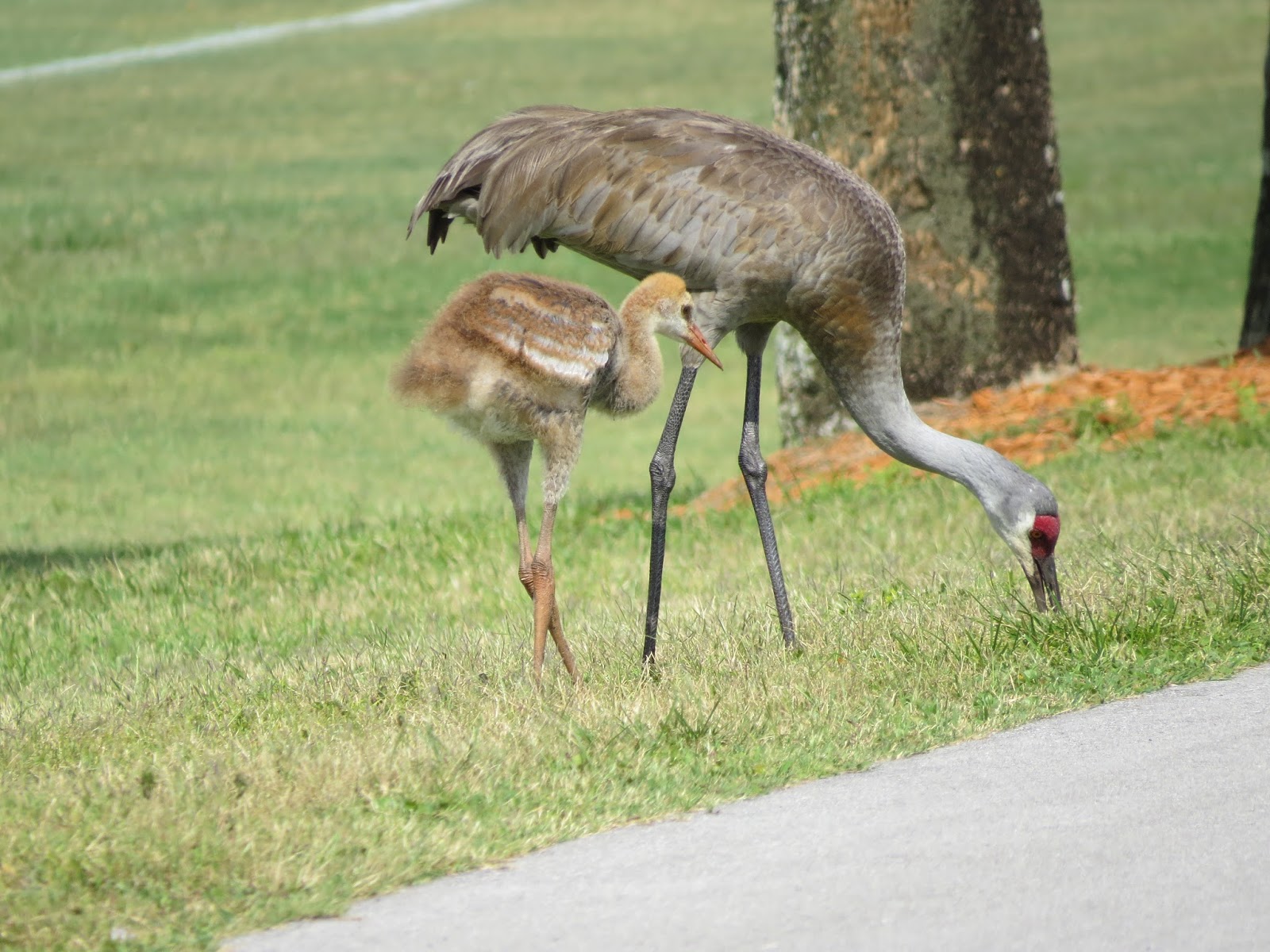
Oh. My. God. Have you guys seen Sandhill Crane's new baby? It is, like, seriously the cutest baby you have ever seen. And so well behaved too. She takes it everywhere and it doesn't make a fuss. Sandhill Crane's really got this mom thing down. Maybe it's easier than we thought to have a baby. Maybe not, Sandhill Crane does look a little tired.

Thursday, June 2, 2016

Monk Parakeet: The Wild Parrots of Miami Beach


Monk Parakeet aka. Quaker Parrot
Lincoln Road, Miami Beach, Florida USA
April 2016
Member of the Lorie, Parakeet, Macaw, and Parrot Family
§A Flock of Parakeets§


Native To: Southern South America, mainly Argentina. A popular pet bird for their ability to learn how to talk, they've been taken all over the world. Self-sustaining feral populations began appearing in the 1960's. Although their largest population is in South Florida, there are pockets as far north as New York and Chicago. Where else do these guys live? They adapt so remarkably well to city life that there are parakeets in Spain, Portugal, Azores, Madeira, Balearic Islands, Gibraltar, France, Corsica, Malta, Cyprus, Sardinia, Italy, Channel Islands, Great Britain, Ireland, Belgium, British Columbia, Mexico, Brazil, Israel, Bermuda, Bahamas, Cayman Islands, Easter Island, Puerto Rico, South Korea, and Japan. They may not be quite as idolized as their cousins in San Francisco, but as far as feral parrots go, they're a pretty big deal.
 
~true bird fact~ Literally the only parrot to build nests out of sticks and branches rather than living in tree-hollows. They live communally, at times with groups of up to 200 birds, which is also unusual. This strangely divergent evolution seems to be the key to their ability to succeed and thrive in places that are normally too cold for parakeets.

Diligent and workmanlike
Shy, but works hard to overcome it
Does best in high pressure situations
Family-oriented

Tuesday, June 30, 2015

Laughing Gull

Laughing Gull
Key Largo, Florida, USA
April 2015
Member of the Gulls and Terns Family
§A Scavenging of Gulls§

~true bird fact~ Another bird that was the target of egg and plume hunting in the 19th century and saw a dramatic decline, to the point where there were basically no nesting colonies in the Northeastern US at all. Since all that business stopped, they're doing just fine. It's interesting that something that was once such a major industry, like bird feathers, can just stop abruptly to the point where it now seems like a strange thing to do. Maybe it's a little bit of hope for the future- what natural resources are we exploiting now that we won't be in 200 years?

~and one more thing~ Also, the 'laughing'. Yeah, that's what his call sounds like. I don't know if I should even bother with bird facts so well known, but I guess some people who come to the blog probably are even less bird-knowledgeable than me? Sound off in the comments.

Rude and crude. Doesn't listen to authority figures
Had to grow up early to take care of his family
Seeks support from friends to survive life's struggles
Has few opportunities to express vulnerability and express self

Thursday, June 18, 2015

Muscovy Duck


Muscovy Duck aka. Barbary Duck aka. Common Duck aka. Forest Duck aka. Greater Wood Duck aka. pato criollo ("creole duck") aka. pato casero ("backyard duck") and pato mudo ("mute duck")
Key West Botanical Gardens, Key West, Conch Republic
April 2015
Member of the Ducks, Geese, and Swans Family
§A Team of Ducks§

~true bird fact~ There is a lively and ongoing debate in the Jewish community about whether or not Muscovy Ducks are Kosher (permissible for strict Jews to eat). This seems to stem from a rabinical decision in the 1800's by an American rabbi, who banned the ducks. No ban has ever existed for Jews in Israel.

Additional Duck Facts

~Another bird first scientifically described by our friend Carl Linnaeus
~Muscovy Ducks don't quack, they hiss
~Muscovy Duck liver and heart are ingredients in Homeopathic medicine, said to relieve flu symptoms
~The name comes from their musky smell, seemingly. There is some debate on this topic.
~Considered an invasive species in most parts of the US, they are sometimes destroyed by wildlife services. The exception to this is in some parts of southern Florida and Texas where they are considered 'close enough' to native. The duck's usual home is Central and South America.
~Muscovy ducks have an unusually detailed wikipedia page, where most of this information is from


And now, a new feature for us here on Amateurnithologist: Selected Excerpts from customer reviews on BackyardChickens.com. We call it...

Bird Reviews
Rated #2 in ducks (!!!)

"My ducks dance where ever they go"

"Cons: creepy looking and smelly "

"These are my best ducks and are great mothers, very sweet, have beautiful babies"

"very laid back"

"I will go outside and they will be up in the front yard just doing duck things"

"We love our Muscovy drake but he is very very randy. He will try to mate with any bird he can get his beak on, which made for an awkward situation with the neighbor"

"I did not like him at all, He was huge and had very sharp nails"

"They can be a little shy at first but once they see you enough they warm right up to you and love you almost instantly"

Monday, June 1, 2015

Glossy Ibis


Glossy Ibis
Green Cay, Boynton Beach, Florida, USA
April 2015
Member of the Spoonbill and Ibis Family
§A Stand of Ibises§

~true bird fact~ Glossy Ibises are extremely nomadic as a species. Although they originated in Africa, they have naturally expanded their range to include parts of Europe, Asia, Australia, and North and South America as well. All this expansion was actively happening as recently as the 19th century. No one brought them to any of these places, they just got there. Glossy Ibises are one of those birds that widely disperses after breeding season, meaning they pretty much just fly everywhere and try to settle down in new areas. I respect that kind of attitude and life style. Hey, cool, ibis

Seamlessly enters new social circles
Has a great sense of perspective. Doesn't sweat the small stuff
Frustrated by over-coddling, or by parents 'spoiling' their children
Likes gooey foods

Tuesday, May 26, 2015

Mystery Bird: Bird with Dark Intentions


BIRD THAT FEELS A LITTLE OFF
Key West, Conch Republic
April 2014
Best Guess: Brown Pelican.. far too large, perhaps a GMO

Unstable, gives off strong 'stay away' vibes
Eats garbage. Wouldn't eat better food if it was available. Has a personal preference for garbage
Strange sense of morality. May actually be insane
Has been failed by society tremendously

Tuesday, May 19, 2015

Wood Stork


Wood Stork (FKA Wood Ibis [not an ibis])
Wakotahatchee Wetlands, Florida, USA
April 2015
Member of the Stork Family
§A Phalanx of Storks§

~true bird fact~ The Wood Stork's breeding system is timed to be during the dry season in the places he lives. This doesn't make sense at first, but the Wood Stork knows what's up. During the dry season, pools of water shrink, meaning that fish are concentrated in smaller areas and it's easier for him to find food.

~true bird myth~ Storks have long been associated with protection, wealth, and of course, child rearing. Storks are believed to hold high amounts of faithfulness and familial values. Not only are they associated with delivering babies (which they allegedly found in caves or marshes), but also with taking care of elderly relatives. Ancient Greeks had a law that punished anyone who killed a stork with death, and Muslims revered the birds because they made a pilgrimage to Mecca on their annual migrations. Many of these myths seem to come about because Storks are large, prominent birds that often nest among humans, but they also stem from the Stork's own behavior. They're very consistent birds- mostly monogamous, and they nest in the same site year after year.

Acts on emotion. Wears her heart on her sleeve
Finds enjoyment in the simple company of others
Doesn't think about 'the big questions'
Likes percussion instruments best


How endangered are they? They've never been a globally endangered species because they have such an enormous range, but Wood Storks had a hard time of it for a while. Back in 1984, their population was dropping by a precipitous 5% per year. However, a concentrated conservation effort over the past 30 years has brought them back up to healthier levels. In July of 2014, they were moved off the US Fish and Wildlife Endangered List and are now considered merely 'threatened'. There are now estimated to be somewhere between 6,000 and 10,000 storks in the States. Stork populations have followed a similar trajectory in Brazil. Good for you, storks.

Monday, May 11, 2015

Roosters of Key West

Key West has a lot of Chickens. Estimates are that over 2000 birds live on the 2x4 mile island. Locals are divided on the chicken issue- they add a lot of charm and character, but they are undeniably annoying at times. Regardless of what they think, there's not a lot that people can do about the chickens- they're currently a protected species. It is illegal to 'harm or harass' a chicken in Key West. Why are there so many roosters, and what type are they? Well, it seems likely that most of the roosters are the result of people releasing their chickens once cockfighting was outlawed. The sport used to be a big deal, especially in Cuba, and before the cold war, there was a major chicken trade. This means these chickens are probably mostly 'American Game' or 'Cubalaya' birds, but intermixed with other breeds that people had originally brought to the islands for food and eggs. They've interbred and have been feralized, to the point where it would be fair to just call them the Key West breed. Some have suggested the name Key West Gypsy Chicken, which is what I think I'll go with. Let's take a look at some specimens.


Feels unconnected to his past and his people's suffering. Not sure what to do with conflicted feelings about his privilege.


Gets asked for advice by younger chickens in the community. Often recommends folk remedies.


Pursuing a modeling/acting career. Big fish in a small pond.


Tough as nails. Doesn't mess around when it comes to her kids. The kids are cute, but a little rambunctious. You admire her pugnaciousness, but are not sure what message it's sending to the chicks about how to solve their own problems later in life.

Key West Gypsy Chicken
Key West, Florida, USA
April 2015
Member of the Junglefowl Family
§A Peep of Chicks§

~true bird fact~ They say Key West has fewer cockroaches than many other tropical destinations because these chickens keep the numbers down. I did not see any while I was there, so I have to assume it was due to the chickens.

Monday, May 4, 2015

Roseate Spoonbill

Roseate Spoonbill
Green Cay, Boynton Beach, Florida, USA
April 2015
Member of the Spoonbill and Ibis Family
§A Bowl of Spoonbills§

~true bird fact~ Most people know that the distinctive color shared by Rosey over here and his compatriat Flamingo comes from algae in the small crustaceans they mainly eat. Sadly, his unique coloration has also made him the target of poachers. Populations declined in the 1800's, when Spoonbill wings were popularly made into fancy fans.

Likes to weird people out with counterculture behavior and appearance
Would adopt pit-bulls, make a big deal out of it
Rich mom and dad
As the world changes to be more progressive, and his enemies fewer, he finds himself a little bit lacking in purpose


Amateurnitholog (author's notes)
Well, here it is blog followers, one birding resolution well and truly accomplished! Spoonbill is totally one of the birds I was most interested in finding during my recent travels to South Florida, and boy did he deliver. He was sitting totally cooperatively on a branch right along the boardwalk trail, but as you'll all see in coming weeks, he was far from the only interesting find. Propers to Green Cay and Wakodahatchee Wetlands, which are both incredible birding spots- really nicely maintained and well-attended. When I was a kid growing up in Florida, places like this didn't really exist there. It's heartening to see Florida embracing it's natural beauty and wildlife a little more with places like these.

Also of note- I posted this as a Holiday Special bird because 1) he looks like a Star Wars alien, and today is not-real-nerd-holiday May the Fourth 2) he is a predominantly South American/Mexican bird, and tomorrow is actual-real-holiday Cinco de Mayo. This bird looks like he would enjoy cracking open a Corona, huh?

Tuesday, April 28, 2015

Bird Sick Day

It's a sad day blog fans, because your amateurnithologist is a bit under the weather. It's ok though, because everyone gets sick sometimes, and maybe we can get through this together. How do some of the birds we've taken a look at in the past deal with it when they get the sniffles?
Brown Pelican (juvenile) lazes about and feels sorry for himself. If you get too close to him he'll start coughing more loudly or moaning about his headache. Best to just give him some space.

Red-winged Black Bird believes in ayurvedic techniques and tries to purge her body of vaguely defined toxins. She goes to hot yoga, drinks tea that makes you sweat, and generally covers herself with lots of blankets. It's very sweaty, but she is dedicated.

There's no polite way to put it, Green Heron is a hypochondriac. He constantly thinks he's getting sick, and when he inevitably does, he approaches it like a job. He takes a ton of over-the-counter medicines, but also goes to the doctor and tries to get anti-biotics even though it's probably just a cold. That doesn't work for a cold, Green Heron! It's going to be worse for you in the long run..

Black-necked Stilt continues to live a party lifestyle and pretends he is not sick. He takes a big gulp of alcohol and laughs and says 'this should kill the germs!' Black-necked Stilt gets a lot of people sick because of his inconsiderate behavior.