Showing posts with label Amateurnifailogist. Show all posts

Saturday, August 22, 2026

Trip to Iceland pt.1

Hello bird fans. You may have noticed, or maybe not, that your favorite bird blog hasn't updated in a pretty long time. There are several reasons for this, but most crucially, I just don't have that much time. Don't have much time for trips where I might get to do some good birding, don't have much time for photography don't have much time to write these little updates. It doesn't help that I left twitter due to it becoming a cesspool, and so now my audience is just you, the person who stumbles upon this or who I know on facebook.

Anyway, it's ok for me to be out of the bird blogging game, I am content. I've seen a lot of good birds, and I will always love birds, and the experience of identifying birds, either for myself, or for others. So that being said, this will not be a traditional bird blog, but more like a travelog. Those who go way back might remember my other blog. Imagine something like that. 

Now, recently I was able to sneak a little trip to Iceland in during what was otherwise a summer family vacation to Nova Scotia. Our plan for our first day was a drive on the fabled Golden Circle- a circuit of natural wonders easy driving distance from Reykjavik, where we were based. After partaking of a lovely hot springs (the second of the trip), we were on to our first natural feature, the famous waterfall Gullfoss (lit. Golden Falls).

It was an incredible waterfall, easily making it's way in to my top tier of waterfall experiences, despite the grey weather we had that day. Just look at this bad boy, it's got it all- a rugged and striking landscape, massive volume, an aesthetically pleasing mist, and... wait a minute... 

Computer, enhance. 


Is that a fucking BIRD???

Oooooh shit, every time I think I'm out, they pull me back in. I mean it folks, when I saw this swan just completely chilling as millions of gallons of water (this is literally true, it is an approximately 1.7 million gallons/minute waterfall) rushed past it, I said "ok, I guess I will do a bird blog about this".

So who do we have here? I'm glad you asked

Whooper Swan aka. The Elk aka. Hooper aka. Wild Swan (Álft)
Gullfoss, Selfoss, Iceland
Member of the Duck, Goose, and Swan Family
★The National Bird of Finland★
★The Largest Native Herbivore in Iceland★
§A Lamentation of Swans§

~True Bird Fact~ Very accomplished fliers, despite their size (frequently noted online as 'one of the heaviest flying birds'. Their typical airspeed is around 62mph, however, they have been known to travel to extraordinary heights, up in the lower stratosphere, in order to make use of the jetstream. One group of birds was clocked traveling almost 100 miles per hour using this technique while migrating from Iceland to Ireland. Extremely tough!

~Real Bird Myth~ A wikipedia 'citation needed' fact (off to a strong start) notes that sounds this bird makes upon death and the source of the phrase 'swan song'. I did not hear any of them die, so thus cannot verify myself.

~Real Icelandic Bird Myth~ A 1921 Icelandic Fairytale, Sagan af Dimmalimm by Guðmundur Thorsteinsson, recounts a tale of a princess who, through the power of love, breaks a curse on a swan, who then becomes a prince. It's essentially Swan Lake.

Well, I hope my extremely scant handful of readers have enjoyed this rare bird blog. But you know what? I'm going to do some more. Because shockingly being in Iceland for 4 days without my kids afforded me the time to see some pretty cool birds. And now you're going to see them too, or at least you will, if you keep clicking on the bird blog.


Friday, December 1, 2023

Good Birds, Bad Pics: Florida edition

For a lot of reasons, it's looking like I probably won't be going back to my home state of Florida for quite some time. Although I have a complicated relationship with the place, I increasingly enjoyed my regular visits, and was able to develop an appreciation for the things that make it special. Arguable (and certainly for the purposes of this blog) the best thing about Florida is the birds. A great state for birds in general, but also, one where there is relatively little overlap with my adoptive home state of California. 

So every time I've gone back I've tried to get a bit of birding done, despite how little time I actually get to spend there. This past April was my last trip, and while it produced some good bird pictures (to be posted at the usual rate that things go around here), it also produced some real stinkers. However, given that this was my last trip for a while, I'm going to go ahead and say 'still counts'! So here, without further equivocating, are some really terrific and cool birds that I was so happy to see, but that I was unable to get anything but the #WorstBirdPics of.


Caspian Tern
Arthur R. Marshall Loxahatchee National Wildlife Refuge, Boynton Beach, Florida, USA
April 2023
Member of the Gull, Tern, and Skimmer Family
§A Committee of Terns§
★The World's Largest Tern★

{Etymology Corner} Yes, they are named after the Caspian sea. And yes, a lot of these terns do live there. They really get around, huh?

What went wrong? Man, you know how these things fly around. It's hard to get a picture of them in flight, and they weren't landing. Also, the light was getting a little tough by this point.


Cape May Warbler
Arthur R. Marshall Loxahatchee National Wildlife Refuge, Boynton Beach, Florida, USA
April 2023
Member of the Wood Warbler Family
§A Confusion of Warblers§

{Etymology Corner} Yes, they are named after Cape May, New Jersey, which was where the bird was first collected by European colonizer types. However, unlike the Caspian Tern (above), they do not actually really live in Cape May. In fact, it took a hundred years for another Cape May Warbler to be sited there, although today it's recognized as an uncommon visitor. Maybe don't go for just your first idea on these things, when you're naming birds. And yet, still better than being named after some guy..  Shoutout to the Bird Names for Birds movement on their recent victory.

~True Bird Fact~ They have a curled semi-tubular tongue, which is unique among warblers, and enables their seasonally varied diets. In the summer, they're up North, mostly eating bugs, but in the Winter, they live in the Caribbean, where flower nectar and fruit end up being a large part of their diet. I wonder if they like the winter better. I know which of those two diets sounds more appetizing to me.

What went wrong? This guy was hoping around everywhere, going nuts. Also, I get reluctant to hold other people up when I'm trying to take a picture of a bird around other people. Maybe my camera settings were funky? I think the light was also starting to go a little here as well.


Worm-eating Warbler

Lantana Nature Preserve, Florida, USA
April 2023
Member of the Wood Warbler Family
§A Confusion of Warblers§

{Etymology Corner} They don't eat worms! Not even a little. They do eat caterpillars, but not more than any other warbler. The reaction to this information across the bird internet is muted, sort of a 'eh, what are you gonna do?' vibe. I find this distressing information. To make matters worse, the Worm-eating Warbler has a range that includes Cape May much more regularly than the Cape May Warbler, and the Cape May Warbler is known for it's favored food source to be an insect called the Spruce Budworms, to the point where Cape May populations increase when there's a Budworm outbreak. Who is naming these things? We need to shut this whole thing down.

What went wrong? I saw this guy out in the open for about 5 seconds before he completely disappeared. I followed his chirping around for a bit, but he never came out in the open again. Also, it was raining


And lastly, a very special welcome back to the American Redstart in his unprecedented second appearance in the Good Birds, Bad Pics series. Go to hell American Redstart.

What went wrong? Personal hatred for me, I'm assuming

Tuesday, October 26, 2021

Pileated Woodpecker


Pileated Woodpecker
Reinhardt Redwood Regional Park, Oakland, California, USA
May 2021
Member of the Woodpecker Family
§A Crown of Woodpeckers§
★The Largest North American Woodpecker★ (RIP to a real one)

{Etymology Corner} What's a Pileat? How does one become Pileated? And why did so many people think this bird was a Pleated Woodpecker? This bird was originally named (for European audiences) by Mark Catesby in 1729. It was called the Larger Red-crested Woodpecker. Carl 'the big guy' Linnaeus, went ahead and renamed it when he included it in his big book of species in 1758. Pileated means 'capped' in Latin, and Linnaeus was famously crazy for Latin, so now we're stuck with it forever. Since we were talking about it a few months ago, I would rank this bird as Tier A in the bird name tier list (purely descriptive). For what it's worth, I think the occasional Latin word snuck into a bird name is a little bit mysterious and exotic, but doesn't actually 'add' anything. I wouldn't want it happening more than it happens already, but I appreciate it when I see it.\

~True Bird Fact~ A big strong woodpecker who makes big strong holes. Both the feeding action and the nest digging of Pileateds are pretty dramatic. They have a distinctive rectangular shape and have been known to snap smaller trees in two inadvertently while excavating their nest cavities. These cavities can be really substantial and intricate, with multiple 'escape tunnels' and sticky sap barriers to stymie predators. The Pileated Woodpecker burrows become homes for many animals once they are abandoned. The woodpecker above was photographed while digging a hole, and you can see him above spitting a bunch of woodchips out. I hope his kids are doing good now.


So this picture also comes with a birding story that I just have to share with you, dear reader. The Pileated Woodpecker has been my 'nemesis bird' for pretty long time. One of the few birds that regularly make appearances around here that I fully had never seen, let alone photographed or blogged. So when an unusually detailed rare bird report about a Pileated Woodpecker excavating a nest in the nearby Oakland hills, I had to go check him out. Another experience chasing a 'rarity', although in this case, less rare, and less chasing, since this was like a 20 minute drive.

The only issue was that my wife was pregnant with our second child, and her due date was less than a week away. Long story short, at approximately the same I took this picture of a father woodpecker, preparing his nest, my wife's water broke. Being in the middle of the park, I did not have cell service for an approximately 2 hour window, and that's when the baby decided to come. So my experience was that as I got out of the no-connection area, I got to learn that my wife was being driven to the hospital by my mother, instead of by me. Not a great look!

Everything worked out in the end though. She wasn't upset, and I was able to meet her at the hospital instead. A few days later we were home with a new healthy baby girl. NB, this baby is also probably the reason bird blogs have become even less frequent in these trying times, but we're making an effort, reader! This (along with the time I drove the car into a ditch to get a picture of a bird, and some surfers had to pull over to help us get the car out) will live on forever in my wife's gleeful retelling of it.

Saturday, August 22, 2020

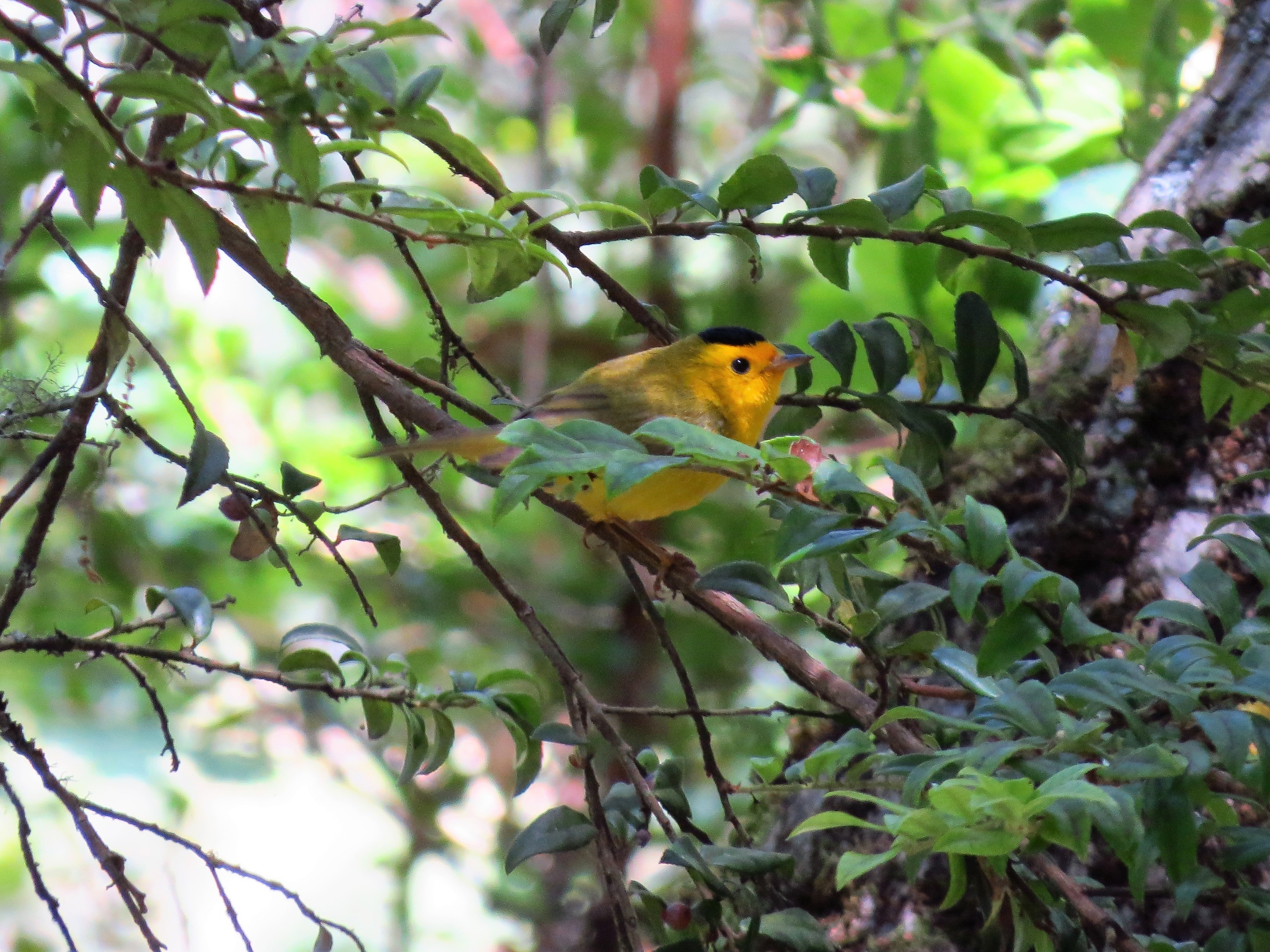
Wilson's Warbler

Wilson's Warbler
Huckleberry Botanic Regional Preserve, Oakland, California, USA
June 2020
Member of the Wood Warbler Family
§A Confusion of Warblers§

~True Bird Fact~ Most songbirds leave the nest for good once they've fledged. Wilson's Warblers, on the other hand, often return for a night or two. Failure to launch? 


Named for and by:


Alexander Wilson
(1766 – 1813)

Called The Father of American Ornithology, and the second only to Audubon in terms of American Ornithology Importance, and that's just in the first sentence of his wikipedia page! Wilson was born in Scotland and his first profession was as a weaver. He took an early interest in poetry and wrote ballads, pastoral pieces, and satirical works about the plight of weavers. These satirical poems were evidently so biting, that he was arrested for a 'libelous and inflammatory' poem about a mill owner. Here's an excerpt, in the original Scots:

Wha cou’d believe a chiel sae trig
|Wad cheat us o’ a bodle?
Or that sae fair a gowden wig
Contained sae black a noddle?
But Shark beneath a sleekest smile
Conceals his fiercest girning;
And, like his neighbours of the Nile,
Devours wi’ little warning
By night or day.

I guess you had to be there. He was also, it should be noted, that he was a very bad weaver, and eventually quit and moved to America, after languishing in poverty.

His career turned to teaching, and eventually he met the naturalist William Bartram, who awakened his true passion. Birds! He resolved to publish illustrations of every bird in North America. He did pretty good at this task, at least better than his weaving, traveling widely, and eventually publishing a nine volume work, including 268 birds, 26 of which were new to his audience of western naturalists. He died young from, and I quote "dysentery, overwork, and chronic poverty." He seems like he was a pretty cool dude, and has a lot of birds named after him. He also seems to have been a direct inspiration for Audubon himself, both in his style of illustrating and his publication.


Wilson's illustration of Red-bellied, Pileated, and... Ivory-billed Woodpeckers

However, bird fans, I am not content to let this topic rest here. There's been a lot of debate in the bird world lately about eponyms and honorifics, and whether birds should really be named for their 'discoverers'. I try to make a little point of this each time I profile a naturalist- that these birds were not truly "discovered", only given new, western names. There were people here before them, and the birds were plenty discovered already. And some of the people who have birds named after them turn out to be truly heinous. There's a lot of overlap, it turns out, between ideas of discovery and exploration and ideas of colonialism and manifest destiny. This includes some naturalists I've written about here, and frankly, I didn't know how bad they were. This is my bad, but racism doesn't often make it into the wikipedia summary, it turns out.

There's been one major recent success for this movement, the renaming of McCown's Longspur to Thick-billed Longspur. This one was named after a confederate general (yikes emoji). So yes, some bird names might be changing, if they are named after particularly bad people. But you can also make the broader argument that it's much simpler to just keep bird names descriptive and do away with honorifics all together. The naming of species after a western discoverer is inherently a colonialist practice. And while we'll lose some potentially 'good ones' like Wilson here, his contributions to birding will not be erased if he no longer has the birds directly named after him. (Although again, who knows, about Wilson. I'm not about to read a whole biography looking for problematic elements). If you agree with this view point, there's a petition that you can sign. I have. Maybe in the future we'll just call this bird the "green black-capt flycatcher", as Wilson originally called it in 1811. Well. Maybe we won't call it that. But something else. Stay tuned.

Monday, October 14, 2019

A Beginners Guide to Hummingbirds that have Appeared on this Blog (with bonus mystery bird)

Wow, quite a Summer we had, bird fans. We really crammed it in here on the blog, with The Great Hummers of Late Summer being an unvarnished success by all metrics that matter (quantity, quality, name of feature). We also proved that it is theoretically still possible for this blog to come out on a weekly basis, if highly unlikely. Yes, my recent trip to the greater Tucson area proved very fruitful (read: birdful), especially for hummingbirds, and we had some great blogs about them. However, when you stop and think about it, what did we gain?

That's why today I'm going to talk a little bit about how we might take the hummingbird friends we've made this month and actually gain some knowledge that will help us find them again, in the wild. When I started this blog I never thought that it might be something people who have any interest in identifying birds would read. After all, there are so many better resources out there for that. So instead I chose to focus on 'birds for the casual bird enjoyer'. However, if there's one thing that's become clear the longer I've stayed in this hobby, is that it's at least a little bit contagious, and regular readers often catch the "I want to look at that bird and know what it is" bug (read:bird). So read on, and you too might add some hummingbirds to your life list. But probably not, unless you live, like, in the far South West.

And one more quick ground-rule- these ID tips are intended to be for birds found in the USA. There are places that have like, tons of hummingbird species, and they all look the same, so no help from me there.


Ruby-throated Hummingbird
Key Identification Feature: You might think that the ruby throat would be the dead giveaway, and you're sort of right. But something you'll see as we go down the list is that these color features are highly dependent on 1) male birds and 2) getting the right light. You see Hummingbird coloration is largely structural, not pigment-based. This means that seeing those bright colors depends on the light hitting them just right. An easier ID is that if you live on the East Coast, this is basically your only hummingbird, baring weird accidental appearance. Other than that you have the green body with a white belly, but that's a pretty common color scheme.


Anna's Hummingbird
Key Identification Feature: They have a redish-pinkish head, almost to the point of looking like they're wearing a full hood. Lives on the West Coast. For me, the vast majority of the time, if I've seen a hummingbird along the pacific, it was an Anna's. Pretty easy ID


Allen's Hummingbird
Key Identification Feature: Crazy colors! Unlike most hummingbirds, this one has spots of orange mixed in with spots of green, mostly along the top. As compared with a later orange hummingbird, this one has less orange, more green, generally speaking.


Costa's Hummingbird
Key Identification Feature: A hard one! Very similar to Anna's, but if you see something you think is an Anna's, but the 'hood' has weird points that extend downward, kind of like lapels or shoulder pads (and sometimes away from the head), it might be an Anna's. Also a purple colored head, vs a more red or pink one in Anna's (but the colors here are not always easy to see, as I mentioned earlier). Smaller, more 'hunched' posture than Anna's, which are sleeker looking. It you're not sure, it's probably an Anna's, as these are not seen as often in most places.


Broad-billed Hummingbird
Key Identification Feature: Pretty easy, I would say. Super colorful, blues and greens all over the body, even without hitting the right light. The bill, though, is really where it's at. Red, slightly curved, with a black tip. Not many hummingbirds have this combination. It is also reported that the bill has a 'broad base', which is what the bird is named for, although it's not exactly the kind of feature I think a normal person would notice or remark on.


Black-chinned Hummingbird
Key Identification Feature: A dark head and a distinctive color pattern on the throat that goes black chin, purplish necklace (sometimes just looks black), white collar. Also has a little white spot behind the eye. The top of the head is always green, in contrast with some of our more colorful hummingbirds above.


Rufous Hummingbird
Key Identification Feature: Extremely orange. If you see a hummingbird and are like "wow, I didn't know there were orange ones", it's probably a Rufous. You might see little bits of green here and there, but less so than in an Allen's. I've been informed that there are basically no differences between an Allen's and Rufous female, so you probably shouldn't even try.


Rivoli's Hummingbird
Key Identification Feature: Big! Darker than most. If you trust pictures on the internet, very colorful throughout, but that's not how I saw it. If you see a hummingbird that looks a lot sturdier and a little slower than normal, it's probably this guy. Long wings and tail with prominent black. Another white eye spot haver.

So, given all that information, we're probably all hummingbird experts now, right? Well, not so fast, because you see, this is a guy I haven't been able to identify. I also posted in the usually very accurate "What's this bird?" Facebook group and there was no consensus. I got Violet-crowned, Broad-billed, and Violet-crowned x Broad-billed hybrid, which is apparently something that can happen. So I present to you now, this Mystery Bird. Maybe some day with lots of training, it'll be YOU who finally tells me what he is. But probably not! The combination of fast moving, super small, highly variable color patterns within species, and colors that requite light to hit at certain angles make hummingbird identification pretty hard. You'll be accurate probably 90% of the time just saying it's a Ruby-throated if you're on the East Coast and an Anna's on the West, to be honest.


Potential Violet-crowned Hummingbird
July 2019

Key Identification Features: Looks a lot like a broad-billed, but check out that streak of blue along the head and back. Also, take a look at the white neck and belly, and then go look at the Broad-billed again. Much more white! However, it's not perfect, since these guys are supposed to have very straight, red beaks. And ideally there'd be an even more white. What's going on here? A trick of the light? Some weird hybrid? Maybe we'll never know. Still, I think I'm probably going to count it, since I saw it at the wonderful Patton Center for Hummingbirds, which is a place that reports daily sightings of these otherwise fairly rare birds.

Still, if you think you know what this bird is with confidence, sound off in the comments. Until next time, bird fans-

Monday, July 29, 2019

Identifying All the Birds in the Lion King (1994)

With the new Lion King burning up the theaters (?) with it's commitment to photorealism, I thought it might be a nice time to revisit the 1994 original. I'm doing this both because this was a real favorite of your amateurnithologist when he was a kid, and because Optimized Content bay-bee! My first idea was to make a bunch of wonderful .gifs to show off the beautiful animation, but then I thought why not take remake's efforts to create the most realistic possible animals and try to hold the original to the same standard. So we'll be having it both ways today, as we do our best to both show off The Lion King and identify All The Birds.

I'm going to level with you blog fans, basically 90% of the bird content in this movie comes from the opening number, the show-stopping Circle of Life. Which is fair, the movie's not called The Bird King after all.

By Charles J Sharp - Own work, from Sharp Photography, sharpphotography.co.uk, CC BY-SA 4.0, https://commons.wikimedia.org/w/index.php?curid=66179038

We open with a couple of pretty easy ID's- a trio of Marabou Storks fly to Simba's presentation ceremony. Now would be a good time to talk about where The Lion King takes place (and hence, where we're drawing our IDs from). The most common answer you find doing this research is Central-Eastern Africa. Specifically Disney's animators took a trip to Kenya's Hell's Gate National Park to prepare for the project. This is the bird list I'm going to attempt to draw from first. However, there are other signs that the movie takes place in South Africa. These very storks appear to fly over Victoria Falls a moment after this clip. Also, Simba later ends up in a desert, which doesn't really exist in Kenya. So the movie's not perfect, but it's certainly Africa, mostly Kenya, with a few incongruities. I wonder if new Lion King is more accurate..

By Yathin S Krishnappa - Own work, CC BY-SA 3.0, https://commons.wikimedia.org/w/index.php?curid=25062828

Hitting all the classics early as you can see with the group of Flamingos. These appear, from the two-toned bill, to be Greater Flamingo. Do they live in Kenya? Yes, they do! So far, so good. Maybe this blog is gonna be super easy, huh?

Vulturine Guineafowl at Samburu.jpg
By Sumeet Moghe - Own work, CC BY-SA 4.0, https://commons.wikimedia.org/w/index.php?curid=64855531
Slightly more of a challenge, but I can do this! Clearly Guineafowl, and we can narrow it down to the species that are native to Kenya (although you could make a case that animals from neighboring countries are making it to this important ceremony), the Crested, The Helmeted, and the Vulturine Guineafowl. The most accurate answer is probably Vulturine, seeing as these guineafowl have the prominent blue color and pointed breast feathers. They also lack the noticeable head ornamentation that both the crested and helmeted have. Now the wing-bar doesn't really add up, but I guess we can't be perfect.


Oh. Oh no. That's a lotta birds Disney's The Lion King. Do I gotta identify em' all? [looks at title I chose for blog that I certainly can't change now]. Ok, let's give it a go.

-An hour passes-


Ok, so these are my best guesses. To be honest with you, it became clear pretty quickly that most of these weren't *real* birds. However, the illustrator certainly had something in mind, at least in terms or family, for most of these. There are clear parrot, bird of paradise, kingfisher, flycatcher inspired shapes, and sometimes that's the best you can hope for. The truth is that this 2 second shot of an elephant with a ridiculous array of birds on his tusks is the real dark underbelly of The Lion King. Must've been the work of a rogue animator. Let's shake it off and move on, shall we?

By Atamari, CC BY-SA 3.0, https://commons.wikimedia.org/w/index.php?curid=2479447
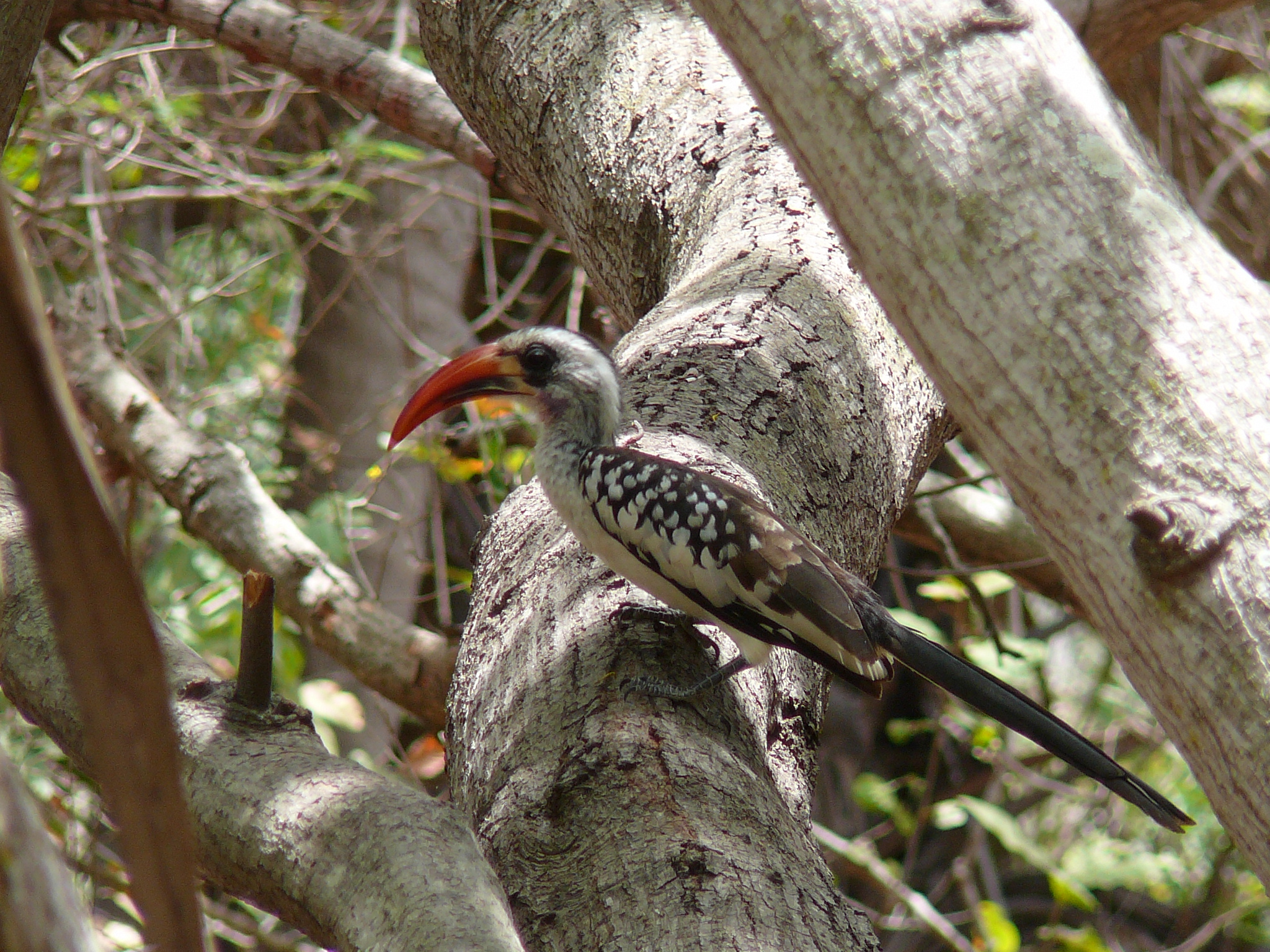
Wow, that was a lot of effort. Let's get back to something easy! Zazu, the only named bird character in the movie (offensive!) is identified as a hornbill in an upcoming musical number by Simba ("Kings don't need advice from little hornbills for a start"). What kind of hornbill is he? The internet seems really convinced that he's a Red-billed Hornbill. This fact is quoted on several zoo webpages (Oregon, Sacramento), Aviary.org, the Disney Wiki, and Zazu's own wikipedia entry. This is good enough for me, but I will register that the Crowned Hornbill might match his color pattern a little better and account for his raised crest. Whatever, you can't argue with the experts.


Speaking of "Just Can't Wait to Be King". This is where we get our Ostrich sequence. There are only two Ostrich-options, the Common Ostrich and the Somali Ostrich. Because this bird doesn't have a prominent blue neck, it's safe to call it the Common Ostrich. This one's easy. Ostrich.

By hyper7pro - Flickr: Vulture, CC BY 2.0, https://commons.wikimedia.org/w/index.php?curid=17194438

Time for another challenge! When fortunes have turned for Simba and he ends up wandering through a mystery desert, he is beset by Vultures. Do we have vulture options? Yes friends, we do. These vultures are drawn in the traditional Disney house-vulture-style, so we're looking for a bald headed bird that is black on top, white from underneath, ideally with a bit of fluff around the neck. I'm going to go with White-headed Vulture- even though they're not totally bald, they do have the best color matching of the options (if you wish to make your own decision, I was also considering Ruppel's Vulture, Lappet-faced Vulture, Hooded Vutlure, and African White-backed Vulture). Please note that Pumba calls these buzzards when he disperses them ("Bowling for Buzzards!"), but that shouldn't change anything about our ID, as he is clearly not even a hobbiest bird watcher.

Left: By Alandmanson - Own work, CC BY-SA 4.0, https://commons.wikimedia.org/w/index.php?curid=52834294
 Right: Me
After this, the action of the movie picks up, and there's largely not time for random birds any more. I know I was hoping for some action during the Hakuna Matata sequence, but no dice. They do appear one more time, right before the end title card pops up. Here Simba stands with Nala and presents his baby to the world, and once again, birds are in attendance. This scene may finally be where I throw in the towel.


As you can see a number of little white birds fly up to circle the young family. If we ZOOM and ENHANCE we can see at least a featured Egret, but the other birds look a lot like white doves, aka. Release Doves, aka. specially bred Rock Doves. And while Africa does have Rock Doves, they probably would not all coincidentally be white. It is theoretically possible that Rafiki went and bought some Release Doves from the magician store as a special treat for this presentation ceremony. If we were gonna go nature, the Emerald Spotted Dove is probably the lightest dove you could get around here. As for the Egret, Cattle Egret is the only choice that makes sense given the yellow-ish feet and beak.

Phew! We did it! And it only took like a whole day that I could've done other things during. Still, my conclusion is that the original animators definitely had really birds in mind when they created this Disney masterpiece, and perhaps most importantly to our core question, I felt they were identifiable. For the most part it's a testament to the expressive and suggestive powers of animation as an art. The original captures the essence of a thing without necessarily needing to recreate it perfectly. My only real gripe would probably be with Zazu, who is way too blue. I wonder if they fixed this in the new Lion King..


Oh! Well there you have it, never mind all that stuff I was saying before. The remake is officially better than the original! Goodnight folks.

Sunday, July 14, 2019

White-breasted Nuthatch


White-breasted Nuthatch
Chestnut Hill Reservation, Brighton, Massachusetts, USA
June 2019
Member of the Nuthatch Family
§A Jar of Nuthatches§
★The Largest of the Nuthatches★ (Not for nothin, but still quite a small bird)

~true bird fact~ Like many birds, this one is monogamous. The reason for this arrangement is pretty easy to guess at, it makes both birds less likely to get surprised by a predator. This is also, evolutionarily, a reason many birds travel in flocks. However, this relationship isn't of equal benefit to both partners. The male nuthatch has to watch out less for predators, but the female has to also watch out for the male crowding her out of foraging areas. That means the male ends up better off, and the female, well, probably better off too, but not as much. Sounds familiar somehow... The ladies out there know what I'm talking about.


First Described by....


John Latham
(1740-1837)

This guy! This is a fun guy! I'm excited I get to talk about him, because I feel like in many ways, he's the spiritual predecessor to Amateurnithologist (this blog). We'll get there, but first, some boring stuff. He was an English physician and ornithologist, and the bulk of his work was in Australian birds, which began making their way to England in the 1780's. His first book, A General Synopsis of Birds (nailed it on the title) contained 106 illustrations, which he did himself, many of them never previous described in England. Sounds pretty awesome, but whoopsa-doopsa, he forgot to give them scientific names (the Linnean binomial system was pretty new at the time. He tried to fix his mistake by publishing the same book 10 years later, but this time with a latin title (Index Ornithologicus, still nailin' it) to go along with latin names for all the birds. Unfortunately by that point another dude had already named many of the birds that Lathan had first described, meaning the other guy gets the name and the credit. Still though, they were some pretty good birds that John here introduced to his Western audience, including Emu, Black Swan, and Hyacinth Macaw. No word on how this North American Nuthatch made it's way into his body of work.

He also was not particularly good at identifying birds- his books often had the same bird described multiple times with different names, causing confusion among Ornithologists for years to come. He was still publishing books in his 80's, and according to one reviewer his misidentifications only got worse with time. Quoth one Alfred Newton "his defect as a compiler, which had manifest itself before, rather increased with age, and the consequences were not happy." Ouch. Shoutout to a real one, John Latham, I know your struggle.