Showing posts with label Cormorants. Show all posts

Sunday, July 7, 2024

Birds of Costa Rica 2: part 1

Well, I went back to Costa Rica, just over ten years since my last trip. Costa Rica is a well known birders paradise, boasting more than 900 species in a relatively small area. Did I learn anything about birding since then? I guess we'll find out (but the answer is 'no', for those not wanting to read the whole thing). As you will see, this was not a 'birding trip' and was very limited in scope, but it would be impossible to not see some very impressive birds. 


Squirrel Cuckoo (Piaya cayana)
Peninsula de Papagayo, Liberia, Guanacaste Province, Costa Rica
May 2024
Member of the Cuckoo Family
{Etymology Corner} Why is it called a Squirrel Cuckoo? Well, because it kind of acts like, and could be confused for, a squirrel (theoretically). Quoth wikipedia: "This species’ English name derives from its habit of running along branches and leaping from branch to branch like a squirrel. It flies only short distances, mainly gliding with an occasional flap." OK!
Also, while researching this cuckoo I learned of potentially my favorite member of this family, the Cocos Cuckoo. C'mon, that's just too fun.

~True Bird Fact~ Unusual amount of interspecies cooperation observed with this bird, which forages happily alongside other birds and even some smaller mammals. They even take advantage of army ants, which they follow as they flush out prey. Also, unlike many cuckoos, they don't do any brood parasitism, and opt to raise their own young instead. I hate to assign personality to a bird (why would I do something like that?), but this guy seems like the good egg (so to speak) of a troubled family.


Neotropic Cormorant aka. Olivaceous Cormorant (Cormorán Biguá aka. Pato Cerdo, Pato Puerco, Pato Chancho, Pato gruñón [lit. Pig Duck, Dirty Duck, Oinking Duck])
Peninsula de Papagayo, Liberia, Guanacaste Province, Costa Rica
May 2024
Member of the Cormorant Family
§A Flight of Cormorants§

{Etymology Corner} Yes, Olivaceous means olive-colored. The Spanish informal names refer to the sound the bird makes, which is extremely pig-like IMO. Check it out at this link

~True Bird Fact~ Semi-domesticated and used for fishing by native people for, reportedly, the past 1600 years. Specifically, the bird is used by the Uru people of Peru.


Bare-throated Tiger Heron (Avetigre Mexicana)
Peninsula de Papagayo, Liberia, Guanacaste Province, Costa Rica
May 2024
Member of the Egrets, Herons, and Bitterns Family
§A Sege of Herons§

~True Bird Fact~ There are, essentially, no fun facts associated with this Tiger Heron. He sure is a looker though!

Loves Sports Betting

Sunday, October 16, 2016

Brandt's Cormorant


Brandt's Cormorant
Point Joe, Pebble Beach, California, USA
October 2016
Member of the Cormorant Family
§A Swim of Cormorants§

~true bird fact~ Impressive divers, they are built for the strenuous task of undersea hunting. They can dive up to 120 feet deep to seek their preferred prey of rockfish and pacific herring.

Has a cruel-sounding laugh
Mysteriously knowledgeable about narrow subjects
Quick to disengage with people who disappoint him
Well developed palate


Oh hey Amateurnithologist, who's this Brandt guy??

I'm glad you asked, very few people would actually care about that. You, reader, are a special flower. Anyway, you've given me an opportunity for another..

Naturalist Profile!

Johann Friedrich von Brandt
1802 - 1879
Like many of our eponymous naturalist, von Brandt was a bit of a renaissance man. In addition to his bird work, he wrote about medicinal plants, specialized in beetles and millipedes, and might actually be most well regarded as a paleontologist. Although he was German born and educated, he emigrated to Russian in his early 30's to found and direct the Zoological Museum of St. Petersberg. His description of this Cormorant came from museum specimens that had been collected by Russian explorers on trips to the Pacific coast, but never previously identified. He also is credited with the Spectacled Eider and Red-legged Kittiwake. So if either of those are your favorite birds, this is your guy, I guess. His wikipedia page is very dry and more in-german than any other english wikipedia page I've ever seen. My guess is a dry wikipedia page is a sign of a basically moral and drama-free life, so good for him. He also has a bat and a hedgehog named after him

Monday, August 22, 2016

Birds Are Going Back to School

Ah, late summer. It's that time of the year when it's super hot out, birds are least plentiful, and your Amateurnithologist struggles to get weekly posts out as he adjusts to returning to his full time job in the school system. Yes, school's back in session. But not just for you and me and maybe your kids. No, it's school time for birds as well. As birds return to school, they meet their new teachers for the semester and start to get a sense of what their next year is going to look like. Let's meet them too, since there's nothing better to do.


First Period: Professor Double-crested Cormorant
Subject: English Literature
Personality: Professorial in demeanor, a little stodgy. Think blazer with elbow patches. Believes in the power of learning and in the ability of books to change lives. Often disappointed in his students secretly, but doesn't show it. He's been doing this job for a long time and doesn't show signs of slowing down. Other teachers look up to him.
Teacher Rating: Inspiring


Second Period: Mr. American Crow (slightly leucristic)
Subject: Science
Personality: An eccentric who delights in finding creative ways to reach students. Lives for events like the rocket launch, the egg drop, or putting Mentos in Diet Coke. Very hands on. A little bit silly, gets along well with the kids since he's a bit of a kid-at-heart himself. Don't mention his leucism though, or god help you. He won't be mad, but he's a bit sensitive about it, and it'll hurt his feelings.
Teacher Rating: Fun


Third Period: Dr. Common Loon
Subject: Cooking
Personality: No one knows what her doctorate is in, why she is teaching cooking with a doctorate, or how a Loon acquired a doctorate in the first place. However, she is a good cooking teacher. Loves food, and the students tend to like her class, since it involves cooking and eating. Hints that she enjoys a full and interesting life outside of her job. Keeps these mysteries close to the vest.
Teacher Rating: Enigmatic


Fourth Period: Mrs. House Finch
Subject: History
Personality: Engages in a lot of rituals that shows her dominance over students, making them repeat things over and over or follow meaningless rules. Believes that the most important thing is that students submit to their teachers. Ruthless in her style with co-works as well, doesn't seem to be able to 'turn it off'. This style is successful for some young birds, but mostly leads to a lot of bad feelings.
Teacher Rating: Disliked


Fifth Period: Miss California Quail
Subject: Mathematics
Personality: Honestly not the greatest teacher, but very nice. Relationship-focused in her teaching philosophy. Gives her students a lot of affection and praise, doesn't put too much attention on the quality of the work. Students often come back years after graduating to visit Miss California Quail and give her a big hug. Maybe this is what's most important after all, since most of her students don't use the math very much (being birds).
Teacher Rating: Doting

Well that's all for today. Hopefully you learned a thing or two from these bird teachers, or at least got through your school experience relatively undamaged. Join me in a few days when I try to get back on the normal blog schedule with a common but fun bird that has evaded me for a long time. You won't want to miss it.

Tuesday, February 10, 2015

Bird Relationship Status Update Bulletin

It's almost Valentine's Day and love is in the air for birds. Literally. Because they are birds..
Let's check in on some of our old bird friends and see how their love life is going. Because what else do you want to do on the most romantic day of the year other than e-stalk some birds?

Western Scrub Jay has suffered a bad break-up. He's sleeping little and is turning to food to get him through. He's not looking good. We all feel bad for him, but it's been a long time and he's still experiencing it very intensely. Time to toughen up, Scrub Jay.

Double-Crested Cormorant is young and in love. No one can tell these two what to do and they're on top of the world. We all hope that a tragic car accident or illness doesn't bring all that youthful optimism crashing down around them, but we can't say for sure that it won't happen.

After a long and traditional string of serial monogamy, American Robin is playing the field and taking things as they come. She is going on a lot of dates and just enjoying herself right now. She gets tired of it sometimes, but is also feeling more confident and strong than she ever has before in her life. She figures she'll find what she needs eventually.

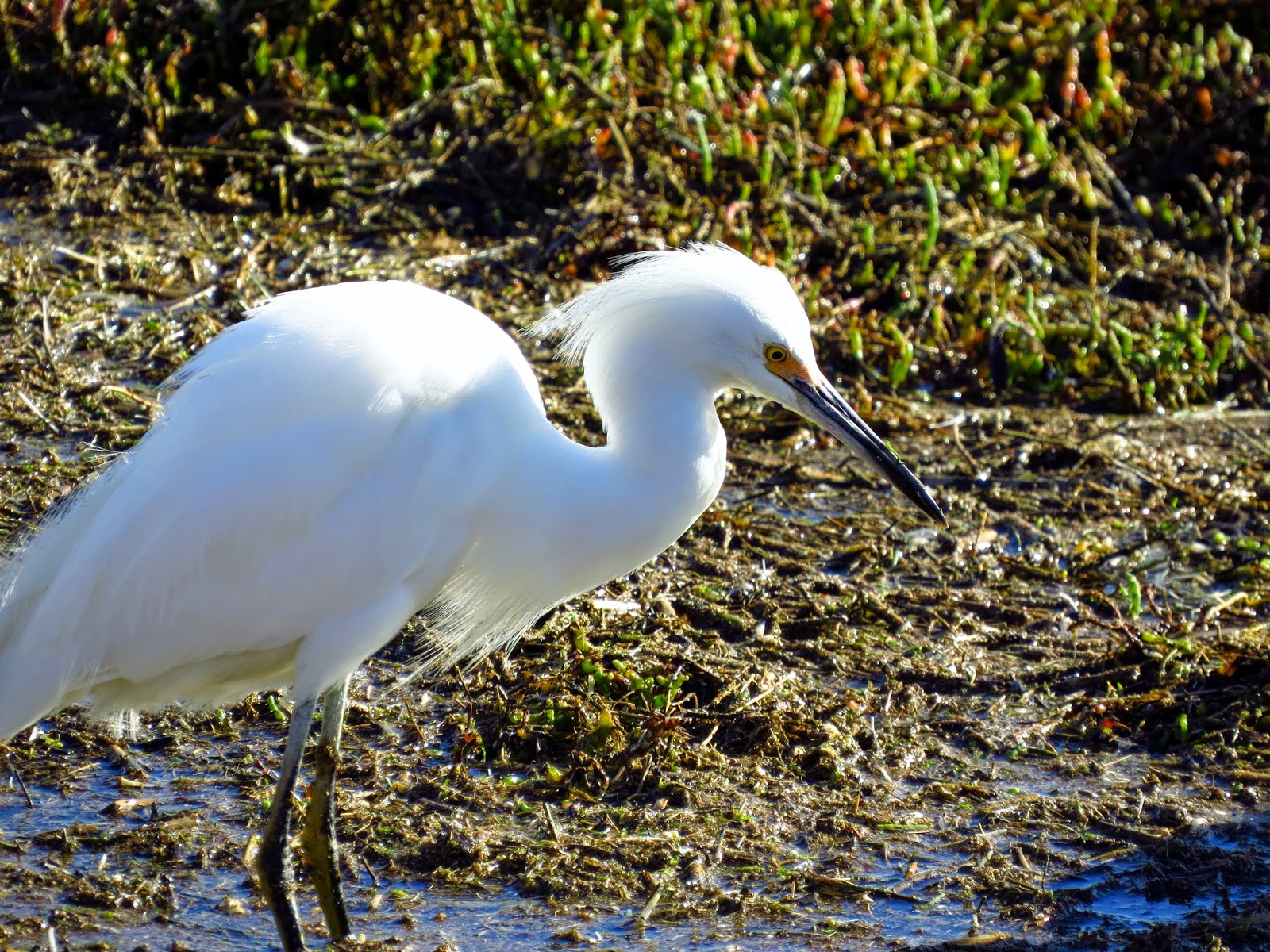
Snowy Egret has a boyfriend. He sounds really great.. almost too great. Almost kind of like Snowy Egret is making up a boyfriend to tell her friends about. Why would Snowy Egret do this? Maybe she is tired of questions about her relationship status. Or maybe it's something else. In any case there is some suspicion but no one is willing to ask her about it. Maybe we'll thrown some kind of party that he will have to come to if he's real.

Friday, June 29, 2012

Apologies and Retractions: A Cormorant is not an Anhinga

Take a look at this bird. He is a Double-Crested Cormorant, a bird of great quality and uniqueness. He is many things to many people, but one thing that he is not is an Anhinga. The Amateurnithologist incorrectly identified this bird as an Anhinga to some friends while out-and-about and thus brought disgrace upon this entire endeavor and the profession of Amateurnithology as a whole.
The mistake was made by observing the bird's behaviors, which are similar to the aforementioned Anhinga. He swims low in the water and dries his wings in a similar way, to be exact. He is related to the Anhinga, but not closely enough to be in the same family. Anhingas have a much narrower head and beak, as well as an overall lighter, more colorful, and smaller body. Most damningly, however, Anhingas do not live in California, where this sighting was made. The Anhinga is native only to Florida, where the Amateurnithologist hails from. This serves as a (wholly inadequate) explanation as to how this mistake could have been made. We strive for greater quality than this at Bird Blog. You, dear readers, and the birds we catalog, deserve better. May we never speak of this again.
Double-Crested Cormorant
Oakland, California, USA
Cormorant Family
*true bird fact*~ He has exceptional longevity for a bird, living as long as 17 years in the wild (the average is a saddening 6 years).

Fashion-conscious
Comfortable with his body, confidant. A bird to strive to be like
A great dancer, but kind of a show-off
Sometimes pretends he is a fish when he dives underwater

You may be wondering now what an Anhinga looks like, but this birdtographer has not taken a picture of one yet. It is our usual policy to only include original works on Amateurnithologist, but in the interest of improving understanding, we provide this stock photo.