Showing posts with label Egrets/Herons/Bitterns. Show all posts

Sunday, July 7, 2024

Birds of Costa Rica 2: part 1

Well, I went back to Costa Rica, just over ten years since my last trip. Costa Rica is a well known birders paradise, boasting more than 900 species in a relatively small area. Did I learn anything about birding since then? I guess we'll find out (but the answer is 'no', for those not wanting to read the whole thing). As you will see, this was not a 'birding trip' and was very limited in scope, but it would be impossible to not see some very impressive birds. 


Squirrel Cuckoo (Piaya cayana)
Peninsula de Papagayo, Liberia, Guanacaste Province, Costa Rica
May 2024
Member of the Cuckoo Family
{Etymology Corner} Why is it called a Squirrel Cuckoo? Well, because it kind of acts like, and could be confused for, a squirrel (theoretically). Quoth wikipedia: "This species’ English name derives from its habit of running along branches and leaping from branch to branch like a squirrel. It flies only short distances, mainly gliding with an occasional flap." OK!
Also, while researching this cuckoo I learned of potentially my favorite member of this family, the Cocos Cuckoo. C'mon, that's just too fun.

~True Bird Fact~ Unusual amount of interspecies cooperation observed with this bird, which forages happily alongside other birds and even some smaller mammals. They even take advantage of army ants, which they follow as they flush out prey. Also, unlike many cuckoos, they don't do any brood parasitism, and opt to raise their own young instead. I hate to assign personality to a bird (why would I do something like that?), but this guy seems like the good egg (so to speak) of a troubled family.


Neotropic Cormorant aka. Olivaceous Cormorant (Cormorán Biguá aka. Pato Cerdo, Pato Puerco, Pato Chancho, Pato gruñón [lit. Pig Duck, Dirty Duck, Oinking Duck])
Peninsula de Papagayo, Liberia, Guanacaste Province, Costa Rica
May 2024
Member of the Cormorant Family
§A Flight of Cormorants§

{Etymology Corner} Yes, Olivaceous means olive-colored. The Spanish informal names refer to the sound the bird makes, which is extremely pig-like IMO. Check it out at this link

~True Bird Fact~ Semi-domesticated and used for fishing by native people for, reportedly, the past 1600 years. Specifically, the bird is used by the Uru people of Peru.


Bare-throated Tiger Heron (Avetigre Mexicana)
Peninsula de Papagayo, Liberia, Guanacaste Province, Costa Rica
May 2024
Member of the Egrets, Herons, and Bitterns Family
§A Sege of Herons§

~True Bird Fact~ There are, essentially, no fun facts associated with this Tiger Heron. He sure is a looker though!

Loves Sports Betting

Sunday, May 6, 2018

Yellow-crowned Night Heron


Yellow-crowned Night Heron aka. Crab-eater
Hugh Taylor Birch State Park, Fort Lauderdale, Florida, USA 
April 2018 
Member of the Egrets, Herons, and Bitterns Family 
§A Pose of Herons§

~true bird fact~ These bad boys occasionally eat turtles, being able to do so because of special stomach acid that eats through their shells. This digestion prowess probably also helps with the crabs that make up a much greater portion of his diet. Apologies to all turt-lovers out there.

~real bird history~ The Caribbean once had it's own species of Night Heron called the Bermuda Night Heron. It was driven to extinction in the 17th century, during colonization of the islands. Yellow-crowned Night Herons were introduced to the islands in the 1970s as a response to a wildly out of control crab population boom. This attempt has been largely successful for all involved (except the crabs, perhaps).

Loves crabs so much that everyone buys him stuff with crabs on it for his birthday. All home decorations are crab-related
A low achiever, but content with that
Has a weird, old uncle on the West Coast that he never talks to, but that will one day leave him 
an enormous inheritance


Wednesday, December 7, 2016

Juvenile Black-crowned Night Heron, Filtered

Today, dear reader, you're going to get a rare glimpse behind the scenes at the post-editing and production process here on the greatest bird blog in the world. You see, Microsoft, in all of its infinite digital wisdom, has decided to keep making changes to the program I use to edit my photos. Currently, I use something that's just called 'Photos'. Extremely basic, I know, but I wouldn't be the Amateurnithologist if that wasn't the case. While it might seem like a setback that all the things I've been doing up until now have been disappeared (twice!), I look at it as an exciting new opportunity. We're going to learn about the new set of filters they have gifted me with together. Certainly they wouldn't just give me a bunch of garbage after taking away options I found useful, right?

Let's find a test subject.


Ok, looks like a winner. I'd say this is a middling photo by the standards of my blog. Not an all time great, but certainly good enough to put up here. The only reason its gone unused is that I've already talked about Black-crowned Night Herons and don't have enough juvenile birds to make a post out of it. This was taken in June of 2016, by the way, at the Russian River in beautiful Northern California. A photo like this doesn't usually get much editing. I play with the enhance feature a little, crop it to maximize the bird-age, and let er' rip. Let's see what happens when I hit the enhance button now..


Oh dear god! This, to me, looks terrible. Well, it looks like 'enhance' is off the table. At least it didn't do that thing where it tilts the whole picture. Let's see what happens to our picture when we select the only other option besides that. Filters with fun names, away we go.


Does our heron look best in the "Vanilla" filter?


What about "Burlesque?" Maybe a little too risque for a bird blog.


How about "Neo?" No, I think I'll take the blue pill on this one.


Ok, I guess I worded that wrong, because now my bird is completely blue. The "arctic" filter is not for me either.


And now he's see orange he looks like he ought to run for president. Why is this called "Zeke?" Your guess is as good as mine.

Well, that was a lot of fun, but our bird still looks pretty bad. I guess I could post it unedited, but that's just a little too low effort, even for me. After mucking around for a while, I found some more detailed settings. Turns out I don't want to 'enhance' anymore, now I want to 'adjust'.


I think this is what I would land on. Hopefully you've enjoyed this meta-blog, and if you have any recommendation for post production, lay it on me, I'm glad to take advice. Oh, one more new feature I've discovered. I can write on the picture with my finger.


Sunday, June 12, 2016

Checking in with Florida Birds

It's been a while since we've visited with our Florida bird friends, but as you might've guessed from last weeks parrots, we took a trip not long ago. While there are some exciting new birds to come, we also caught up with some old favorites. What're they up to now? How's Florida treating them?

Great Blue Heron has gotten really into the art scene. He lives in a studio/work space now, and is very into his new housemates. We're happy for him, but he's actually not very talented. Art has to be more than just provocative, you know Blue Heron? Even worse, he's been sort of ignoring his old interests and friends. It'll all come crashing down eventually.

Brown Pelican is up to some sketchy behavior. After a failed bird of the year bid, he went down to Florida and got involved in some ill-defined business. He lost some weight, probably from sweating so much in the South Beach heat and humidity. Takes a lot of trips down to Cuba. Drugs? Arms deals? Guantanamo? We wouldn't put it past him.


Northern Mockingbird, as the state bird of Florida (among others), is distressed. She worries a lot these days about the state of politics, climate change, growing civil unrest. Really, just the whole thing. She is often seen with a furrowed brow, staring off into the distance. Where have the simpler times gone, she wonders, when her duties as state bird were mostly ceremonial, and she felt like she was making people happy? Nobody told her it was going to end up like this.


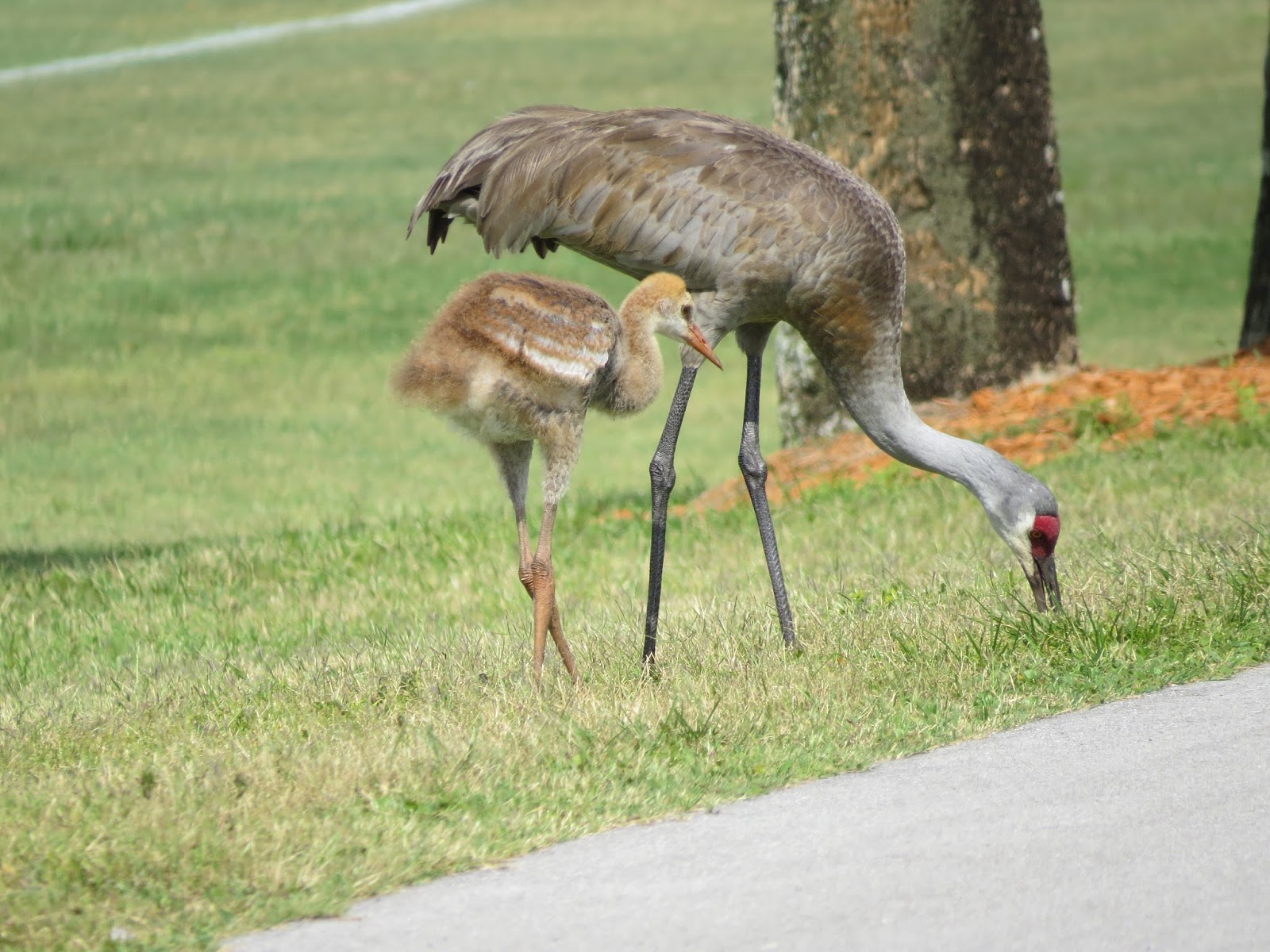
Oh. My. God. Have you guys seen Sandhill Crane's new baby? It is, like, seriously the cutest baby you have ever seen. And so well behaved too. She takes it everywhere and it doesn't make a fuss. Sandhill Crane's really got this mom thing down. Maybe it's easier than we thought to have a baby. Maybe not, Sandhill Crane does look a little tired.

Tuesday, April 28, 2015

Bird Sick Day

It's a sad day blog fans, because your amateurnithologist is a bit under the weather. It's ok though, because everyone gets sick sometimes, and maybe we can get through this together. How do some of the birds we've taken a look at in the past deal with it when they get the sniffles?
Brown Pelican (juvenile) lazes about and feels sorry for himself. If you get too close to him he'll start coughing more loudly or moaning about his headache. Best to just give him some space.

Red-winged Black Bird believes in ayurvedic techniques and tries to purge her body of vaguely defined toxins. She goes to hot yoga, drinks tea that makes you sweat, and generally covers herself with lots of blankets. It's very sweaty, but she is dedicated.

There's no polite way to put it, Green Heron is a hypochondriac. He constantly thinks he's getting sick, and when he inevitably does, he approaches it like a job. He takes a ton of over-the-counter medicines, but also goes to the doctor and tries to get anti-biotics even though it's probably just a cold. That doesn't work for a cold, Green Heron! It's going to be worse for you in the long run..

Black-necked Stilt continues to live a party lifestyle and pretends he is not sick. He takes a big gulp of alcohol and laughs and says 'this should kill the germs!' Black-necked Stilt gets a lot of people sick because of his inconsiderate behavior.

Tuesday, February 10, 2015

Bird Relationship Status Update Bulletin

It's almost Valentine's Day and love is in the air for birds. Literally. Because they are birds..
Let's check in on some of our old bird friends and see how their love life is going. Because what else do you want to do on the most romantic day of the year other than e-stalk some birds?

Western Scrub Jay has suffered a bad break-up. He's sleeping little and is turning to food to get him through. He's not looking good. We all feel bad for him, but it's been a long time and he's still experiencing it very intensely. Time to toughen up, Scrub Jay.

Double-Crested Cormorant is young and in love. No one can tell these two what to do and they're on top of the world. We all hope that a tragic car accident or illness doesn't bring all that youthful optimism crashing down around them, but we can't say for sure that it won't happen.

After a long and traditional string of serial monogamy, American Robin is playing the field and taking things as they come. She is going on a lot of dates and just enjoying herself right now. She gets tired of it sometimes, but is also feeling more confident and strong than she ever has before in her life. She figures she'll find what she needs eventually.

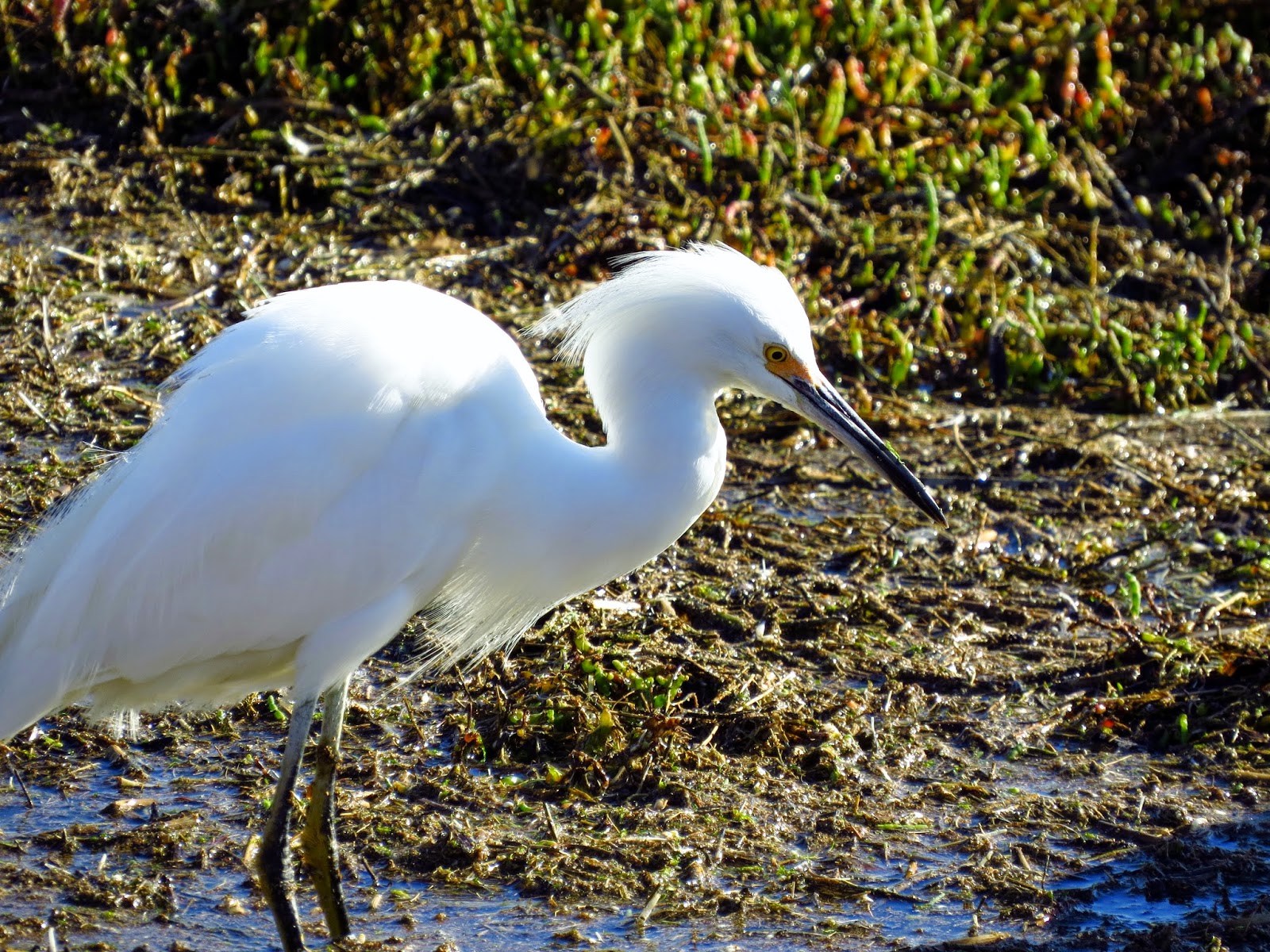
Snowy Egret has a boyfriend. He sounds really great.. almost too great. Almost kind of like Snowy Egret is making up a boyfriend to tell her friends about. Why would Snowy Egret do this? Maybe she is tired of questions about her relationship status. Or maybe it's something else. In any case there is some suspicion but no one is willing to ask her about it. Maybe we'll thrown some kind of party that he will have to come to if he's real.

Tuesday, January 20, 2015

Sora & Martin Luther King Regional Shoreline


Sora aka. Sora Rail, aka. Sora Crake
Arrowhead Marsh, Oakland, California, USA
December 2014
Member of the Rails, Coots, and Gallinules Family
§An Expression of Soras§

~true bird fact~ Soras are the most widely distributed and populous member of the Rail family in North America. They are also the most frequently hunted. Who knows why people do these things, but anyway, their population has remained fairly stable because of their high breeding rate. Good job Soras!

Silent defender of the marsh
Has an air of knowing everything, but really just does a lot of research
Strongly committed to ethical behavior, sometimes to the detriment of his own life
Never really feels like he has done enough

Other denizens of Arrowhead Marsh at MLK Regional Shoreline, In beautiful Oakland, Califonia:

Great Egret
has put a new focus on spending time with the family


American Coots
heard about a really great sale

Black-necked Stilt chronic single-hood is not as fun as it used to be

Burrowing Owl
on sabbatical to write a book

Saturday, April 12, 2014

Green Heron


Green Heron aka. Green-backed Heron
Berkeley, California, USA
Member of the  Egrets, Herons, and Bitterns Family
§A Battery of Herons§

~true bird fact~ This Green Heron is one of the few birds, and indeed few non-human animals, who use tools. Because his legs are not as long as some of his heron relatives, he mostly stays by the shore clinging to plants and branches. To make up for this shortcoming, the Green Heron goes fishing. He takes scraps of food or branches and drops them in the water to attract small fish and other pond dwellers. He's pretty clever, that heron.

Always so worried
Self-imposed isolationist
Keeps on top of the news, leaves comments on internet news sites
Wishes he could be young again


Tuesday, January 21, 2014

Different Birds: Cattle Egret vs. Snowy Egret vs. Great Egret

Ready for some birdin' 101? Of course you're not, you are only a casual consumer of bird knowledge. Otherwise you'd be visiting one of those other "more professional" bird blogs where "experts" "know what they're talking about" and aren't "ignorant". But still, wouldn't you like to be the guy or gal who, when out hiking with a group of friends, can confidently point to a cool looking bird and name him? Of course you don't. But our mission statement here at birdateunithologist dot com involves the pursuit of useless knowledge and plenty of it, so we press on.

Today we'll be covering a trio of terrific waterbirds with subtle yet still visible-to-the-naked-eye distinctions from one another.

Cattle Egret

Sarapiqui River, Heredia, Costa Rica
Member of the Herons/Egrets/Bitterns Family
§A Stampede of Cattle Egrets§

~true bird fact~ One of those rare, resourceful birds who have made humanity into an ally rather than a threat, Cattle Egret loves agriculture. Spending most of his time with domesticated farm animals, he gets his daily meal of insects by following the clouds of them kicked up by the activities of larger animals. He is also known to eat the ticks right off of them. What a good friend. In different parts of the world, Cattle Egret preys on the stir-up of camels, elephants, giant tortoises, and airplanes.

Rises to the top when times get hardest.

Snowy Egret (who we already know)
Corte Madera, California, USA
Member of the Herons/Egrets/Bitterns Family
§An RSVP of Egrets§

Secretly reading epic fantasy novels.

Great Egret
Corte Madera, California, USA
Member of the Herons/Egrets/Bitterns Family
§A Wedge of Egrets§
Symbol of the National Audubon Society

~true bird fact~ Like many in their family, Great Egret rocks the distinctive s-shaped neck. In there is a very unusual long vertebra that acts like a hinge, enabling him to strike out quickly at far away targets.

Does really have a private life due to his important position. No one knows what he's really like, except through hearsay.

Ok, let's break this down. What differences did you notice? Were they all obvious? They might not be, out in the wild, when there's no one else to contrast them with, though, eh? The first thing you might look to is color of the break, since we are drawn to look at the faces of things as human beings. That'll help you differentiate between the Snowy Egret and they other two. If you want to stay with beaks, you can notice that the Great Egret has a thinner, longer, pointier beak than his Cattlesome brother.

The biggest difference is probably in the physical size of these birds. Next to each other you'd never mistake them. They go smallest to largest Cattle, Snowy, and Great. There is also some difference in general bulkiness vs. slenderness. Of course our great motto of 'always look at the feet' serves you well here too. Cattle Egrets have yellowish-greyish feet and legs, Great Herons have black feet and legs, and Snowy Egrets split the difference by having black legs, and weirdly yellow toes. Of course if the bird is standing in mud, you're out of luck.

Sometimes the sad truth of the matter is the only way to know what bird from what is location. This is where knowledge and research come into play. Cattle Egrets mostly hang out in open fields, while the other two are mostly water's edge types. The other things that's important to note is breeding season, during which all these birds look dramatically different. So good luck with that!

Are you ready for your final test? Ok.. What bird is this-


Click here when you're ready to find out if you got it right!

Sunday, September 8, 2013

Where Are They Now? issue 1

Nostalgia. We all experience it. Sometimes you look back on your favorite post here on bird blog dot com just to reminisce. What was your life like when you first read about Loon, for example? Were you younger and more beautiful? What is Yellow Footed Gull doing with his life now? I bet he has kids already. Wow, time really flies. Today's update and new recurring feature is all about nostalgia. We'll be checking in on all of our favorite Birds of The Past and finding out what is going on with them now. So put on your rose-colored glasses and pull up a rocking chair. It's time to look back.


American Crow has found transcendental meditation and is taking steps to actualize her own life. She is preparing to run for local office.


Black-crowned Night-Heron is going through a dark time right now. After some small-time drama, he is finding himself without many friends and not accepted in his old circles. He is leading a very sedentary life at the moment, but has been doing a lot of thinking. Maybe he will come out of this a better bird.


Osprey got tired of being a big fish in a small pond. He disappeared one day on his motorcycle, leaving all of his other worldly posessions behind. Obviously kind of a local legend now, people say that he may have moved to Mexico or California.


California Quail is pursuing creative outlets. He has started writing a blog about 'Quail Fails' which is attracting a modest following. The internet is a great place to make friends for California Quail, and he is feeling very validated.

Tuesday, August 20, 2013

AAAAAAAAAAAA

 AAAAAaaaaaaaaaaAAAAAAAAAaaaaaaa
 UUUUUUUUUUUuuuu
 EEEEHHHHHHHHHHK
 HYEEEEEEEHHHHHH
 ZRRRRRRRRRRRRRRRRP
AAAAAAAAAAAAAAAAAAAAAA

Tuesday, July 9, 2013

Birds.gif: Little Blue Heron Hunting

Click here to bring this Heron to life!

Little Blue Heron
Lake Worth, Florida, USA
Member of the Heron Family
~true bird fact~ The juvenile Little Blue Heron has white plumage, making it hard to distinguish from Snowy Egrets. Young Blue Herons are often taught to fish by these Egrets before they realize they're members of a different species.
§A Hedge of Herons§

Sharps and impressive, knows how to get things done
Comes from a wealthy family of high achievers, but has surpassed them on his own merits
Surprises one with rare little bits of savagery
Secretly driven by an inferiority complex

Oh, you wanted to see the full video? But of course (with musical bonus(?)):

Wednesday, April 17, 2013

Great Blue Heron

Great Blue Heron
Boynton Beach, Florida, USA
Member of the Heron Family
~true bird fact~ The Great Blue Heron is a really big bird. The largest Heron on the continent, he is about 4 feet tall, but only weighs like 6-7 pounds. Birds are really light you guys (it is so they can fly).

The Salt of the Earth
Considers himself an amateur philosopher
His neighbors seek out his opinion on things
Sometimes gets in bar fights, but mainly for existential reasons
Stares at the horizon for a long time, just imagining 'what if..'