With the new Lion King burning up the theaters
(?) with it's commitment to photorealism, I thought it might be a nice time to revisit the 1994 original. I'm doing this both because this was a real favorite of your amateurnithologist when he was a kid, and because Optimized Content bay-bee! My first idea was to make a bunch of wonderful .gifs to show off the beautiful animation, but then I thought why not take remake's efforts to create the most realistic possible animals and try to hold the original to the same standard. So we'll be having it both ways today, as we do our best to both show off The Lion King and identify All The Birds.
I'm going to level with you blog fans, basically 90% of the bird content in this movie comes from the opening number, the show-stopping Circle of Life. Which is fair, the movie's not called The Bird King after all.
We open with a couple of pretty easy ID's- a trio of
Marabou Storks fly to Simba's presentation ceremony. Now would be a good time to talk about where The Lion King takes place (and hence, where we're drawing our IDs from). The most common answer you find doing this research is Central-Eastern Africa. Specifically Disney's animators took a trip to Kenya's Hell's Gate National Park to prepare for the project. This is the bird list I'm going to attempt to draw from first. However, there are other signs that the movie takes place in South Africa. These very storks appear to fly over Victoria Falls a moment after this clip. Also, Simba later ends up in a desert, which doesn't really exist in Kenya. So the movie's not perfect, but it's certainly Africa, mostly Kenya, with a few incongruities. I wonder if new Lion King is more accurate..
Hitting all the classics early as you can see with the group of Flamingos. These appear, from the two-toned bill, to be
Greater Flamingo. Do they live in Kenya? Yes, they do! So far, so good. Maybe this blog is gonna be super easy, huh?
Slightly more of a challenge, but I can do this! Clearly Guineafowl, and we can narrow it down to the species that are native to Kenya (although you could make a case that animals from neighboring countries are making it to this important ceremony), the Crested, The Helmeted, and the
Vulturine Guineafowl. The most accurate answer is probably Vulturine, seeing as these guineafowl have the prominent blue color and pointed breast feathers. They also lack the noticeable head ornamentation that both the crested and helmeted have. Now the wing-bar doesn't really add up, but I guess we can't be perfect.
Oh. Oh no.
That's a lotta birds Disney's The Lion King. Do I gotta identify em'
all? [looks at title I chose for blog that I certainly can't change
now]. Ok, let's give it a go.
-An hour passes-
Ok, so these are my best guesses. To be honest with you, it became clear
pretty quickly that most of these weren't *real* birds. However, the
illustrator certainly had something in mind, at least in terms or
family, for most of these. There are clear parrot, bird of paradise,
kingfisher, flycatcher inspired shapes, and sometimes that's the best
you can hope for. The truth is that this 2 second shot of an elephant
with a ridiculous array of birds on his tusks is the real dark
underbelly of The Lion King. Must've been the work of a rogue animator.
Let's shake it off and move on, shall we?
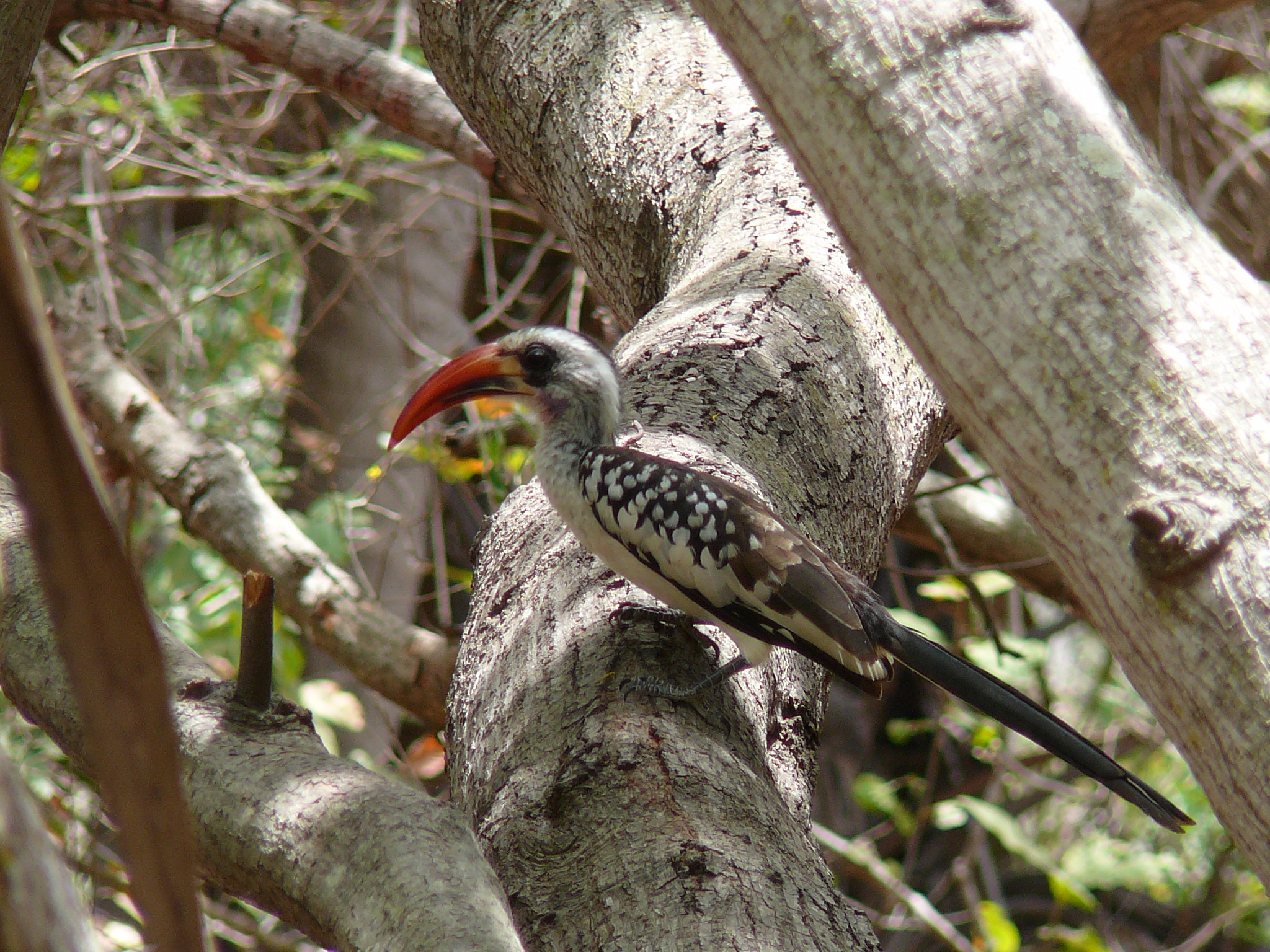
Wow, that was a lot of effort. Let's get back to something easy! Zazu, the only named bird character in the movie (offensive!) is identified as a hornbill in an upcoming musical number by Simba ("Kings don't need advice from little hornbills for a start"). What kind of hornbill is he? The internet seems really convinced that he's a
Red-billed Hornbill. This fact is quoted on several zoo webpages (Oregon, Sacramento), Aviary.org,
the Disney Wiki, and Zazu's own wikipedia entry. This is good enough for me, but I will register that
the Crowned Hornbill might match his color pattern a little better and account for his raised crest. Whatever, you can't argue with the experts.
Speaking of "Just Can't Wait to Be King". This is where we get our Ostrich sequence. There are only two Ostrich-options, the Common Ostrich and the Somali Ostrich. Because this bird doesn't have a prominent blue neck, it's safe to call it the
Common Ostrich. This one's easy.
Ostrich.
Time for another challenge! When fortunes have turned for Simba and he ends up wandering through a mystery desert, he is beset by Vultures. Do we have vulture options? Yes friends, we do. These vultures are drawn in the traditional Disney house-vulture-style, so we're looking for a bald headed bird that is black on top, white from underneath, ideally with a bit of fluff around the neck. I'm going to go with
White-headed Vulture- even though they're not totally bald, they do have the best color matching of the options (if you wish to make your own decision, I was also considering Ruppel's Vulture, Lappet-faced Vulture, Hooded Vutlure, and African White-backed Vulture). Please note that Pumba calls these buzzards when he disperses them ("Bowling for Buzzards!"), but that shouldn't change anything about our ID, as he is clearly not even a hobbiest bird watcher.
After
this, the action of the movie picks up, and there's largely not time
for random birds any more. I know I was hoping for some action during
the Hakuna Matata sequence, but no dice. They do appear one more time,
right before the end title card pops up. Here Simba stands with Nala and
presents his baby to the world, and once again, birds are in
attendance. This scene may finally be where I throw in the towel.
As you can see a number of little white birds fly up to circle the young
family. If we ZOOM and ENHANCE we can see at least a featured Egret,
but the other birds look a lot like white doves, aka. Release Doves,
aka. specially bred
Rock Doves.
And while Africa does have Rock Doves, they probably would not all
coincidentally be white. It is theoretically possible that Rafiki went
and bought some Release Doves from the magician store as a special treat
for this presentation ceremony. If we were gonna go nature, the
Emerald Spotted Dove is probably the lightest dove you could get around here. As for the Egret,
Cattle Egret is the only choice that makes sense given the yellow-ish feet and beak.
Phew! We did it! And it only took like a whole day that I could've done
other things during. Still, my conclusion is that the original animators definitely had really birds in mind when they created this Disney
masterpiece, and perhaps most importantly to our core question, I felt
they were identifiable. For the most part it's a testament to the
expressive and suggestive powers of animation as an art. The original
captures the essence of a thing without necessarily needing to recreate
it perfectly. My only real gripe would probably be with Zazu, who is way
too blue. I wonder if they fixed this in the new Lion King..
Oh! Well there you have it, never mind all that stuff I was saying
before. The remake is officially better than the original! Goodnight
folks.