Saturday, April 12, 2014

Green Heron


Green Heron aka. Green-backed Heron
Berkeley, California, USA
Member of the  Egrets, Herons, and Bitterns Family
§A Battery of Herons§

~true bird fact~ This Green Heron is one of the few birds, and indeed few non-human animals, who use tools. Because his legs are not as long as some of his heron relatives, he mostly stays by the shore clinging to plants and branches. To make up for this shortcoming, the Green Heron goes fishing. He takes scraps of food or branches and drops them in the water to attract small fish and other pond dwellers. He's pretty clever, that heron.

Always so worried
Self-imposed isolationist
Keeps on top of the news, leaves comments on internet news sites
Wishes he could be young again


Monday, April 7, 2014

Connecticut vs. Kentucky: National (Birding) Championship

Well, there's some kind of basketball thing or something, but your Amateurnithologist's bracket was ruined after all the teams with bird mascots were eliminated. Can you believe my bad luck? Anyway, by the time you're reading this blog, the game is probably already in the history books, but we can still see how these two states match up head to head in terms of birding!

We'll be examining these states in 5 scientifically chosen categories

Best State Bird
Coolest Bird that Lives There
Warbler Face-off
Best Birding Hotspot in the State
Most Birds

Enough reviewing the rulebook, here's the tip-off

State Bird
American Robin (Conn) vs. Cardinal (Ken)


My antipathy towards the American Robin is well known. It is, I think, a profoundly boring bird. The Northern Cardinal, by contrast, is a showy hot-shot with a well-defined look and 'tude. His name is taken from the high-up position in the Catholic church. He's the clear favorite going in here. Taking things a little bit deeper, however, you will find that the Cardinal is actually the state bird of 7 states, making the most common state bird. While the Robin remains a conventional choice (3 states), it's not nearly as played-out as that. Next time, Kentucky, get more creative. The point goes to Connecticut!

Coolest Bird you Might See There

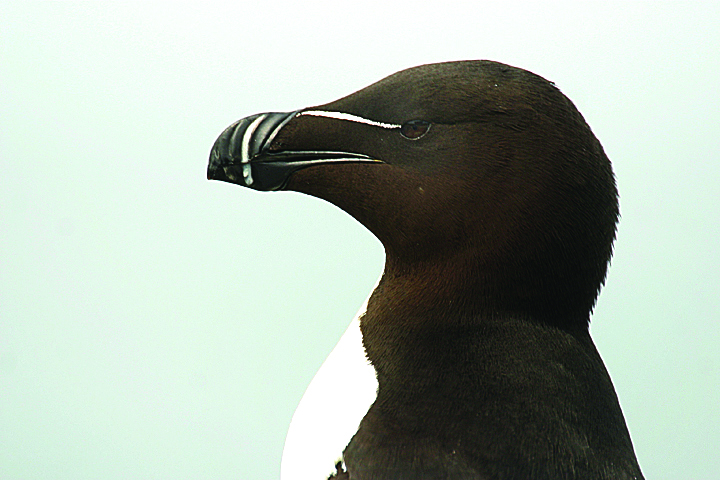
Yellow Northern Cardinal (Ken) vs. Razorbill (Conn)
c. David Gourley @kentucky.com
http://birdcallsradio.files.wordpress.com/2011/12/razorbill1.jpg
c. Chris Bosak @birdcallsradio.com
What you see above is a very rare genetic mutation of a Northern Cardinal that has shown up in Kentucky as recently as 2011. It would be a surprising treat for any birder to see, and normally Kentucky would be sinking this three pointer easily. However, Connecticut has come prepared with a bird baring a bad-ass name and lineage. His name is Razorbill (metal!) and he's the closest surviving relative of the Great Auk, a nearly 3 foot tall flightless seabird, sort of a northern penguin. He might be dead, but Razorbill is still alive and kicking, and seen on occasion on Connecticut shorelines. Another point for Connecticut!

Warbler Face-off

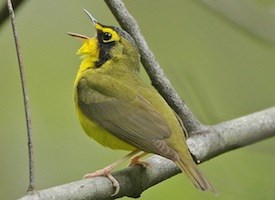
Connecticut Warbler vs. Kentucky Warbler
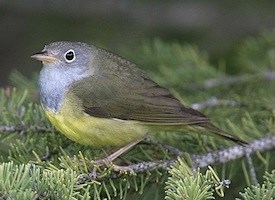
Connecticut Warbler Photo
c. Gerry Dewaghe @allaboutbirds.org
Kentucky Warbler Photo
Ed Schneider @allaboutbirds.org
It turns out that both Connecticut and Kentucky have exactly one bird named after their state, and in each case it is a warbler. These are both undeniably neat looking birds, but we must only choose one. The Connecticut Warbler (while baring an uncanny resemblance to one flappy bird), looks like it may get disqualified on a technicality here. The dubiously eponymous warbler winters in South America, summers in Canada, and only ever just passes through the eastern US at all. He really has basically nothing to do with Connecticut. Also, the Kentucky Warbler was cooler looking anyway. Kentucky puts a point on the board!

Best Birding Hotspot

Stratford Point, Connecticut vs. John James Audobon State Park

File:Audubonwildernesslake.JPG
@wikipedia.org

c. Twan Leenders @ctaudobon.org


Stratford Point is where you want to be if you're birding in Connecticut. It's both a frequent stop-over for rare migrants and possesses a unique coastal grasslands habitat that attracts birds year round. It's even the site of The Connecticut Audubon Society's science and conservation offices. You know what it's not though? Audubon's actual home! Boom, Kentucky sinks another one. Aside from being the location where James Audubon did much of his seminal work on birds, Audubon State Park boasts 6.5 miles of hiking trails, camping, lakes, and a museum. In this category, Connecticut had really long odds, since Kentucky is literally 8 times the size of it.

Most Birds

Connecticut took an early lead and was up at the half, but Kentucky rallied and managed to bring the game into overtime. After such a hard-fought game, it is somewhat fitting that it comes down to a simple free-throw. But who has the numbers they need to seal the deal and claim the trophy?

The winner, as determined by their own state's Ornithological Association count is...
Connecticut with an estimated 417 species vs. Kentucy's still impressive 364!

Which means Connecticut Wins this bird off and is a lock to win the NCAA finals tonight. This prediction is pure science and has nothing to do with the fact that your amateurnithologist went to UConn. Go Huskies! I mean birds... go birds.

Tuesday, April 1, 2014

Amateurmycologist: A New Direction

Hello bird blog fans. We have some big news. Amateurnithologist is changing. Since the runaway success of our recent Flappy Bird blog post, we've had a lot of interest from larger blogs, and we've made the decision to sell. Specifically, we're going to be switching our focus from birds to fungi and lichen. I know what you're thinking, but hear me out- Mushroomblog.com is a great content provider and I'm proud to become part of that family of services (and it's A LOT of money). I think you'll learn to enjoy our new content just as much, if not more. We're still coming to you on the same domain name for now, but soon we'll be switching over to Amateurmycologist.blogspot.com. Today's update is a little bit of a preview for you guys. As a special treat you're getting THREE fungi profiles. Enjoy!

Red Cructose Rock Lichen
Point Reyes, California, USA
~true lichen fact~ This lichen is hard to remove without damaging the substrate or lichen! How tenacious!

Follows sports closely
Traditional values
Very upset about having to change to digital television

&

Yellow Fructicose Rock Lichen
Point Reyes, California, USA

~true lichen fact~ While these guys have a fungal layer outside, there's a algal layer within! What on earth is going on?!

A free-spirited artist
Owns a lot of pets
Goes barefoot whenever possible


Honey Mushroom (Armillaria Mellea)
 
Muir Woods, California, USA
Member of the Armillaria Family
Edibility: Edible and pretty good to eat. Some people get an upset stomach.
Probability that this mushroom is correctly identified: 60%

~true mushroom fact~ Members of this family make up some of the largest and oldest living things in the world. The largest single organism of this species is 3.4 square miles and thousands of years old. Some Armillarias are bio-luminescent and are thought to be responsible for mysterious phenomena like wil-o-th-wisps and foxfire.

A strong voice for organization in the forest
Calls you an affectionate nickname
Has a bit of an ego


Ok, so that's that, hope you enjoyed our new focus... Wait?! What's that? I think there's a bird in that picture of mushrooms.. Well... might as well profile him while I'm here. You know, for old time's sake. What's the worst that could happen?

Pacific Wren
Muir Woods, California, USA
Member of the Wren Family
§A Herd of Wrens§

~true bird fact~ During winter, groups of these wrens of up to 30 will nest together for warmth. Mega cute, you guys. I would also be remiss if I didn't mention that the Pacific Wren is a very recently 'discovered' bird, only being successfully identified as a species distinct from the Winter Wren in 2010! Even scientists are still learning things, which is very inspirational.

A good communicator
Sleepy
Has a great connection to her neighborhood

Update! It looks like fungiworld has revoked my contract after seeing that I wrote about a bird again. Also a bunch of people died cause they ate that mushroom. Oh well, looks like we're back to the grind here on birdblog. Happy April everyone.

Monday, March 24, 2014

Crested Guan//Hell Chicken

As an amateur bird enthusiast, my interest is always peaked when birds get a little bit of attention in the news. You can imagine how excited I was when I saw a headline like this one, from CNN.

Scientists Unveil Dinosaur Dubbed 'the chicken from hell'
or heard this story, from NPR

The 500-Pound 'Chicken From Hell' Likely Ate Whatever It Wanted


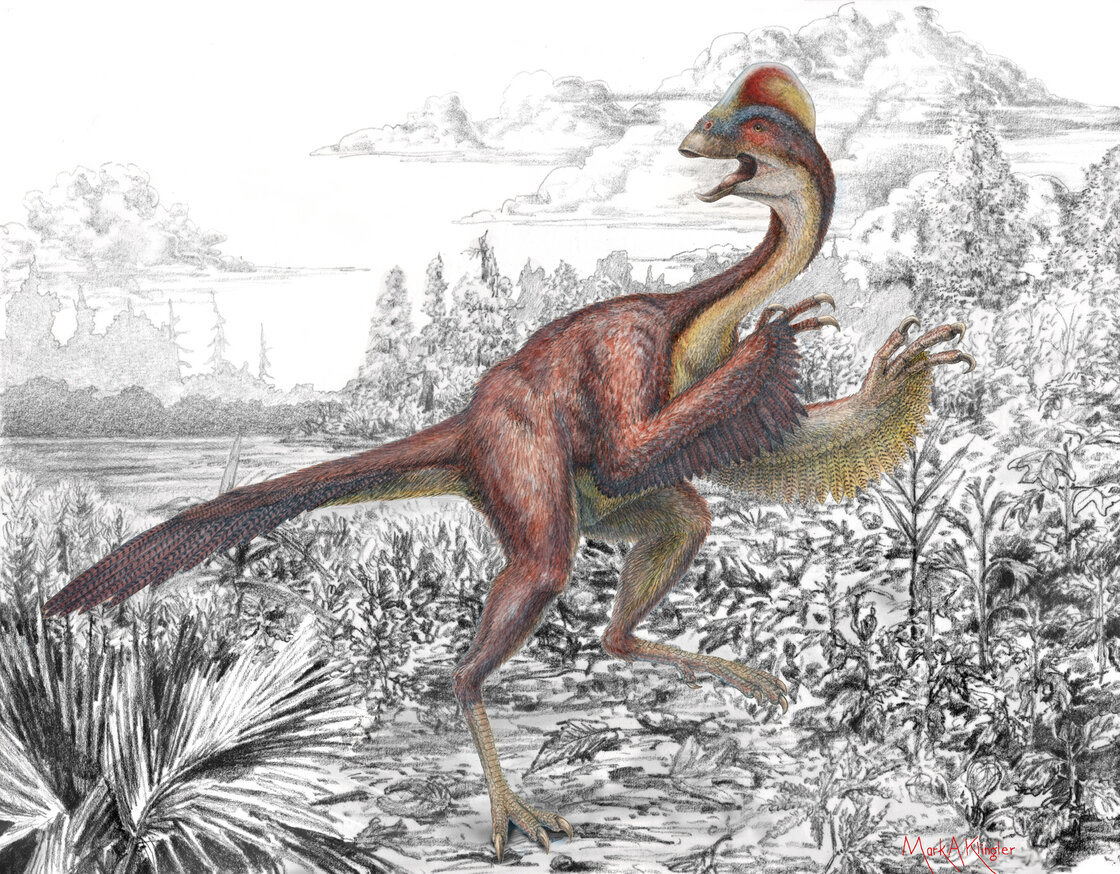
An illustrator's conception of Anzu wyliei.
Wow! A 10 foot tall, 600 pound bad-ass bird. Sounds pretty exciting. Most importantly, Anzu wyliei, as hell chicken is being called now, is the largest species of this type of bird/dino ever discovered in North America and gives scientists some insights into the development of modern birds. In fact, paleontologists have long considered birds to be the only real example of surviving dinosaurs. They share unique evolutionary features, like hollow bones and nest building behavior. The fact is, feathers fossilize so poorly that scientists today are unsure of which of our most beloved and famous dinosaurs were actually covered in pretty little feathers. Today's bird might not be quite as old as hell chicken, but he had some real staying power.

Crested Guan
Guanacaste, Costa Rica
Member of the Guan/Curassow Family

You can see the resemblance, right? Crested Guan here belongs to one of the oldest families of birds. Fossils of this sort of fellow date back as far as 50 million years ago. For reference, the dinosaurs all went extinct 66 million years ago. Some scientists have speculated that this bird's roots go back even further. What this guy is is essentially a large, tree dwelling turkey. Members of his family only still really exist in places that are wild enough that all the large game birds haven't been hunted to extinction by people yet. Rumored to be delicious, but your amateurnithologist wouldn't know a thing about that.

A wikipedia article about the origins of birds, in case you want to take a more in-depth look