Saturday, January 26, 2019

For Owl'd Lang Syne: The 2018 Birding Year in Review

Happy New Year!
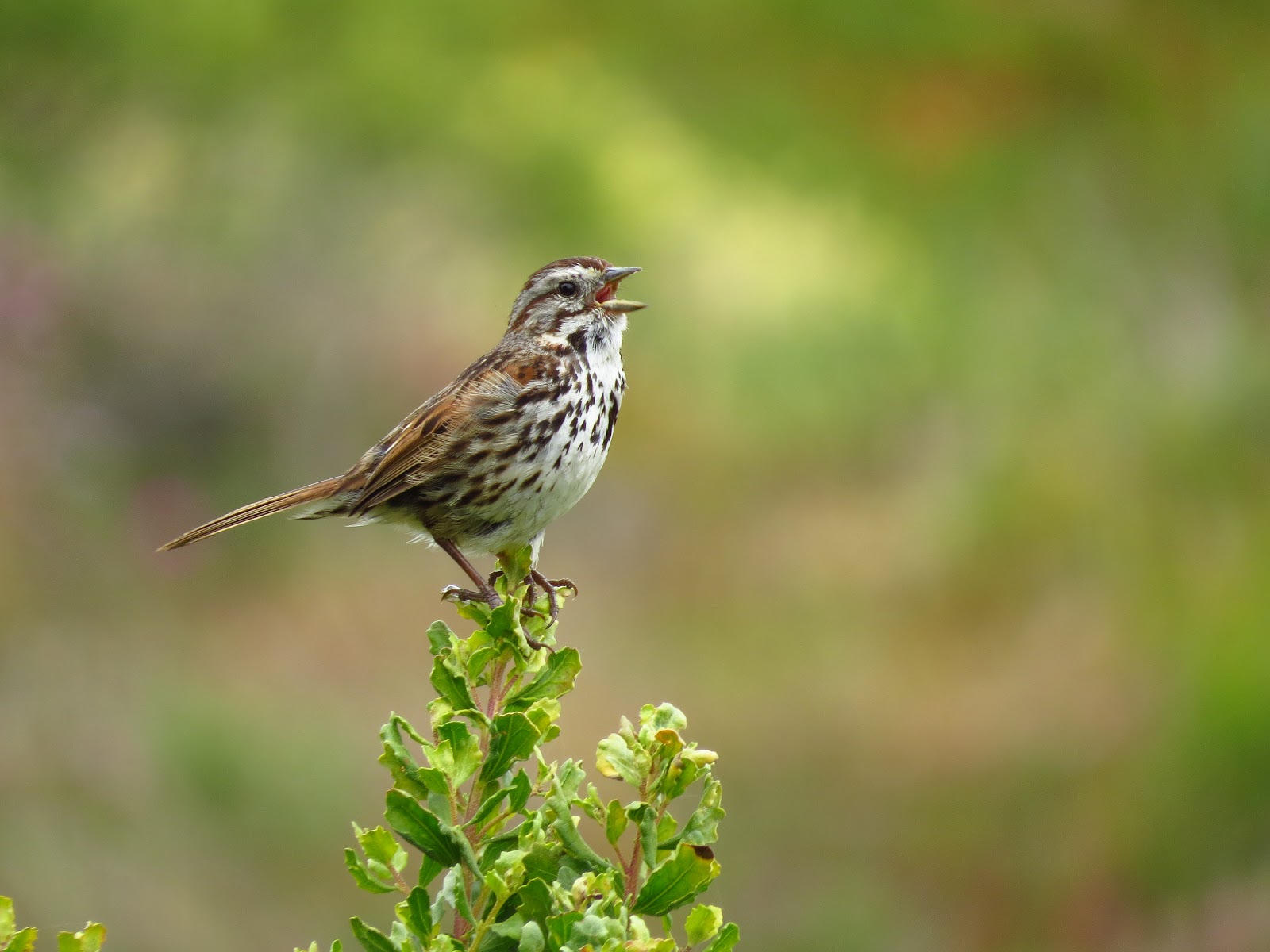
Song Sparrow
 It may be almost February in the rest of the world, but here on bird blog we're still processing the events (and birds) of 2018. That's right, it's time for the hotly anticipated annual 'year in review' post, now with less to review than ever before! But fewer blog posts doesn't necessarily make a not-as-good blog, as we'll hopefully see today.

American Robin

To start with, let's crunch some numbers. To start with, it should probably be acknowledged that only 26 posts were made last year, about half of the average from previous years. What happened? Well, I had a baby, and looking at the number of posts, you can probably tell precisely when. I talked a little bit about fatherhood on my first post-baby blog on the Nanday Parakeet, but my baby has been (shockingly) a slightly higher priority than birds these last few months.

Above: A Rock Wren, the first bird I got a good picture of while having a baby strapped to me
That's not to say we're looking at a permanent dip in blog productivity (or blogductivity [of blogducktivity, when I'm blogging about ducks specifically). I think we'll get better, in the coming year, and maybe get this bad boy back up to bi-weekly.

Great Egret

Birding Highlights 2018

But enough about boring stuff like new human life and having a complete shift of self and perspective, let's talk about the birds! Undoubtedly the highlight of my birding year was a trip down to LA and the nearby Channel Islands National Park. Did I see the Island Scrub Jay? Yes I did, and it was a peak birding experience for me that probably non-bird-people will not understand. Can't see this little guy anywhere else. That's where many of my most exciting birds came from this year, although there were also some cool leftovers from my November 2017 trip to Mexico that didn't get posted until this year.

Double-crested Cormorant

The most popular blog of the year was without a doubt the marginally topical If Birds Were Tracks on Kanye's College Drop Out, followed pretty quickly by the extremely nonsense-filled Bird Cup/World Cup Prediction post (spookily accurate though!) Another favorite of mine was the interest-combining The Birdchelor, which imagined birds as The Bachelor contestants. Did I perhaps cause someone to start a new twitter account with my constant #birdingthebachelor tweets or was it just fortuitous timing? We'll probably never know.

House Finch, my vote for 'bird most likely to be confused for something interesting on first glance'


The exciting thing about these blogs, which were some of my favorites of the year, is that they were ambitious and funny, and crucially did not rely heavily on me having good pictures of new birds. I talked about this last year a little, but it's been harder to find unique birds locally, and my travel perspectives are only looking more restrictive. These posts give me an ideal way forward, and I already have my idea for the next two posts of 2019. Also filed to good news is that the blog actually appears to be getting (slightly) (gradually) more popular, with each post getting a good deal more hits on average than in previous years. Shocking, but nice to see.
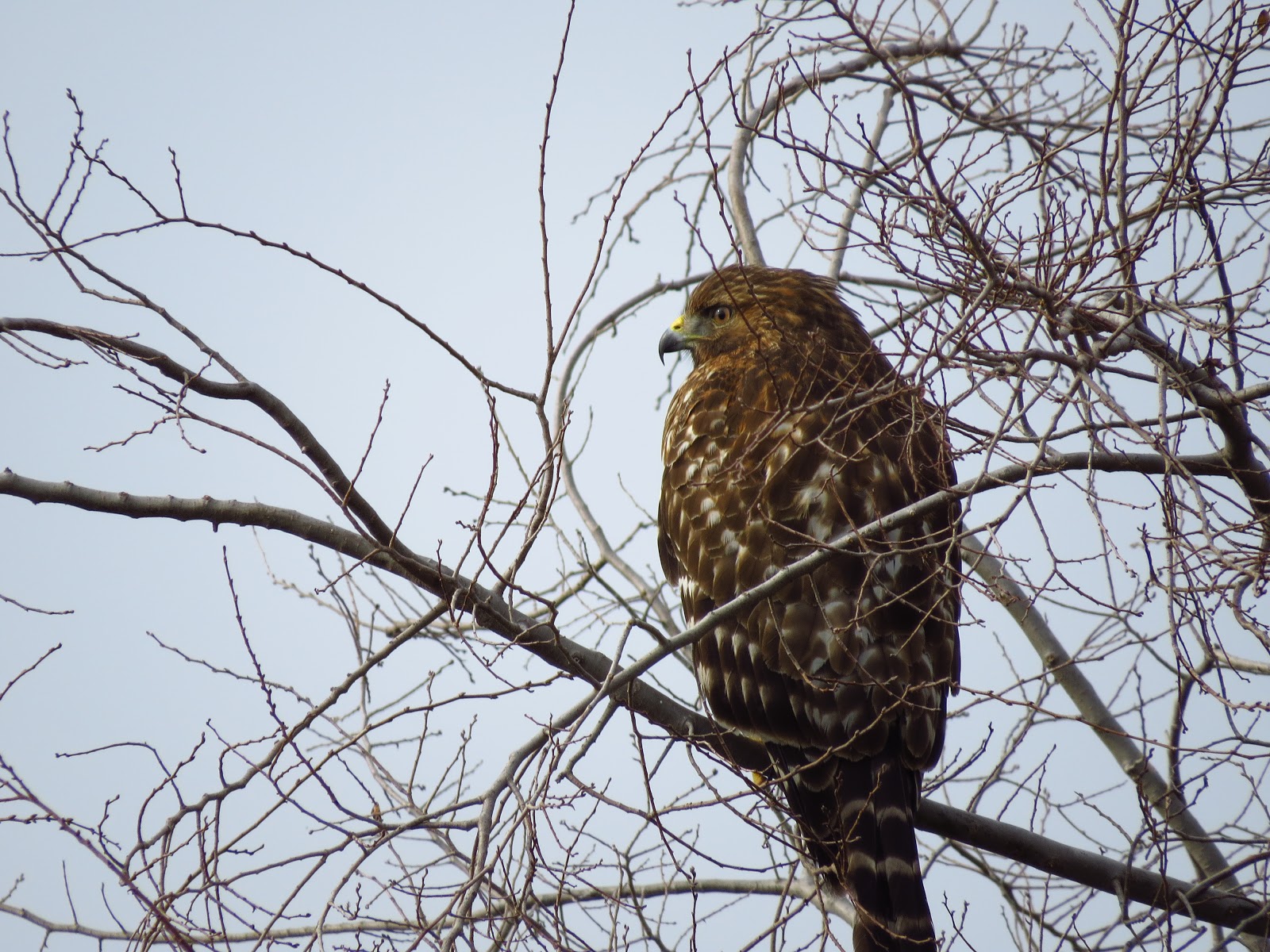
Red-shouldered Hawk (?Probably?)

What else do we do on this year review thing? Uhhh, pictures! Yes, those! I like my Wrentit pictures, which is a challenging bird to photograph, and took quite a lot of patience to get. I also was excited to get the Bullock's Oriole shot at Mount Burdall, which quickly joined Wetlands Edge as one of my favorite local birding spots. That's where a lot of the photos that accompany this essay are from, by the way. Wood Duck was good too. Some of my best pictures were in those Birdchelor and Kanye posts, actually, since they didn't have the restriction of needing to be pictures of new birds.

White-tailed Kite


Birding Resolutions

Lastly, let's talk resolutions. I'll start by saying I'm glad I set the bar really low for myself last year. The resolutions, in case you don't want to click the link, were 'find a new schedule that works for my changing life', and 'bird local'. And honestly, I think I kinda did both, sort of. Like, given the circumstances. For 2018 I give my self a B- for Effort! So what do I want to do this year?

American Kestrel


Well, as I've been alluding to, I want to get back up to 1. 2 posts per month, eventually. And for my other goal, let's try to 2. recommit to filling in the more common birds from my area that I still haven't posted here year. It's gonna mean squinting at some photos of gulls and sparrows, but I figure I'll have to do the work eventually. Jen Sanford has been making some really interesting points on Instagram (which I'm still not on) on the value and ethics of birding close to home, and I might try to go into it with that attitude (although maybe I'll go with more like a 20 mile radius). And I think that'll do it. Anything more ambitious would just be hubris.... although... I do really want to try and get that Snail Kite when I go to visit family in Florida this year. A blogger can dream, after all.

American Crow

See you all next month!

Sunday, December 23, 2018

Western Grebe


Western Grebe aka. Dabchick aka. Swan Grebe aka. Swan-necked Grebe
Lake Merritt, Oakland, California, USA
December 2018
Member of the Grebe Family
Largest North American Grebe
§A Waterdance of Grebes§ (and you should really check out that waterdance. These are technically different Grebes (Clark's), but these guys do the same thing, and were once thought to be the same species actually)

Chain-smoker
The type who wants to reach the peak of his hobby or interest. Driven
Zine contributor


You know, there weren't that many fun facts about this guy, aside from that water dancing (which, again, you should really take a look at), so that means there's time for a Naturalist Profile!


Sir William Lawrence
(1783 - 1867)

A busy and complicated guy, William Lawrence was a surgeon and author. He helped found The Lancet, a really important medical journal, and wrote a bunch of medical textbooks. He might have even been coined the term Biology. He's more famous, however, for his pre-Darwinian takes on evolution and human development. His wikipedia page is long and dense, but the long and short of it is he was right about a lot of things that few people were right about at the time, wrong about a lot of things, and also was declared blasphemous by the English court at the time. It is said that the level of caution with which Darwin published his early work could be attributed to what happened to Lawrence. He bounced back from this ignominy eventually and was made a Baron by the queen shortly before his death.

What does any of this have to do with birds? Nothing. Absolutely nothing. There is no mention of this Grebe, or indeed of birds, birding, or even naturalism in his wikipedia page. It almost makes me wonder if I have the wrong 'Sir William Lawrence', but multiple sources describe him as the original describer of this bird, despite it being a bird of the American West, and him being a British Surgeon. A mistake? Who knows! If it were, this would certainly be the first time this blog has been wrong about anything, that's for sure.

Thursday, November 29, 2018

Young Birds, Tricky IDs

Lately I've had this experience a lot, where I get a picture of a cool looking bird that I don't think I've gotten before, and wind up stumped. After lots of time intensive searching I discover that the bird doesn't match anything in my guides. Did I just discover a new bird? Well, no, of course not. I'd be lucky to discover that I've remembered to bring my camera with me these days. Mostly what I run into is juvenile birds. Let's go through a few examples, shall we?


Here's a guy who has fooled me twice lately. And you know what they say..
Yes, I know he's just a sparrow, but your amateurnithologist is so hard up for birds lately that even a new sparrow can be a source of excitement. It's going to happen one of these days. Anyway, you'd think the markings here are quite distinctive, and on the head too, which is really the sweet spot for sparrow identification. Rufous streaks on either side of the crown and behind the eyes. Simple as that. Well, turns out this guy is actually a White-crowned Sparrow, who kinda looks nothing like this in adulthood.


Do you see the resemblance? Nah, neither do I.

Here's another great example


Wow, now that is a cool bird! Check the distinctive coloration- and also of note, this guy is big, and a bird of prey to boot. Should be easy as can be to identify. Well, it actually sort of was, once I could do a little searching around. Turns out in their younger days White-tailed Kites are quite colorful. Actually got a picture of him sitting next to an adult, for contrast.


Hey bird? Where'd all your coloration go? Gosh.


So, like, what are you supposed to do about identifying these guys? Well, for me, the most important tip was paying attention to the other birds around them. In both cases, the adults of the family were nearby. Also, if you start to encounter something that looks truly unusual, just start google image searching for "juvenile ______", where the blank is birds that you know are in the area, and belong to the family of the mystery bird you've spotted. I know I'll be going to the juvenile well much more quickly in the future, after these misadventures in bird spotting.

In conclusion, birds are weird. I hope you've enjoyed these birds for what they are. They may not be new, but they look new, and in it's own way, isn't that almost the same thing as being new? The answer is 'no, not really', but a blogger can dream.

Wednesday, October 24, 2018

Wrentit


Wrentit
Solstice Canyon Park, Malibu, California, USA
July 2018
Member of the Sylvid Family

[Etymology Corner] As you might expect from a bird with a name from the 'we don't know what this bird is' school of naming, there has been some dispute about exactly what family the Wrentit falls in. Is it a Tit? No, but we used to think so. Is it a Wren? Not even close, but it does have an upturned tail like one. For a while we thought that Wrentits were the only member of their own family, ala Limpkins. It turns out that Wrentits are the only representative of a family of birds mostly found in the Mediterranean and Asia, which include parrotbills and babblers.

~True Bird Fact~ A remarkably sedentary bird, Wrentits live only in the narrow stretch of land on the North American coast between the Sierra Mountains and the Pacific. Even more shockingly, these birds barely leave the immediate area of their nest, usually making their own homes only 1200 feet away, on average, from where they were born.

If you want to know where this bird lands, politically speaking, I got one word for you: Chemtrails
Specific junk-food tastes (i.e. only ruffled potato chips)
Collects old magazines and newspapers with 'significant' headlines. Will happily explain his collection to you