Friday, September 4, 2026

Eurasian Oystercatcher//Eurasian Whimbrel

We got a double header for you fine folks today, really back at it and firing on all cylinders. Today's birds have a theme, and you're only likely to detect it if you're a real bird sicko. See if you can figure it out, but if you want spoilers, you can scroll right to the end to the 'lessons learned' section.


Eurasian Oystercatcher aka. European Oystercatcher aka. Common Pied Oystercatcher aka. Sea Pie (historic) (Icelandic -Tjaldur)
Þingvellir National Park, Þingvellir, Iceland
Member of the Oystercatcher Family
National Bird of the Faroe Islands
§A Parcel of Oystercatchers§

~True Bird Fact~ This bird's joining the good-parents-club, and not just because she's pictured above with baby. In fact, Oystercatchers are lifetime monogamous and they're a long-lived bird, so that can mean a 40 year commitment. Both male and female birds contribute to the defense of the nest. They take a two pronged approach of attacking flying predators by air, and distracting or leading away ground predators. This can look like trying to lure the attacker away by taking short flights, making loud calls, or even pretending to be injured.


Eurasian Whimbrel aka. White Rumped Whimbrel (historic) (Icelandic - Spói)
Þingvellir National Park, Þingvellir, Iceland
Member of the Sandpiper Family
§A Curfew of Whimbrels§

~True Bird Fact~ In an exciting and unexpected twist (for me), the Whimbrel seems to be a pretty important bird in Iceland. This is a migratory bird, which spends it's summers in Iceland (and winters in West Africa). As such, it's heavily associated with Spring and the arrival of warmer weather, which, as you might imagine, is a pretty big deal for Icelanders. They go so far as to call his cry the sound of the summer, and even have a name for it, Vell. There's a whole system around this call that icelanders use (used?) to predict the weather, so it's considered something of a 'fortune teller bird' there. There's also a charming saying that I'm going to attempt to work into my own life, "The whimbrel sings porridge" ("Spóinn syngur graut"), which means 'warm weather is coming'. Wish me luck in that endeavor.


So what is it that we were supposed to learn today? Well, aside from a surprising amount about Whimbrels, the lesson here is 'always take a picture of a boring looking bird you've seen a million times when you're in a new place'. I had 100% assumed that these were my traditional American Black Oystercatcher and Hudsonian Whimbrel (a bird I've certainly seen and photographed, but surprisingly never blogged). But I took a picture anyway, because 'what if?', and I was right! The Whimbrel I didn't even really bother to get a 'good' picture of. So anyway, the moral here is 'it counts anyway' even if you've seen a nearly identical bird before. Pump up those life lists people.

And for edification purposes, the difference between the Back Oystercatcher and the Eurasian is.. (waiting for you to check the other blog and report back)


The eye color! Incredible stuff.

As for the whimbrel? All in the rump, specifically, whether it's white or brown. Ok,  so maybe they weren't that identical after all, but they were to my tired eyes.

Saturday, August 22, 2026

Trip to Iceland pt.1

Hello bird fans. You may have noticed, or maybe not, that your favorite bird blog hasn't updated in a pretty long time. There are several reasons for this, but most crucially, I just don't have that much time. Don't have much time for trips where I might get to do some good birding, don't have much time for photography don't have much time to write these little updates. It doesn't help that I left twitter due to it becoming a cesspool, and so now my audience is just you, the person who stumbles upon this or who I know on facebook.

Anyway, it's ok for me to be out of the bird blogging game, I am content. I've seen a lot of good birds, and I will always love birds, and the experience of identifying birds, either for myself, or for others. So that being said, this will not be a traditional bird blog, but more like a travelog. Those who go way back might remember my other blog. Imagine something like that. 

Now, recently I was able to sneak a little trip to Iceland in during what was otherwise a summer family vacation to Nova Scotia. Our plan for our first day was a drive on the fabled Golden Circle- a circuit of natural wonders easy driving distance from Reykjavik, where we were based. After partaking of a lovely hot springs (the second of the trip), we were on to our first natural feature, the famous waterfall Gullfoss (lit. Golden Falls).

It was an incredible waterfall, easily making it's way in to my top tier of waterfall experiences, despite the grey weather we had that day. Just look at this bad boy, it's got it all- a rugged and striking landscape, massive volume, an aesthetically pleasing mist, and... wait a minute... 

Computer, enhance. 


Is that a fucking BIRD???

Oooooh shit, every time I think I'm out, they pull me back in. I mean it folks, when I saw this swan just completely chilling as millions of gallons of water (this is literally true, it is an approximately 1.7 million gallons/minute waterfall) rushed past it, I said "ok, I guess I will do a bird blog about this".

So who do we have here? I'm glad you asked

Whooper Swan aka. The Elk aka. Hooper aka. Wild Swan (Álft)
Gullfoss, Selfoss, Iceland
Member of the Duck, Goose, and Swan Family
★The National Bird of Finland
★The Largest Native Herbivore in Iceland
§A Lamentation of Swans§

~True Bird Fact~ Very accomplished fliers, despite their size (frequently noted online as 'one of the heaviest flying birds'. Their typical airspeed is around 62mph, however, they have been known to travel to extraordinary heights, up in the lower stratosphere, in order to make use of the jetstream. One group of birds was clocked traveling almost 100 miles per hour using this technique while migrating from Iceland to Ireland. Extremely tough!

~Real Bird Myth~ A wikipedia 'citation needed' fact (off to a strong start) notes that sounds this bird makes upon death and the source of the phrase 'swan song'. I did not hear any of them die, so thus cannot verify myself.

~Real Icelandic Bird Myth~ A 1921 Icelandic Fairytale, Sagan af Dimmalimm by Guðmundur Thorsteinsson, recounts a tale of a princess who, through the power of love, breaks a curse on a swan, who then becomes a prince. It's essentially Swan Lake.

Well, I hope my extremely scant handful of readers have enjoyed this rare bird blog. But you know what? I'm going to do some more. Because shockingly being in Iceland for 4 days without my kids afforded me the time to see some pretty cool birds. And now you're going to see them too, or at least you will, if you keep clicking on the bird blog.


Tuesday, November 12, 2024

Birds of Costa Rica 2: part 3

Common Black Hawk (busardo negro aka. gavilán cangrejero negro (lit. Black Crab-eating Hawk)
Peninsula de Papagayo, Liberia, Guanacaste Province, Costa Rica
May 2024
Member of the Kites, Eagles, and Hawks Family
§A Kettle of Hawks§

~True Bird Fact~ Black Hawks are specialized to hunting prey in the water (hence the 'crab-eater' above). They can wade around in shallow water to startle fish and then use their wings to 'herd' them to spots where they can be picked off more easily. They also like to perch on low branches and then drop suddenly into the water to snatch up crabs, fish, and crawfish. Sounds like a nice life.


Rufous-tailed Hummingbird (
colibrí cola rojiza)
Peninsula de Papagayo, Liberia, Guanacaste Province, Costa Rica
May 2024
Member of the Hummingbird Family
§A Bouquet of Hummingbirds§

{Etymology Corner} Something that's always fun is when you get a picture of a bird with a name that's like the "named-after-an-incredibly-obvious-physical-feature hummingbird" and somehow the angle that you get is the only possible one where that feature isn't visible. Makes you real cautious about the ol' ID. But I think that's probably what he is. There's not a lot of options in terms of the pink/orange bill. Anyway, this guy has kind of a red tail area.

~True Bird Fact~ Rufous-tailed Hummingbirds have a pretty rare social set-up- they live in loose colonies with one male and many females. In this setup, the male mates with the females and the females are responsible for nest-building, egg-incubating, and child rearing. How's that for a division of labor? Sheesh.

I know, I know, this is far and away the worst photo I have uploaded to the blog, a true #worstbirdpic, but I was so excited to see this guy and this is the only shot I got of him. C'est la vie. Maybe he will appear again on this blog when I get a good shot.

Crested Caracara aka. Mexican Eagle aka. Mexican Buzzard (carancho aka. traro)
Peninsula de Papagayo, Liberia, Guanacaste Province, Costa Rica
May 2024
Member of the Falcon Family

~True Bird Fact~ The only falcon to build a nest- all others just kind of lay eggs in the dirt, or use the old nest of other birds. Seems to be a bit of an intelligence outlier among this family to be honest- they also have learned to follow trains and cars to feed on discarded food. 

~Real Bird Myth~ As you might expect for such a distinctive and charismatic bird, the Crested Caracara features prominently in mythology. In the Aztec founding legend, the bird that shows them where to build their capital city is probably the Caracara. The legend goes that the sun god, Huitzilopochtli, told them they would build a city where they find an eagle perched on a cactus, holding a snake. This image may sound familiar to some, as it is depicted on the Mexican flag. Of course, the city they found is Tenochtitlan, which is the modern day Mexico City. The beautiful narrative here is only somewhere tainted by the fact that the bird on the modern Mexican flag is very clearly a Golden Eagle. Different interpretations of the same myth, it seems.

Friday, August 2, 2024

Birds of Costa Rica 2: part 2


Steak-backed Oriole (turpial dorsilistado aka. turpial de fuego (lit. Fire Oriole!))
Peninsula de Papagayo, Liberia, Guanacaste Province, Costa Rica
May 2024
Member of the Blackbird Family

{Etymology Corner} Another local name for the bird is bolsero dorsilistado, which translates to Streak-backed Purse maker, which refers to these birds really cool looking nests. These birds (along with several others) construct what is called a penduline nest, or a woven structure made from grass and other foliage that hangs from a tree branch. These are really cool looking. Here is one such nest, also from this trip to Costa Rica.


Gray-breasted Martin (martín pechigrís)
Peninsula de Papagayo, Liberia, Guanacaste Province, Costa Rica
May 2024
Member of the Swallow Family
§A Scream of Swifts§ (Ok, I know, I know, these are Martins, not Swifts, and that's not even the same family (SOMEHOW), but I hadn't heard 'scream' as a term of venery before and I thought it was neat. Guys, the well is DRY on this bird, there are no other interesting facts about it. If you know anything about swallows or swifts, you know everything there APPARENTLY is to know about these birds. Ok, fine, fine, here's something-)

~True Bird Fact~ They can't walk, their little legs are only for perching. See!! That was the best I could do. That's barely interesting at all and something you probably would've assumed just looking at this thing. This bird blog was held up SIGNIFICANTLY while I tried to come up with something to say about this Gray-breasted Martin, which, BY THE WAY, this might not even 100% be, because Swallows are hard to ID. So LAY OFF!

Turquoz-browed Motmot (momoto cejiceleste) aka. Torogoz aka. Guardabarranco (lit. Ravine-guard) aka. Pájaro reloj (lit. Clock Bird)
Peninsula de Papagayo, Liberia, Guanacaste Province, Costa Rica
May 2024
Member of the Motmot Family
National Bird of both El Salvador and Nicaragua

{Etymology Corner} I think we got a famous one here ladies and gentleman. It's always a good sign when a bird has like 6 plus names, and they're all really expressive and beautiful, and that's the situation we have here. In El Salvador, he's called Torogoz, which is a reference to the sound he makes (you be the judge). In Nicaragua he's called Guardabarranco (lit. Ravine-guard). In the Yucatán, he's called Pájaro reloj (lit. Clock Bird, for the way he moves his tail). And in Costa Rica he's called Pájaro bobo (Foolish Bird) for his comfort around humans. That's the good stuff!

~True Bird Fact~ So, that tail- it's referred to as 'racketed' and serves a couple of purposes. First, they use it for sexual selection- i.e. a male with a long tale is a more desirable mate. But interestingly, they also use it to communicate with predators (!). They wag their tail back and forth, like a clock pendulum, to signal to a predator that they have been observed, and that pursuing them would be pointless, because they will fly away if approached. This is called a 'pursuit deterrent signal'.

~Real Bird Myth(?)~ Look, I don't know what to trust anymore in regards to the internet. But there are lots of claims that the Motmot is a significant bird in Mayan cultural tradition (and why not, look at it!). Most of the stories I found were on travel websites, and they all had a theme of how the bird lost most of it's tail feathers, leaving only the aforementioned 'rackets', usually as a result of arrogance. Here's my favorite one of this genre, which I totally can't vouch for as legit, from this website.

The motmot’s Mayan name is toh, and it features in local legend and lore. According to one story, the motmot liked to meet his fellow royal birds and spend the day telling stories and feasting on insects while other birds were working. He was such a beautiful creature and so proud of his glossy tail and plumage that it made him arrogant and overbearing.
One afternoon, when black clouds were massing on the horizon heralding the approach of a storm, Oc, the king vulture summoned all the birds to a meeting and they decided to build themselves a shelter. Chujut the woodpecker, Panchel the toucan, Mox the parrot and Xtut collected timber, Baax the chachalaca and Cutz the wild turkey carried the heaviest branches and the hummingbirds collected grass, herbs and leaves for the roof. Other birds gathered fruit and seeds to tide them over the storm. Only the motmot refused to help, saying that he was an aristocrat, not a worker.
When the storm burst, the motmot found a crack in a stone wall that he thought would be a good place to hide. He crept in and went to sleep without noticing that his elegant long tail was still out in the open.
Much later, the motmot woke up and emerged from his shelter to sing in the sun like the other birds. He was astonished to find that all that was left of his beloved tail were two bedraggled and naked barbs with a small clump of feathers at the end. The wind and water had done their worst. Horrified, realized what a fool he had been. Pride soon got the better of him and he decided to shun his former companions for fear that they would mock him. He flew off into the depths of the forest and dug a hole where he hid until this very day. He still keeps to himself; perching on branches overlooking cenotes where he swings his long tail from side to side incessantly like the pendulum on a clock.

Sunday, July 7, 2024

Birds of Costa Rica 2: part 1

Well, I went back to Costa Rica, just over ten years since my last trip. Costa Rica is a well known birders paradise, boasting more than 900 species in a relatively small area. Did I learn anything about birding since then? I guess we'll find out (but the answer is 'no', for those not wanting to read the whole thing). As you will see, this was not a 'birding trip' and was very limited in scope, but it would be impossible to not see some very impressive birds. 


Squirrel Cuckoo (Piaya cayana)
Peninsula de Papagayo, Liberia, Guanacaste Province, Costa Rica
May 2024
Member of the Cuckoo Family
{Etymology Corner} Why is it called a Squirrel Cuckoo? Well, because it kind of acts like, and could be confused for, a squirrel (theoretically). Quoth wikipedia: "This species’ English name derives from its habit of running along branches and leaping from branch to branch like a squirrel. It flies only short distances, mainly gliding with an occasional flap." OK!
Also, while researching this cuckoo I learned of potentially my favorite member of this family, the Cocos Cuckoo. C'mon, that's just too fun.

~True Bird Fact~ Unusual amount of interspecies cooperation observed with this bird, which forages happily alongside other birds and even some smaller mammals. They even take advantage of army ants, which they follow as they flush out prey. Also, unlike many cuckoos, they don't do any brood parasitism, and opt to raise their own young instead. I hate to assign personality to a bird (why would I do something like that?), but this guy seems like the good egg (so to speak) of a troubled family.


Neotropic Cormorant aka. Olivaceous Cormorant (Cormorán Biguá aka. Pato Cerdo, Pato Puerco, Pato Chancho, Pato gruñón [lit. Pig Duck, Dirty Duck, Oinking Duck])
Peninsula de Papagayo, Liberia, Guanacaste Province, Costa Rica
May 2024
Member of the Cormorant Family
§A Flight of Cormorants§

{Etymology Corner} Yes, Olivaceous means olive-colored. The Spanish informal names refer to the sound the bird makes, which is extremely pig-like IMO. Check it out at this link

~True Bird Fact~ Semi-domesticated and used for fishing by native people for, reportedly, the past 1600 years. Specifically, the bird is used by the Uru people of Peru.


Bare-throated Tiger Heron (Avetigre Mexicana)
Peninsula de Papagayo, Liberia, Guanacaste Province, Costa Rica
May 2024
Member of the Egrets, Herons, and Bitterns Family
§A Sege of Herons§

~True Bird Fact~ There are, essentially, no fun facts associated with this Tiger Heron. He sure is a looker though!

Loves Sports Betting

Friday, December 1, 2023

Good Birds, Bad Pics: Florida edition

For a lot of reasons, it's looking like I probably won't be going back to my home state of Florida for quite some time. Although I have a complicated relationship with the place, I increasingly enjoyed my regular visits, and was able to develop an appreciation for the things that make it special. Arguable (and certainly for the purposes of this blog) the best thing about Florida is the birds. A great state for birds in general, but also, one where there is relatively little overlap with my adoptive home state of California. 

So every time I've gone back I've tried to get a bit of birding done, despite how little time I actually get to spend there. This past April was my last trip, and while it produced some good bird pictures (to be posted at the usual rate that things go around here), it also produced some real stinkers. However, given that this was my last trip for a while, I'm going to go ahead and say 'still counts'! So here, without further equivocating, are some really terrific and cool birds that I was so happy to see, but that I was unable to get anything but the #WorstBirdPics of.


Caspian Tern
Arthur R. Marshall Loxahatchee National Wildlife Refuge, Boynton Beach, Florida, USA
April 2023
Member of the Gull, Tern, and Skimmer Family
§A Committee of Terns§
The World's Largest Tern

{Etymology Corner} Yes, they are named after the Caspian sea. And yes, a lot of these terns do live there. They really get around, huh?

What went wrong? Man, you know how these things fly around. It's hard to get a picture of them in flight, and they weren't landing. Also, the light was getting a little tough by this point.


Cape May Warbler
Arthur R. Marshall Loxahatchee National Wildlife Refuge, Boynton Beach, Florida, USA
April 2023
Member of the Wood Warbler Family
§A Confusion of Warblers§

{Etymology Corner} Yes, they are named after Cape May, New Jersey, which was where the bird was first collected by European colonizer types. However, unlike the Caspian Tern (above), they do not actually really live in Cape May. In fact, it took a hundred years for another Cape May Warbler to be sited there, although today it's recognized as an uncommon visitor. Maybe don't go for just your first idea on these things, when you're naming birds. And yet, still better than being named after some guy..  Shoutout to the Bird Names for Birds movement on their recent victory.

~True Bird Fact~ They have a curled semi-tubular tongue, which is unique among warblers, and enables their seasonally varied diets. In the summer, they're up North, mostly eating bugs, but in the Winter, they live in the Caribbean, where flower nectar and fruit end up being a large part of their diet. I wonder if they like the winter better. I know which of those two diets sounds more appetizing to me.

What went wrong? This guy was hoping around everywhere, going nuts. Also, I get reluctant to hold other people up when I'm trying to take a picture of a bird around other people. Maybe my camera settings were funky? I think the light was also starting to go a little here as well.


Worm-eating Warbler

Lantana Nature Preserve, Florida, USA
April 2023
Member of the Wood Warbler Family
§A Confusion of Warblers§

{Etymology Corner} They don't eat worms! Not even a little. They do eat caterpillars, but not more than any other warbler. The reaction to this information across the bird internet is muted, sort of a 'eh, what are you gonna do?' vibe. I find this distressing information. To make matters worse, the Worm-eating Warbler has a range that includes Cape May much more regularly than the Cape May Warbler, and the Cape May Warbler is known for it's favored food source to be an insect called the Spruce Budworms, to the point where Cape May populations increase when there's a Budworm outbreak. Who is naming these things? We need to shut this whole thing down.

What went wrong? I saw this guy out in the open for about 5 seconds before he completely disappeared. I followed his chirping around for a bit, but he never came out in the open again. Also, it was raining


And lastly, a very special welcome back to the American Redstart in his unprecedented second appearance in the Good Birds, Bad Pics series. Go to hell American Redstart.

What went wrong? Personal hatred for me, I'm assuming

Sunday, August 20, 2023

Ruffed Grouse


Ruffed Grouse aka. Patridgde, aka. Pheasant, aka. Prairie Chicken (all colloq., inaccurate) aka. Thunder-chicken

East Glacier Park, Montana, USA
August 2023
Member of the Turkey, Grouse, and Partridge Family
§A Pack of Grouse§
★The State Game Bird of Pennsylvania★ (Ranked the worst state bird by this website, due to not being a state bird (Pennsylvania does not have one)
★The most widely distributed game bird in North America★

~True Bird Fact~ They are described as an "immensely popular game bird" by allaboutbirds.org, and I see no reason to argue with that characterization, given that they appear to have an enormous organization named after them. Yes, you heard me, The Roughed Grouse Society exists, and appears to have an extremely slick website, and a history of working with state governments to improve forest management to create more appropriate grouse habitats. 

Yes, these are hunters, which is not really my thing, but I think the lesson to take here is that a bird species thrives when attention and care is paid to it, although maybe not for ideal reasons in this case. Anyway, this aforementioned website is filled with great quotes. Like this one, about the birds comfort with humans "they can still be killed with a canoe paddle or thrown stones in Minnesota wilderness forests, and are not considered much of a sporting bird in western mountains and north into Canada due to their confiding “fool-hen” nature."

And this one about Ruffed Grouse chicks "The chicks are precocial, which means that as soon as they have dried following hatching they are ready to leave the nest and start feeding themselves. Grouse chicks are not much larger than a man’s thumb when they leave the nest. They are surprisingly mobile and may be moving farther than 1/4 mile a day by the time they are 3 or 4 days old. They begin flying when about 5 days old, and resemble giant bumble bees in flight."

I also learned that "Ruffed Grouse are almost exclusively “flower-eaters,” living on the dormant flower buds or catkins of trees such as the aspens, birches, cherries, ironwood and filberts. Extensive feeding upon flower-buds in apple orchards caused Ruffed Grouse to be placed on the list of bountied animals in some New England states at one time."

Man, what a great website.

So anyway, I went to Montana, to Glacier National Park specifically, to continue my bucket list dream of visiting all the National Parks. Didn't actually get that many birds there, due to not really taking a birds-first approach, but I did get some, that I'll be posting in the coming (months? years?). I did also capture some strange non-bird animals, that maybe you'd have a passing interest in. Like this one

Moose (Shiras subspecies)

Fishercap Lake, Glacier National Park, Swiftcurrent, Montana, USA
August 2023
Member of the Deer Family
§A Herd of Moose§
★Largest and Heaviest Member of the Deer Family


{Etymology Corner} from the Algonquin "Moosh" from the Innu people. Meaning "stripper and eater of bark"

Sunday, February 19, 2023

Dark-eyed Junco


Dark-eyed Junco (aka. Oregon Junco)
Point Lobos State Natural Reserve, Carmel-by-the-sea, California, USA
February 2022
Member of the American Sparrow Family
§A Quarrel of Sparrows§ 

~True Bird Fact~ Truly baffling that I haven't blogged this guy yet since I see him everywhere. Something between never bothering to blog him because I think I already have and never bothering to take a picture because I think I don't need one. Still, one of our cutest little guys. This bird is subject to a debate that is baffling to the amateur bird enjoyer like myself. See, this bird is described everywhere as having an 'extremely variable' appearance. What does this mean? It means that depending on the 'sub-species' the bird looks entirely different.

Map illustration by Borja Mila from the National Museum of Natural Science in Madrid

Take a look at this. Does this look like the same bird to you? Now keep in mind that I've never known ornithologists to not tell me that two almost identical (please see all seagulls for example) birds were actually different, and we have a real mystery on our hands. This article sort of explains it- scientists believe that this bird is involved in very rapid speciation. That is, it's turning into lots of different birds, right before our eyes (at least compared to the scale of time these things usually happen according to). I have to assume it's only a matter of time before they spin this bad boy off into like 14 different birds, half of which are nearly identical. Until then, I'll enjoy my local Dark-eyed Juncos without having to worry too much.

Two left feet
Never uses a public restroom
Always picks a little piece of tall grass and caries it with her when she goes walking
Swears by grinding her own spices over using the pre-ground kind

Friday, December 30, 2022

Purple Martin


Purple Martin
Vollmer Peak, Orinda, California, USA
July 2022
Member of the Swallow Family
§A Gulp of Swallows§ (dubious about this claim)
The Largest North American Swallow

{Etymology Corner} So, when I was preparing this blog I stopped for a moment and thought 'why are they called Martins instead of, you know, Swallows, like all the other members of the Swallow Family. So, as you do, I googled it, for the blog. The answer is interesting enough that I'm just going to fully quote The Online Etymology Dictionary directly"

Martin (n.) kind of swallow-like bird (Chelidon urbica), 1580s (earlier in diminutive form maretinet, mid-15c.), from Old French martin, which is apparently from the masc. proper name Martin in some sense. Writers in 17c. said it was named for St. Martin of Tours (d. 397 C.E.), patron saint of France, whose festival day (Martinmas) is Nov. 11, about the time the birds are said to depart for winter. But OED says the naming "may have been purely arbitrary," and Century Dictionary says "the name has no specific meaning ...." Usually with a qualifying term: the common house-martin is so called because it nests under the eaves of houses. The American purple martin is so called by 1804.

So named after, literally, the name Martin, or maybe just nothing. Amazing work language, you're doing great.


~True Bird Fact~ Purple Martins have a rare and interesting relationship with humans, having developed, over the centuries an almost symbiotic relationship with us. Purple Martins are almost 100% reliant on humans for the creation and maintenance of their nests. The bird migrates between North and South American, and Native peoples in pre-colonial times would hang up hollowed out gourds for nests. The people get a bird that eats tons of insects that would otherwise be eating crops, and the birds get a home. The practice of building and keeping up Martin nests continues to this day, although there is concern that it's becoming less popular with young people (Millennials are killing Martins with their lattes and avocado toast! (I am being sarcastic here)). There are not many birds with a whole non-profit dedicated to their continued existence, but this bird has one. Cool stuff, Martin!


So this is my last blog of the year. Usually I do some kind of year in review post, outlining the best birds, best posts, etc. Well, this year, as you might have noticed, we have had a grand total of 3 blogs, coming in well under my own goal of doing one a month. What can I say, this is the year my son went from 3 to  4 and my daughter went from 0 to 1. It's been a bear, folks, but hopefully, next year will be more like a bird, which is to say I'll do more bird watching and blog more birds in the new year. Best wishes, Amateurnithologist signing off for 2022. 

Saturday, July 30, 2022

Black-bellied Whistling Duck


Black-bellied Whistling Duck, fka Black-bellied Tree Duck

Green Cay Nature Center and Wetlands, Florida, USA
April 2022
Member of the Ducks, Geese, and Swans Family
§Brace of Ducks§

{Etymology Corner} I don't usually mention this, but the Latin name of this duck is Dendrocygna autumnalis, which translates roughly into Autumnal Tree-swan. I think that's a great name, it is a very autumnal looking bird.

~True Bird Fact~ Fascinating bird, with behavior that is very unique for ducks- ready for some bullet points? Cause this duck needs bullet points

  • Does whistle
  • Does nest in trees (in South America, where the duck is most commonly found, it nests in palm trees. Boy I'd like to see that)
  • Does form monogamous pair bonds
  • Has increased it's North American population by 6% per year from 1966 to 2019, and they expand northward every year. They used to be a rare bird, but now are quite common in southern states. If things continue at this rate, soon the only life this continent will sustain will be Black-bellied Whistling Ducks, and honestly, that's fine.

What a cool duck, huh? Well, anyway, that's all for today... Unless you'd like to talk about how this is my first blog post since January. Two this year! How did this happen? Well, to be honest, I had a second kid (as recounted here), and boy, does that take a lot of time up. Birding time has been minimal, but not as minimal as looking-through-photos time and sitting-down-to-write-a-blog time. Still, I am resolved to revive this blog, so I'm going to make a commitment to catch up on my blogging and come out with at least a total of 10 this year, to match my last year's total. I can do 10, right? That's super easy. Lots more birds to come. 

Hugs and kisses, 

The Amateurnithologist


Saturday, January 29, 2022

Oak Titmouse


Oak Titmouse

Hal Brown Park, Kentfield, California, USA
September 2021
Member of the Titmice/Chickadee Family
§A Dissimulation of Titmice§ (just checking dictionary.com here, and dissimulation means "concealment of one's thoughts, feelings, or character; pretense", so yes, definitely a completely deranged collective noun for this bird, if you were wondering)

{Etymology Corner} So, we finally got a titmouse, which means it's time for a trip to the Etymology Corner for sure. I'm sure you're wondering, as I was, why on earth it's called that. The culprit, as is often the case, is Old English. 'Tit' was a word used for any small animal or thing, and 'mase', which eventually morphed into 'mouse', also meant.. small. So the name of the bird means, basically, "teeny, tiny bird (or other animal, who can be bothered, really)"

~True Bird Fact~ Haven't seen this many synonyms for plain when looking up a bird for a long time. "Nondescript save for it's crest" raves allaboutbirds.org, and describes the bird as "very-drab plumaged", meanwhile, audubon.org enthuses that it's "as plain as a bird can be." But, if you dig deeper, you'll see that people really like the Oak Titmouse. Dave Shulford, in his Marin County Breeding Birds Atlas memorably describes him like this "Though drab in color, this crested parid is the voice and soul of the oaks." I guess what I'm saying is, sometimes there really isn't a fun true bird fact, but a bird still just has 'vibes'. Oak titmouse is such a bird.

Quick, read this incredible blog post about the titmouse, from Nature in Novato, and forget that I was supposed to come up with a bird fact myself.

Wednesday, November 24, 2021

Marsh Wren


Marsh Wren aka. Long-billed Marsh Wren
Coyote Hills Regional Park, Fremont, California, USA
April 2021
Member of the Wren Family
§A Herd of Wrens§

~True Bird Fact~ The male Marsh Wren is a busy bird, making 'dummy nests' during breeding season to create a diversion for potential predators while the female broods in the real one. Often a dozen or more of these nests are made, but never used for eggs. Lest you think he's a good dad, he also goes around and destroys the eggs and kills the young of other birds in the marsh, both other species and his own. Red flag city over here.

-I would say, with an amateur level of psychoanalysis, that this bird does what he does out of extremely anxious feelings and insecurity
-Has a collection of baseball hats
-Might be a cop


Tuesday, October 26, 2021

Pileated Woodpecker


Pileated Woodpecker
Reinhardt Redwood Regional Park, Oakland, California, USA
May 2021
Member of the Woodpecker Family
§A Crown of Woodpeckers§
★The Largest North American Woodpecker★ (RIP to a real one)

{Etymology Corner} What's a Pileat? How does one become Pileated? And why did so many people think this bird was a Pleated Woodpecker? This bird was originally named (for European audiences) by Mark Catesby in 1729. It was called the Larger Red-crested Woodpecker. Carl 'the big guy' Linnaeus, went ahead and renamed it when he included it in his big book of species in 1758. Pileated means 'capped' in Latin, and Linnaeus was famously crazy for Latin, so now we're stuck with it forever. Since we were talking about it a few months ago, I would rank this bird as Tier A in the bird name tier list (purely descriptive). For what it's worth, I think the occasional Latin word snuck into a bird name is a little bit mysterious and exotic, but doesn't actually 'add' anything. I wouldn't want it happening more than it happens already, but I appreciate it when I see it.\

~True Bird Fact~ A big strong woodpecker who makes big strong holes. Both the feeding action and the nest digging of Pileateds are pretty dramatic. They have a distinctive rectangular shape and have been known to snap smaller trees in two inadvertently while excavating their nest cavities. These cavities can be really substantial and intricate, with multiple 'escape tunnels' and sticky sap barriers to stymie predators. The Pileated Woodpecker burrows become homes for many animals once they are abandoned. The woodpecker above was photographed while digging a hole, and you can see him above spitting a bunch of woodchips out. I hope his kids are doing good now.


So this picture also comes with a birding story that I just have to share with you, dear reader. The Pileated Woodpecker has been my 'nemesis bird' for pretty long time. One of the few birds that regularly make appearances around here that I fully had never seen, let alone photographed or blogged. So when an unusually detailed rare bird report about a Pileated Woodpecker excavating a nest in the nearby Oakland hills, I had to go check him out. Another experience chasing a 'rarity', although in this case, less rare, and less chasing, since this was like a 20 minute drive.

The only issue was that my wife was pregnant with our second child, and her due date was less than a week away. Long story short, at approximately the same I took this picture of a father woodpecker, preparing his nest, my wife's water broke. Being in the middle of the park, I did not have cell service for an approximately 2 hour window, and that's when the baby decided to come. So my experience was that as I got out of the no-connection area, I got to learn that my wife was being driven to the hospital by my mother, instead of by me. Not a great look!

Everything worked out in the end though. She wasn't upset, and I was able to meet her at the hospital instead. A few days later we were home with a new healthy baby girl. NB, this baby is also probably the reason bird blogs have become even less frequent in these trying times, but we're making an effort, reader! This (along with the time I drove the car into a ditch to get a picture of a bird, and some surfers had to pull over to help us get the car out) will live on forever in my wife's gleeful retelling of it.

Wednesday, September 1, 2021

The Definitive Bird Name Tier List

 Greetings bird fans. You know, something I've learned over the years of doing this blog is that all birds are great, but not all bird names are equally great. We've done a little bit of grousing about this in the past, but today I'm going to really dive into this topic and do my best to determine what it takes to name a bird really really well. 

Ready? Let's get to the ranking, which is sure not to upset anyone

F minus Tier: Birds named for people (problematic)

Hoo boy, do I even have to say it? #BirdNamesForBirds of course, obviously. Yes. There's nothing that sours a birding experience quicker than remembering that the person who assigned his name to this bird was a real piece of work. If you can google your bird name + problematic and come up with results? You've goofed on the bird naming. What do we mean by awful people? Usually, because of the time period in which we got most of our commonly used bird names, we're talking about the colonialists, racists, and general genocide-enjoyers of the Age of Manifest Destiny.

Best Examples: Bachman's Sparrow, named for slavery-defender John Bachman

Audubon's Oriole, named after famous bird painter, slave owner, and white supremacist, John James Audubon

McCown's Longspur, which was named after a confederate general and staunch slavery advocate. Oops! This one was so bad that the American Ornithological Society actually did something for once, and now it's called the Thick-billed Longspur, which is probably like a C-Tier Name (so, much better).

Birds of this category that have appeared on this blog: Townsend's Warbler (Grave robber! Phrenologist! read more here) Steller's Jay (the Steller tea, admittedly somewhat milder)

F Tier: Birds named for people (non-problematic)

Rivoli's Hummingbird

Although some don't, I do make a minor distinction here. In my very cursory research there are some birds named after legitimately cool conservationist types and early birdwatching enthusiasts. That is, to me, less bad. However, what is the compelling case to mess around with eponyms in the first place? The idea of someone 'naming' a bird after themselves or someone else, when it almost certainly has a name from the native people of the area, is pure colonialism. Honestly, if you go back and read my blog entries for some of the eponymous birds above, you won't find a lot of these details, because a lot of the time those details are absent from their wikipedia summaries. I guess what I'm saying is that all of these old people are going to get cancelled for something eventually. Let's just get ahead of it now. Also, these names have zero flare. (PS, sign the bird names for birds petition, and read more about the villains of history who somehow get birds named after them.)

The Argument for: In this case, I kind of get the idea. If someone was important to naturalism or conservation, you might want to name a bird in their honor. For the bird watcher or enjoyer these names are basically useless, but they do give you a little sense of curiosity and mystery, and sometimes make you want to look up old historic figures who you may not know much about. Sometimes you might even find out those historic figures were slave owners. If you really want to do this, save it for the Latin name.

Examples: Wilson's Warbler, Allen's Hummingbird

D Tier: Birds named for a feature or location (inaccurate)


The Palm Warbler, who does not live in Palm Trees, and the Inca Dove, who does not live anywhere within the former lands of the Incan Empire are prime examples of this. A milder version would be The Connecticut Warbler, which has a range that includes Connecticut, but also the entire East Coast, and Mid-West, and parts of Central Canada. Even worse are the birds with inaccurate field markings. The Ring-necked Duck, with it's invisible cinnamon ring springs to mind, as does the Red-bellied Woodpecker, which has a belly that is only visibly red when the bird is "dead, in your hand", as one naturalist was quoted as saying.

The Argument for: There is no good reason to name a bird like this. Maybe it's kind of fun to have a very confusing and unintuitive name once in a while. Makes birding an exclusive club where we get to roll our eyes at newcomers who ask "Wait, why is that called a Ring-necked Duck?" That doesn't sound like a very compelling case in favor to me. Like the eponyms, you also get a little homework assignment where you feel compelled to investigate why these birds have such bad names. Show me a birder who doesn't like homework.

C Tier: Comparative Bird names


Greater this, lesser that, common whatever. These names are boring and not usually particularly helpful. Pass, throw them all away. I will say that there are some descriptor or modifier names that I kind of like, like Elegant Trogon or Magnificent Frigatebird. These are more like superlatives, but they do introduce kind of a wrinkle, since I think they fit best into this category. That's why it's time for me to introduce the "Poetic Modifier".  Any category from here on out gets a full bump in tier by taking a bird name from mundane to poetic. I.e. Magnificent Frigatebird is more like a B name, whereas Common Loon is a C name.

The Argument for: I guess if you live in a place where two birds look very similar, but one is larger, and one is smaller, you have a little bit of a useful name on your hands. I'm looking at you, Yellowlegs. The useless but flattering names are kind of fun. Maybe you just loved the bird so much when you saw it you needed to let everyone know it was extremely elegant. I can accept that.

B Tier: Birds named for a location (accurate)

Western Bluebird

This is the most boring name that a bird can have while still retaining some level of utility for the bird watcher. You run into the problem the problem fairly quickly that birds are generally pretty famous for moving around a lot, so it's hard to lock it down with just one place name. So you end up with a lot of birds being named for whole countries they are in, which doesn't really narrow it down. The habitats are better, and I especially like the Wren series- Marsh, Rock, Cactus, etc. I will admit that some location based named are cooler than others. My own personal scale puts Prairie Warbler and Gila Woodpecker well above American Wigeon and Island Scrub Jay, but your mileage may vary.

A Tier: Birds named for how they look/their physical features

I think this is your clear go-to, right? The number one way you would intuitively name most birds if you were asked to do so. Mostly this is not flashy, but it's certainly memorable and helpful. Great Blue Heron, got it. Roseate Spoonbill. Ok! I know what that's going to look like! The low end of this is probably, like, Black Phoebe, but you can get very very creative. Some of my personal favorites are Razorbill, Rhinocerous Auklet, Canvasback, and Vermillion Cardinal (yes, they are named after the Catholic clergy)

A+ Tier: Onomatopoeic Names/Birds named for how they sound

You get into trouble with the physical names eventually because there are, let's face it, a lot of birds that are at least a little bit boring looking. You can only have so many Little Brown Sparrows before you start running out of ways to describe the streaks. When you get there, you have some options, and a really fun one is the audio description. This ranges from Catbird (one of the best, sounds like a cat!) to Mourning Dove to Black-bellied Whistling Duck. All terrific names. If you want to take it up another notch further, you can dig into the Onomatopoeia. Bobwhite, Curlew, Chachalaca, Chickadee, Killdeer, and Whip-poor-will are all named for the sounds they make. You can see why every bird can't be named like this, but it's a great option when you have a distinctive call and a not-that-distinctive looking bird. Perhaps my favorite is the Nene. In my view, a bird named in the language of a place's native people also deserves to go up a tier.

S Tier: Birds named for how they behave
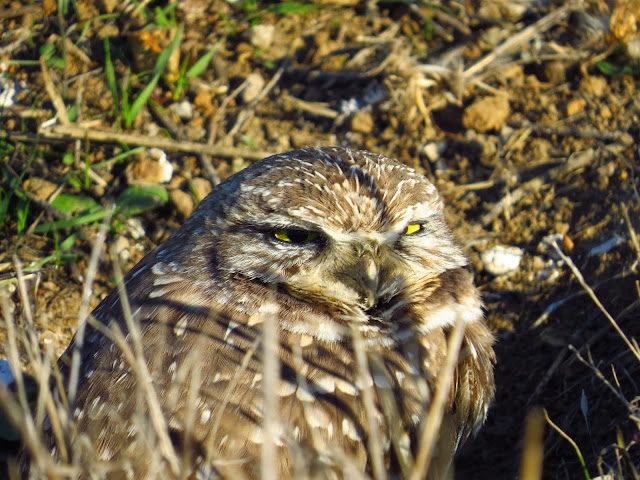
                                                                       Burrowing Owl

This is, to me, the absolute zenith of bird name quality. Don't tell me how the bird appears, tell me who the bird IS. What do they DO? What do you imagine their personality is LIKE? The more abstract and loaded with imagery the better. Hermit Thrush? Yes please. Happy Wren? Don't mind if I do. This also applies to birds that have descriptions of their behavior- many family or subfamily names are laid out like this, Creeper, Roadrunner, Skimmer, Flycatcher, Hummingbird, etc. Names like this are fairly rare, but they are always so great. It is also, in my opinion, the area that has the most room for expansion, perfect for renaming some of those eponymous birds. We don't need a Brandt's Cormorant, but an Ambitious Cormorant? Now I'm interested. Just a simple proposal, and I'd be happy to make up personality traits for as many birds as you like, if you're looking for an expert in the field of making stuff up about birds.

Post Script: Birds whose names I have no opinions on: Booby, Dickcissel, Bushtit, etc. These are often listed among the worst bird names, but I think it's ok that some things are funny. None of the birds are actually named after dirty words, except for the Windf*cker. They really meant it with that guy. Anyway, sometimes the etymology is pretty interesting for these birds. Leave them alone!