Showing posts with label Pelicans. Show all posts

Sunday, June 12, 2016

Checking in with Florida Birds

It's been a while since we've visited with our Florida bird friends, but as you might've guessed from last weeks parrots, we took a trip not long ago. While there are some exciting new birds to come, we also caught up with some old favorites. What're they up to now? How's Florida treating them?

Great Blue Heron has gotten really into the art scene. He lives in a studio/work space now, and is very into his new housemates. We're happy for him, but he's actually not very talented. Art has to be more than just provocative, you know Blue Heron? Even worse, he's been sort of ignoring his old interests and friends. It'll all come crashing down eventually.

Brown Pelican is up to some sketchy behavior. After a failed bird of the year bid, he went down to Florida and got involved in some ill-defined business. He lost some weight, probably from sweating so much in the South Beach heat and humidity. Takes a lot of trips down to Cuba. Drugs? Arms deals? Guantanamo? We wouldn't put it past him.


Northern Mockingbird, as the state bird of Florida (among others), is distressed. She worries a lot these days about the state of politics, climate change, growing civil unrest. Really, just the whole thing. She is often seen with a furrowed brow, staring off into the distance. Where have the simpler times gone, she wonders, when her duties as state bird were mostly ceremonial, and she felt like she was making people happy? Nobody told her it was going to end up like this.


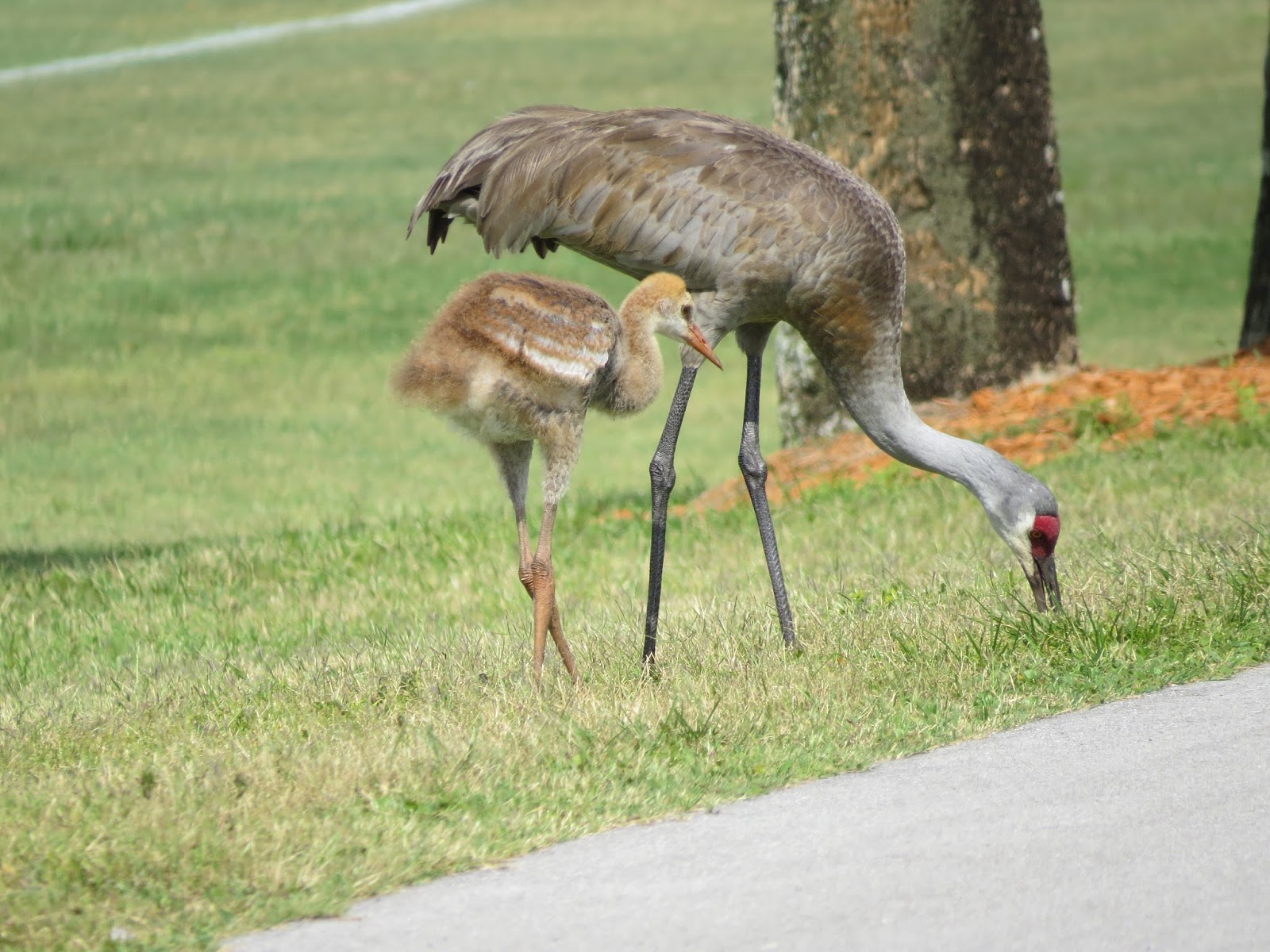
Oh. My. God. Have you guys seen Sandhill Crane's new baby? It is, like, seriously the cutest baby you have ever seen. And so well behaved too. She takes it everywhere and it doesn't make a fuss. Sandhill Crane's really got this mom thing down. Maybe it's easier than we thought to have a baby. Maybe not, Sandhill Crane does look a little tired.

Friday, March 25, 2016

BRL: Bird Request Live: Hummingbird and Pelican


Welcome to a new feature! You write in with your bird requests, I do a blog about them (provided I actually have the bird in question), and that's the whole thing. Realistically, I imagine this feature will repeat approximately never to once every 6 months, because that's the estimated level of interest here. Still, nearly at 20,000 clicks and on our 4 year anniversary, it doesn't feel bad to add a new feature. Happy Amateurniversity to me! If you'd like to request a bird, hit me up on the Twitter or just leave a comment.

Today's bird request is coming in live from Lia P. in Atlanta, GA. Lia writes:

Do you take requests? Like, maybe you could do a DJ Fly feature (get it? Because most birds fly) and do a post on requested birds. If so, this is Lia in Atlanta and I'm requesting the hummingbird and pelican, two of my favs.

I absolutely can, Lia, but I have to say I don't really understand that joke. Sense of humor has never been our strength here at The Amateurnithologist. You requested 'the hummingbird' and 'pelican', so I assume you just leave it up to me which type of hummingbird and pelican you'd like to see.


There are 338 known species of hummingbirds, but only 20 that are regularly found in North America. Even then, most of those are located south of or on the southern US border with Mexico. Narrowing things even further, the only hummingbird regularly seen on the east coast is the Ruby-throated Hummingbird (covered on this blog here). We've also done Anna's Hummingbird, the most common on the West Coast. Today we have a new hummingbird to show you.
female
Costa's Hummingbird (slightly speculative, I find these very hard to tell from Anna's)
Palm Canyon, Palm Springs, California, USA
February 2016
Member of the Hummingbird Family
§A Bouquet of Hummingbirds§

~true bird fact~ You picked a really interesting bird in the hummingbird. It has many unique features, but I won't share them ALL today. Hummingbirds eat only flower nectar, generally only from very specific flowers. Often hummingbirds will co-evolve beaks that fit perfectly with the flowers they pollinate. That's how you sometimes see hummingbirds with extreme or unusual bills.

As always, here at Amateurnithologist, we maintain that hummingbirds are not actually birds, but rather malfunctioning machines, or perhaps bugs

male

Pelicans were the other bird requested. There are only two species of pelican that live in North America, and we've covered both of them here on the blog- American White Pelican and Brown Pelican. Impressively, I've managed to do 8 blogs that at least include images of pelicans despite there only being two types (well, two types here. There are still only 8 worldwide). A testament to the interestingness level of pelicans. And interesting they are- some of the worlds heaviest birds, they look like they should never be able to fly. However, their body structure is incredibly light for how bulky it is, as they have connected networks of air sack organs in their bones and skin that not only make them lighter, but let them float high in the water. Their strange bill is defined by an expandable pouch that usually catches fish, but can also hold rain water.


Thursday, October 15, 2015

Birds in Motion (by the Ocean)

Going with a much more picture heavy format today, amateurnitholofans. You see, I have all these birds pictures that I like, that don't really fall into the categories I've established for this blog. They're not really good enough to be portraiture, or I've already explored the bird in question. However, I think a lot of these are really great moments worth sharing. Today they all share a theme of exploring the ways in which birds move. All photos taken in Santa Cruz, California, USA in September of 2015.

Brown Pelican Quatrych (surveying, diving, takeoff, rising)


Brewers Blackbird- fix up, look sharp


Elegant Tern - hate to see you leave


Sooty Shearwater -  going someplace


Whimbrel - beak uses


Black Turnstone- bad water, good water

Tuesday, April 28, 2015

Bird Sick Day

It's a sad day blog fans, because your amateurnithologist is a bit under the weather. It's ok though, because everyone gets sick sometimes, and maybe we can get through this together. How do some of the birds we've taken a look at in the past deal with it when they get the sniffles?
Brown Pelican (juvenile) lazes about and feels sorry for himself. If you get too close to him he'll start coughing more loudly or moaning about his headache. Best to just give him some space.

Red-winged Black Bird believes in ayurvedic techniques and tries to purge her body of vaguely defined toxins. She goes to hot yoga, drinks tea that makes you sweat, and generally covers herself with lots of blankets. It's very sweaty, but she is dedicated.

There's no polite way to put it, Green Heron is a hypochondriac. He constantly thinks he's getting sick, and when he inevitably does, he approaches it like a job. He takes a ton of over-the-counter medicines, but also goes to the doctor and tries to get anti-biotics even though it's probably just a cold. That doesn't work for a cold, Green Heron! It's going to be worse for you in the long run..

Black-necked Stilt continues to live a party lifestyle and pretends he is not sick. He takes a big gulp of alcohol and laughs and says 'this should kill the germs!' Black-necked Stilt gets a lot of people sick because of his inconsiderate behavior.

Monday, December 29, 2014

2014: A Birding Year in Review

At the beginning of this year, I posted some birding resolutions for the coming year. Well, it's our last blog post of the year, and I think it's a good time to look back at some of those goals and see just how much we accomplished, as well as setting some new ones. Were they mostly amateurnifails or amateurnisuccesses? It's a time for reflection, a time for introspection, it's the amateurnithologist year in review.

1) Take a picture of a Golden Eagle

Status: TOTAL FAILURE
Amateurnithologist should have set this goal as 'take a million pictures of bald eagles' since it was really their year. I saw them probably a dozen times this year, but never even spotted a golden eagle. This goal will have to continue forward, since I still totes wanna see that bird.

2) See a Roseate Spoonbill

Status: Semi-success
Well, I definitely got to see this bird, and I even got a picture of it, so maybe it's a full success. But I just can't get over how disappointing it is that I didn't have my good 'birdin camera' on this very eventful trip to Florida. It broke shortly beforehand and I had to use a backup, hence why there haven't been many pictures from it post to the blog. We're a victim of our commitment to quality here on Bird Blog. Next year maybe I will get a picture of a Spoonbill worth a portraiture entry.


3) Get a good picture of a Vulture


Status: Good Job!
Actually was able to knock the whole North American Vulture Family off the blog list this year, with solid entries for both Black and Turkey Vultures. It was most exciting that I finally got to find some at rest and take intimate portraiture shots that you don't often see of these birds. Condors, my 'reach goal', were not to be had, but they were always unlikely.


4) Blog about more ducks


Status: Duckcess!
We managed to get a few good ducks on the blog in this year, and have several more in the queue. Most importantly, I paid more attention to ducks in my day to day birding, and as a result got quite a few interesting ones, including the inexplicable Lake Merritt Tufted Duck and the Surf Scoter that was my 'duck to look for'.

5)  Track down the elusive Snail Kite


Status: DID NOT DO
Yeah, when I went and visited his home, there were simply no raptors to be seen. I think I'd need to dedicate a lot more energy to finding this guy, and frankly he doesn't seem worth it. If Snail Kite happens, he happens, if not, I'm willing to let this one go. I did get a ton of other raptors this year, many of which will be blogged about in the new year, including the above Merlin.


6) Find a Painted Bunting

Status: Welllllll... 
This Painted Bunting Pic (PBP) was taken by Amateurnithologist's mom at Green Cay Wetlands in Florida. So, since I worded the goal 'find the Painted Bunting', you could call it a success. I now know where he is. However, never one to rest on his laurels, the Amateurnithologist will not be satisfied until he sees one himself and can put a quality picture of it up on the blog. Next year Painted Bunting, next year!

Total Success Rate: 50%
I'd say halfway getting to your new years resolutions is better than most people manage, so I'm going to call this one a success. So, just to recap, what am I going to be trying to do in 2015? I think this year's goals are going to be mostly local, trying to take in the rarer birds that I know are here, but haven't gotten to see yet. It will the year of the California bird.

Three goals that carry forward
1. Golden Eagle
2. Califonia Condor
3. Painted Bunting

and three new ones
4. Audubon Society blog (expertly named Audublog) posted recently about Owling California. It seems California is positively lousy with the things. I'm a huge owl fan, as seen in entries about the Barn and Burrowing Owls, and would be excited to get, let's say... Two More Owls this year.
5. Sitting nearly right under your Bird Blogger's nose are the Farrallon Islands one of the great birding destinations. You don't need to travel half way around the world to see Puffins, and this year, I'm hoping to get out there by boat and capture some images of Tufted Puffins.
6. Road Runner. I just want a picture of a road runner. He lives in, like, all of our deserts. Let's make it happen.

Thanks for joining us on this journey, loyal readers. Join us next year for another fantastic year of birding amateurishly.

Tuesday, March 18, 2014

8 Tips to Take your Amateur Birding Game to the Next Level that They Don't Want you to Know. You Won't Believe Number 6!

Today it is our second anniversary on amateurnithologist dot blogspot dot com. While we proudly maintain our amateur status, after two years of looking at birds, it is safe to say we've learned a lot. Are you an armchair birder too? Here are some of the things we've learned along the way. Maybe you'll find something helpful here too.


1. We are all Time's Subjects
By this I mean get to know what different times of the day mean for birding. Most people probably know already that close to dawn is when birds are most easily observed. "The early bird gets the early bird", as the old saying goes. However, late afternoon can be just as rewarding of a time to go birding, and a much less annoying one to be awake during. I recommend the last hour and a half or so before sunset. Your mileage may vary for different birds. Try going on the same hike a few times during different times of the day and making observations about what you see.

2. Become a Seasoned Birding Expert
I also recommend that you start paying attention to seasons. You might think you've seen all the birds a local spot has to offer, but if you just went in fall, you're going to miss out on all the spring birds. Little know fact: birds fly around, and live in different places, you know? There should be a word for this behavior. Another assumption is that birding is most profitable during the Spring, but because birds migrate in lots of different directions it's really worth it to look year round. Your chilly lake may be just the right temperature for a bird who summers in the arctic.

3. Learn the Hot Birding Spots in your Area, but Don't Ignore Everywhere Else
Where do birds live? The answer is basically everywhere. Birding starts in your own neighborhood, on your city streets, in the drainage pool behind the mall. Some of the rarest bird's I've seen have just been spotted wandering around residential neighborhoods or college campuses. While ebird.com's got a great database of birding hotspots that I can't recommend enough, it's also important to do some looking on your own. One general tip about birds: bodies of water are always a great place to start.

4. Hurry Up and Do Nothing
Our most exciting sounding tip yet! While the hobbies of birding and hiking intersect, there is a key difference in goal and generally in pace. When you walk through a park looking for birds, make it a leisurely stroll. Observing your environment carefully, rather than giving it the casual once-over, will increase the number of birds you see dramatically. Found a nice spot where you can hear some birdsong? Stop and sit a while. Relax. Birds will appreciate you more if you're a chill dude or lady.
5. Go by Yourself (or with Very Laid-Back People)
Let's face it, birding is not an inherently social activity. Maybe a group of birders can pull this one off, but if you plan on going someplace mainly to look at birds, and you're inviting some of the uninitiated, you'd better give some fair warning. Either your friends are going to get super bored while you stare at some bird and take a million pictures of it, or the bird is going to fly away and you will secretly resent them for breathing too loud. Anyway, one of the greatest pleasures of this hobby (to me at least) is peace and space to think that you can get from a little bit of solitude.

6. Think Like a Bird
Does a bird want you to point at it and shout? Probably not, right? My frequent walking partner, N, can always tell I've spotted a really neat bird because I go completely quiet. If a bird is flying away from you, don't pursue it. It can be hard to ignore this impulse, but you have to be willing to let the birds come to you. When a bird really wants to be photographed, he'll come by and pose for you. You just have to wait for the right moment. Another part of this tip is to be logical in where you are looking for birds. Birds of prey often hang out on the unobstructed branches of tall trees or telephone poles because those are the best places to spot prey from. If you never look up there, you'll never see one.
7. Preparation is 9/10ths of the Bird
This is probably a tip only for people as dumb as your amateurnithologist, but don't forget all your stuff at home. A shameful number of times I've brought my camera with me, but accidentally left the memory card at home, or neglected to charge the batteries. It can also be a good idea to take your birding stuff with you even when you aren't planning on spotting a bird, because sometimes they just show up. Lately I've noticed a family of Orioles at my work and started bringing my camera with me, just in case I get a good opportunity to take a picture. Ancillary tip: Don't leave expensive looking birding equipment in your car. Ever.


8. Be Patient with Yourself
This tip won't necessarily help you bird better, but it'll prevent you from birding burnout (or birdout, as it's known in the community). I can still remember the first time I successfully identified a bird without the use of a guide. That was less than 3 years ago, and just this past weekend I was walking along the bay shore and was impressed by just how many of the birds I recognized immediately. You have to be willing to give yourself time to grow and improve, and be aware that you're going to make a lot of mistakes at the beginning. Unless you really cram and study (and who wants to do that) you're going to remain an amateur for some time. And that's great. Remember, we are all on this amateurnithological journey together. And you know what they say about the journey and the destination. For the bird blog, this is A., signing off.

Tuesday, November 5, 2013

Bird of the Year 2013: Meet the Candidates

Hello birdpersons! I had planned a super boring entry about a Northern Flicker, but then I got the news. Audubon California has announced the candidates for Bird of the Year 2013! Obviously I had to stop everything I was doing and write up a voters guide. For birds we've covered before, we'll catch up on their latest accomplishments. New birds will receive a brief, but informative overview. An informed voting public is a societal good!

Black-necked Stilt
On fire since being declared sexiest bird of the year 2012. Has successfully branched out into more sectors than anyone really expected. Resting on his laurels right now, to be honest, but in the eyes of the public this bird can do no wrong.
Chances of winning: GOOD.


Brown Pelican
What did brown pelican do to get his name on the ballot? You don't wanna know. But he's there, and he's made all the right moves this year to position himself for a win. Why does he care? A bid for power? A move towards legitimacy? Simple egotism? No one knows, but he's been racking up endorsements from the business community, and detractors are suspiciously (ominously) silent.
Chances of winning: I'M MORE WORRIED ABOUT WHAT HE'LL DO IF HE DOESN'T WIN

Burrowing Owl
 
Archival Image from Ca. Audubon: Peter LaTourrette
The traditional gesture nomination provided to someone both cute and deserving of recognition, like when a child actor is in an actually good movie. Unlikely to be awarded the title unless the public is in a strange mood. Burrowing Owl himself is pretty 'over' his fifteen minutes and right now is attempting to drive away interest with rude public behavior. Unfortunately this is leading to more attention, and not the positive kind he's used to. Will burrowing owl make it through this rough spot?
Chances of Winning: PROBABLY NOT

Golden Eagle
 
 Archival Image from Ca. Audubon: SigmaEye (??)
Your Amateurnithologist saw a golden eagle once in the wild. He was hiking in the desert and one took off from the ground just a few dozen feet from him. Honestly, the experience was too awing for him to even try with the camera. He seemed aloof and perfect, like some kind of bird god-king. A mighty and remote competitor, golden eagle is pretty much ignoring that the contest exists, but is still commanding respect from all commentators.
Chances of Winning: HOW COULD HE NOT?

Loggerhead Shrike

Archival Image from Ca. Audubon: Patricia R. Pierce
Loggerhead shrike's positioning in this contest is mostly that of a spoiler for the more serious competitors. He's a third party candidate, in essence. He appeals to bird purists with his straightforward approach and no-drama attitude. He seems to say: I am a bird, I have wings, I have a tail, I have a beak. What more could you want?
Chances of Winning: VERY LOW

Western Yellow-billed Cuckoo

 Archival Image from Ca. Audubon: Laura Frazier
When's the last time western yellow-billed cuckoo did anything worth mentioning? Truly a nomination out of left field for the struggling bird. Perhaps a bone throw from the academy so that people will say 'hey, remember western yellow-billed cuckoo'. Retains his charms in a technical way, but to those who know him well, it is like seeing a ghost.
Chances of Winning: ACTUALLY ZERO

I hope this guide prepares you for election day and the celebratory gala afterwards. This amateurnithologist knows he will be there with bells on, live blogging the ceremony. Best of luck to all the competitors.