Showing posts with label Misc Bird Photos. Show all posts

Friday, December 1, 2023

Good Birds, Bad Pics: Florida edition

For a lot of reasons, it's looking like I probably won't be going back to my home state of Florida for quite some time. Although I have a complicated relationship with the place, I increasingly enjoyed my regular visits, and was able to develop an appreciation for the things that make it special. Arguable (and certainly for the purposes of this blog) the best thing about Florida is the birds. A great state for birds in general, but also, one where there is relatively little overlap with my adoptive home state of California. 

So every time I've gone back I've tried to get a bit of birding done, despite how little time I actually get to spend there. This past April was my last trip, and while it produced some good bird pictures (to be posted at the usual rate that things go around here), it also produced some real stinkers. However, given that this was my last trip for a while, I'm going to go ahead and say 'still counts'! So here, without further equivocating, are some really terrific and cool birds that I was so happy to see, but that I was unable to get anything but the #WorstBirdPics of.


Caspian Tern
Arthur R. Marshall Loxahatchee National Wildlife Refuge, Boynton Beach, Florida, USA
April 2023
Member of the Gull, Tern, and Skimmer Family
§A Committee of Terns§
★The World's Largest Tern★

{Etymology Corner} Yes, they are named after the Caspian sea. And yes, a lot of these terns do live there. They really get around, huh?

What went wrong? Man, you know how these things fly around. It's hard to get a picture of them in flight, and they weren't landing. Also, the light was getting a little tough by this point.


Cape May Warbler
Arthur R. Marshall Loxahatchee National Wildlife Refuge, Boynton Beach, Florida, USA
April 2023
Member of the Wood Warbler Family
§A Confusion of Warblers§

{Etymology Corner} Yes, they are named after Cape May, New Jersey, which was where the bird was first collected by European colonizer types. However, unlike the Caspian Tern (above), they do not actually really live in Cape May. In fact, it took a hundred years for another Cape May Warbler to be sited there, although today it's recognized as an uncommon visitor. Maybe don't go for just your first idea on these things, when you're naming birds. And yet, still better than being named after some guy..  Shoutout to the Bird Names for Birds movement on their recent victory.

~True Bird Fact~ They have a curled semi-tubular tongue, which is unique among warblers, and enables their seasonally varied diets. In the summer, they're up North, mostly eating bugs, but in the Winter, they live in the Caribbean, where flower nectar and fruit end up being a large part of their diet. I wonder if they like the winter better. I know which of those two diets sounds more appetizing to me.

What went wrong? This guy was hoping around everywhere, going nuts. Also, I get reluctant to hold other people up when I'm trying to take a picture of a bird around other people. Maybe my camera settings were funky? I think the light was also starting to go a little here as well.


Worm-eating Warbler

Lantana Nature Preserve, Florida, USA
April 2023
Member of the Wood Warbler Family
§A Confusion of Warblers§

{Etymology Corner} They don't eat worms! Not even a little. They do eat caterpillars, but not more than any other warbler. The reaction to this information across the bird internet is muted, sort of a 'eh, what are you gonna do?' vibe. I find this distressing information. To make matters worse, the Worm-eating Warbler has a range that includes Cape May much more regularly than the Cape May Warbler, and the Cape May Warbler is known for it's favored food source to be an insect called the Spruce Budworms, to the point where Cape May populations increase when there's a Budworm outbreak. Who is naming these things? We need to shut this whole thing down.

What went wrong? I saw this guy out in the open for about 5 seconds before he completely disappeared. I followed his chirping around for a bit, but he never came out in the open again. Also, it was raining


And lastly, a very special welcome back to the American Redstart in his unprecedented second appearance in the Good Birds, Bad Pics series. Go to hell American Redstart.

What went wrong? Personal hatred for me, I'm assuming

Sunday, March 28, 2021

Backyard Birds pt.1

One great trend to come out of the pandemic has been the rise of hyperlocal birding. I know I've been paying more attention to my own patch as I've been unable to do much serious travel in the last year or so. The idea of birding your own backyard has been around forever, but it's really blown up lately, as has the 5 Miles Radius list, popularized by Jen Sanford. Anyway, I'm going to present some of the birds I've seen in my yard this year, and will be providing occasional updates as other interesting visitors pass through. For informational purposes I live very close to Wildcat Canyon regional park, in the beautiful East Bay California. Technically, I am counting any bird I have seen from my front or back yard.

Hermit Thrush, nervous

This would be a good time to mention that 1) these pictures are not going to all be the greatest, because I've limited myself somewhat to birds that catch my eye as they momentarily travel through my yard. More information and pictures are linked when available (i.e. they have previous appeared on this blog) 2) in the case of the hermit thrush, my old picture is not great either. In fact, I don't have any great hermit thrush pictures. I guess they don't call them 'social thrush' for a reason.

Bewick's Wren, was geocaching before it was 'cool'

Another thing I feel like I should mention is the privilege inherent in backyard birding. Not just the privilege of having a yard, which is significant, but of having access to nature. For me, living near a park, being in a neighborhood I can freely and safely walk around in without fear, and living someplace with a climate that permits being outside for the entire year and enormous contributors to my happiness, and things I know not everyone has access to. However, I do think that the concept of birding close to where you live is something that actually makes birding more accessible for some. And we should always be thinking about how to make birding more accessible and equitable. Ok, I'll let you get back to scrolling through blurry bird pictures from my yard now.


Brown Creeper, thrill seeker

This one actually hasn't appeared on the blog before! A lifer! In my backyard! To be honest, I've definitely seen brown creepers before, but never had a picture of one worth sharing. Well, this one's still not good enough to be worth sharing, but in the context of only birds in my backyard, it's making it in!

California Towhee, yearns for the sea

If you asked me to guess what the bird I see the most often is in my backyard, California Towhee is what I would say. They are daily visitors and just hang out here all the time, sometimes, as in the above-linked blog, to their own detriment. They have single-handedly caused me to never leave my backdoor open.

White-crowned Sparrow, eye for detail


American Crow, "why bother?"

House Finch, thinks "fake friends" are a real problem

Lesser Goldfinch, always blinks or makes a weird face when a picture is taken of him. It's like a curse

Funny enough, I now think the bird in this link looks more like an American Goldfinch (I've gotten a lot better at birding!), but it's still not totally clear to me, so I'm not gonna go change it).

American Robin, Tries to convince people he's a fake plastic bird by sitting very still

Eurasian Collared-Dove, weight of the world on her shoulders

The following birds are visitors, but are not included in the blog. I distinctly remember seeing them or I see them often enough that I know I will get a picture of them soon.

California Scrub Jay

Anna's Hummingbird

Great Horned Owl- this was one of my most exciting backyard sightings. First thing in the morning I heard a great number of crows making a ruckus in the back yard. Possessing what little birding knowledge I have, I thought it would be worth it to go check out. Sure enough, I was able to briefly see a great horned owl in the neighbor's redwood before it was successfully flushed out by the crows. Truly an incredible experience.

Northern Mockingbird

Turkey Vulture

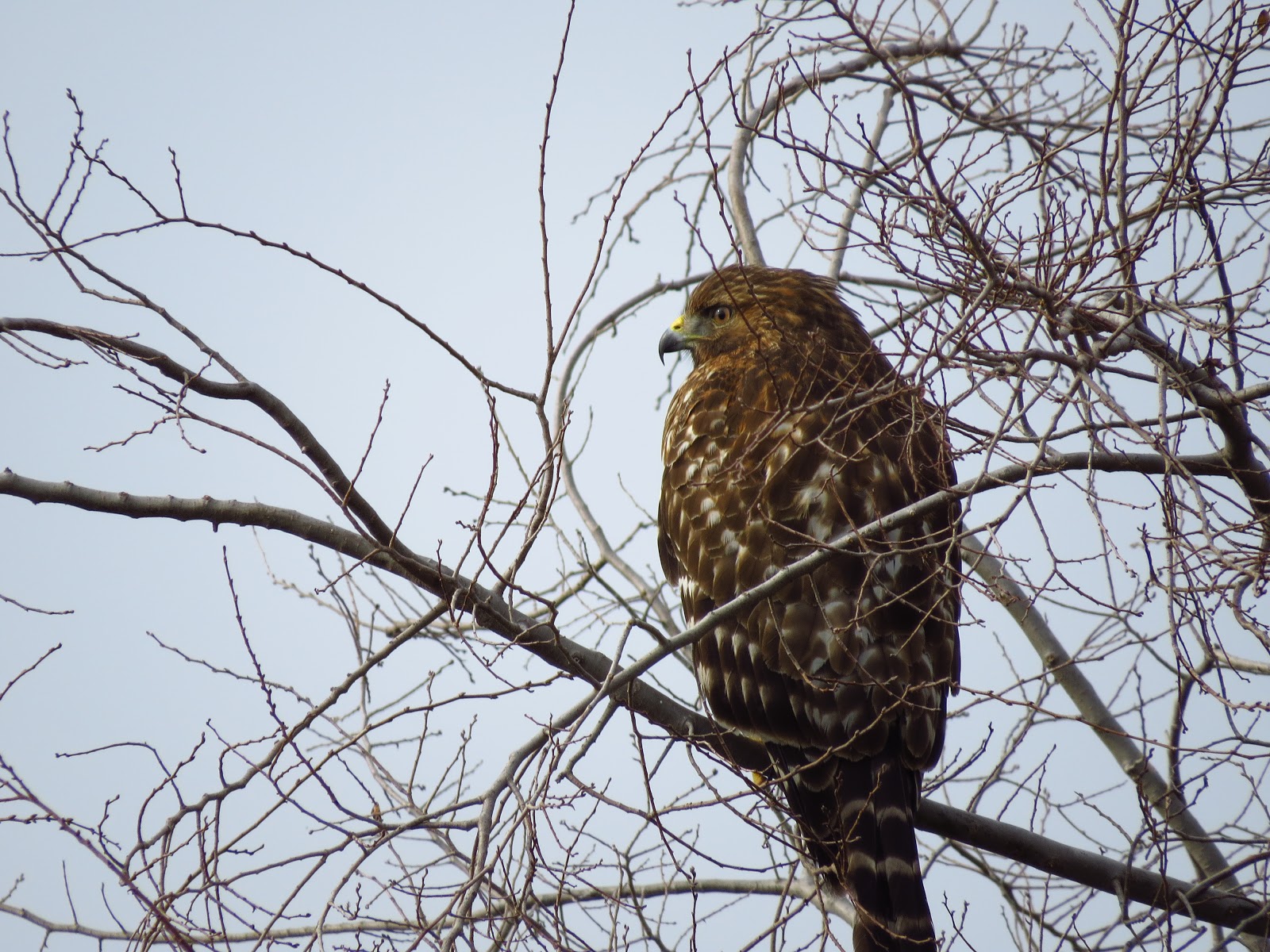
Red-tailed Hawk

Wild Turkey

I know none of these birds are the type that people really get excited for. In fact, it reads very much like a list of the most common birds seen anywhere in California- but that's kind of the point. They're all good birds, and they're all worth paying attention to. Thanks for reading, I hope this inspires more people to take up backyard and 5 mile radius birding.

Sunday, October 18, 2020

Good Birds, Bad Pics: Mono Lake Edition

 Hello bird fans! As you might have known from my Grouse Grousing last month, I recently took a trip to Mono Lake. It was a wonderful trip, but to be honest, not as bird-bountiful as I might've wanted. It was a little early to catch the big migrations, but still, it's away from home, and that means new birds. Just not, like, a lot of new birds. And certainly not cooperative new birds. So below I present to you some of the finds that I'm happiest about having seen, even if I didn't exactly nail it in the picture department. These days it feels like the busy amateur birder should feel pretty good about having even tried, right?

Clark's Nutcracker
Mono Lake County Park, Lee Vining, California, USA
July 2020
Member of the Crows and Jays Family
§A Jar of Nutcrackers§ (the other ones are worse)

~True Bird Fact~ Yup, he's named after That Clark, of Lewis and Clark fame. I'm not going to do a naturalist profile in this one. I just did one of those. Go read about how birds shouldn't be named after these guys anyway.

Picture Crime: Far away, in shadow. Basically you can barely see it well enough to ID.

Wilson's Phalarope
Mono Lake Tufa State Natural Preserve, Lee Vining, California, USA
July 2020
Member of the Sandpipers and Phalaropes Family
§A Dopping of Phalaropes§
★The Largest Phalaropes★ (of...3)

[Etymology Corner] Phalarope, that's a weird word, huh? It comes from the Latin name of the bird, and it breaks down to mean Coot-footed. So this bird is named after having lobed feet, similar to a coot. Ironically, this member of the Phalarope genus actually doesn't even have the lobed feet. Pretty messed up that the birds have similar feet but one is named after the other. If only the cards had been dealt a different way, perhaps the coot would've been named Phalarope-footed (but this would cause a time paradox, unfortunately). 

~True Bird Fact~ Unlike most birds, the female is the dominant member of the species. She is larger, more colorful, and males watch the nest while she is out finding more partners. Girlboss!

Picture Crime: Far away, in a group, breeding plumage appears to have not quite come all the way in yet. Other birds nearby confuse me and make me less confident in my ID. They could be juveniles, non-breeding birds, or even non-breeding Red-necked Phalaropes.

Brewer's Sparrow
Gem Lake Trail, June Lake, California, USA
July 2020
Member of the American Sparrows Family
§A Ubiquity of Sparrows§

~Interesting Bird Facts?~ None. Hey, it's named after that same guy from Brewer's Blackbird. That's something, I guess.

Picture Crime: Obstructed behind a branch. Slightly out of focus. Sparrow, so, inherently boring. I already forgot which one it is. 

Well, thanks for slogging through those medium pictures. Still, it's 3 birds I didn't know before, and sort of know now. See you next time when we get into some of the birds I got slightly better shots of.

Monday, February 25, 2019

Red America Vs. Blue America, Who Has Better Birding?

The year is 2019, the month is any month, and that means it's Politics Season! Yes, that's right, Politics, the thing that we all love to hear and talk about. Take a deep breath, that's politics on the wind. What else is on the wind? Birds of course, which is another thing we all love, except unironically this time. What if birds and politics were... combined? Is there any quicker way to get a bunch of negative comments on my blog? Let's harvest those hate-clicks and talk some politics!

Bald Eagle, also known as "The Politics Bird"
Friends, in our modern era, sometimes it can feel like we live in two different countries, increasingly in our own sectarian bubbles- Red America or Blue America. Sure this is a big problem for us as a culture and has led to increased radicalization and feelings of hopelessness and isolation. But also, it would be fun to pretend those countries were real places, and try to bird in them, right? That's the premise of today's blog, at least. We're going to solve the political debate once and for all by determining which 'side' has the best birding.

METHODOLOGY: I determined which states were Red and Blue by looking at the last 4 elections (conveniently, 2 of which were won by Democrats and 2 by Republicans). If your state voted the same way in all 4 elections it was determined to fall into one of those categories. We want current data, right? So no reason to go back to 1972 or whatever. In terms of the birds, I have to issue a massive thank you once again to the powerful data engine at ebird.org, where most of this information was gleaned from. In order to get combined checklists of specific combinations of states I had the manually 'hack' the URL, because there was no other way to select that many locations at once. I also used the last 16 years of reports for this, to make sure that all the birds being reported were from a state that was the 'right color' at the time the report was made.

Blue America
An unknown politician with a House Finch
Is made up of, in no particular order: Washington, California, Oregon, Hawaii, Minnesota, Illinois, Massachusetts, Rhode Island, Connecticut, New Jersey, Delaware, Maryland, Washington DC, New York, Vermont, New Hampshire, and Maine*

*-Maine, and Nebraska below, have proportional electoral college votes, meaning they can 'split' their votes between both sides. In each case, the state in question has offered exactly 1 (one) electoral college vote to the other side in the past 16 years, so I decided to count them in their respective blocks. You could probably strike both of these states if you wanted to and have it not effect the totals, but go for it if you really wanna crunch the numbers.

The Data
Number of States: 17
Total Square Miles to Bird in: 639,050
Bird Species to be Found: 849
Biggest Contributor: California, with 660 bird species

California Quail, State Bird, California
An impressive showing! You can see around 85% of the United State's approximately 1000 birds in the Liberal States of America. Leading the charge, both politically and birdually is the Amateurnithologist's adoptive home state of California! California has the most bird species of any state in the nation, but honestly it makes sense. Birds flock to California because 1) it's enormous, 2) has a long stretch of coast line, 3) it borders Mexico [always good for species diversity], 4) it's got a tremendous array of climates and habitats, and 5) great quality of life. We also pick up some notable endemic species from Hawaii, America's asterisk.

Red America 
Funny, sure, but you'd be flinching too
Is made up of: Mississippi, Alabama, Georgia, Kentucky, South Carolina, West Virginia, Tennessee, Missouri, Arkansas, Louisiana, Idaho, Utah, Arizona, Montana, Wyoming, North Dakota, South Dakota, Nebraska*, Kansas, Oklahoma, Texas, and Alaska

The Data
Number of States: 22
Square Miles of Birding: 2,281,021
Species of Birds: 888
Heaviest Hitter: Texas, with 640 bird species

Greater Roadrunner, State Bird, Texas
In some ways it's shocking to me that the numbers are so close, but I guess that's to be expected. While Red America dominates in number of states and sheer size, the amount of birds you could potentially tick in each 'country' is really comparable. Still, it's right there in black and white, Red America has more birds. A lot of this has to do with its massive size, but Texas does a lot of the heavy lifting, mostly by (ironic?) virtue of being practically part of Central American. Birds don't know politics, so you'll find plenty of species you'd normally only find in Mexico and south along the border. Alaska also contributes many West Coast, Asian, and Canadian birds that would otherwise be missed.

So there you have it, the case for Red America as the better birding destination


Unless we consider....

Bird Density


So where is it actually better to go birding in? Like, where is the best bang for your buck? Which place is densest with bird species? Well, the numbers below don't lie

Blue State Species/Square Mile .00133
Red State Species/Square Mile .0000417

Because the blue states are so concentrated on the coasts (major flyways), and their states are relatively small, they are much denser with bird species. Sure, if you had unlimited time you might see more birds in Red America, but Blue America is going give you your best odds for a big day.

So one point red, one point blue. Where does that leave us?


Well, not exactly.

Bird Enthusiasm


You see, here at Five-Bird-y-Eight, we've developed an advanced formula to determine bird enthusiasm, which we'll use as our tie-breaker. Our team of bored scientists has taken the number of e-bird lists submitted from these states this year and divided them by the quality of their state birds (using our irrefutable and indispensable State Bird power rankings). The number yielded by this operation makes up the Best Bird Quotient (or BBQ), which is then multiplied by a thousand, to make it a more parsable number.

Red State Bird Enthusiasm: 10.45
Blue State Bird Enthusiasm: 19.45

Texas may have the best in the nation State Bird, but quantity of E-bird lists is what really sealed the deal here, led by extremely enthusiastic California and New York. It turns out that Blue America just cares more about birds, at a nearly 2 to 1 rate, and really, shouldn't that determine the winner?


Ok, ok, ok, one more thing. If you're like me, you're probably wondering how the Independent states fared. Those brave 12 states that go their own way, or, depending on your interpretation, just absolutely cannot figure it out, year after year. Those states have a total of 766 species in them.They boast, if nothing else by far the greatest bird species density per state at an impressive 63.8. Blue comes in at 49.9, Red at 40.36. Wow. I think if there's one thing we learned today, it's that depending on how you look at things, you could make the case that your chosen political bubble is the best one. I'll also point out that the only way you're going to get all the birds in America is by taking it all in, Red, Blue, and all the colors in between. And isn't that a message we could all learn a little something from? Birding-wise, I mean. This is just about birding.


PPS- The Red States are really in trouble if Puerto Rico is granted statehood, since they have 17 endemic species and really high bird diversity (342 species across 3515 square miles). If I were a congressional Democrat, this would be a real priority for me. Again, only for bird reasons.

Saturday, January 26, 2019

For Owl'd Lang Syne: The 2018 Birding Year in Review

Happy New Year!
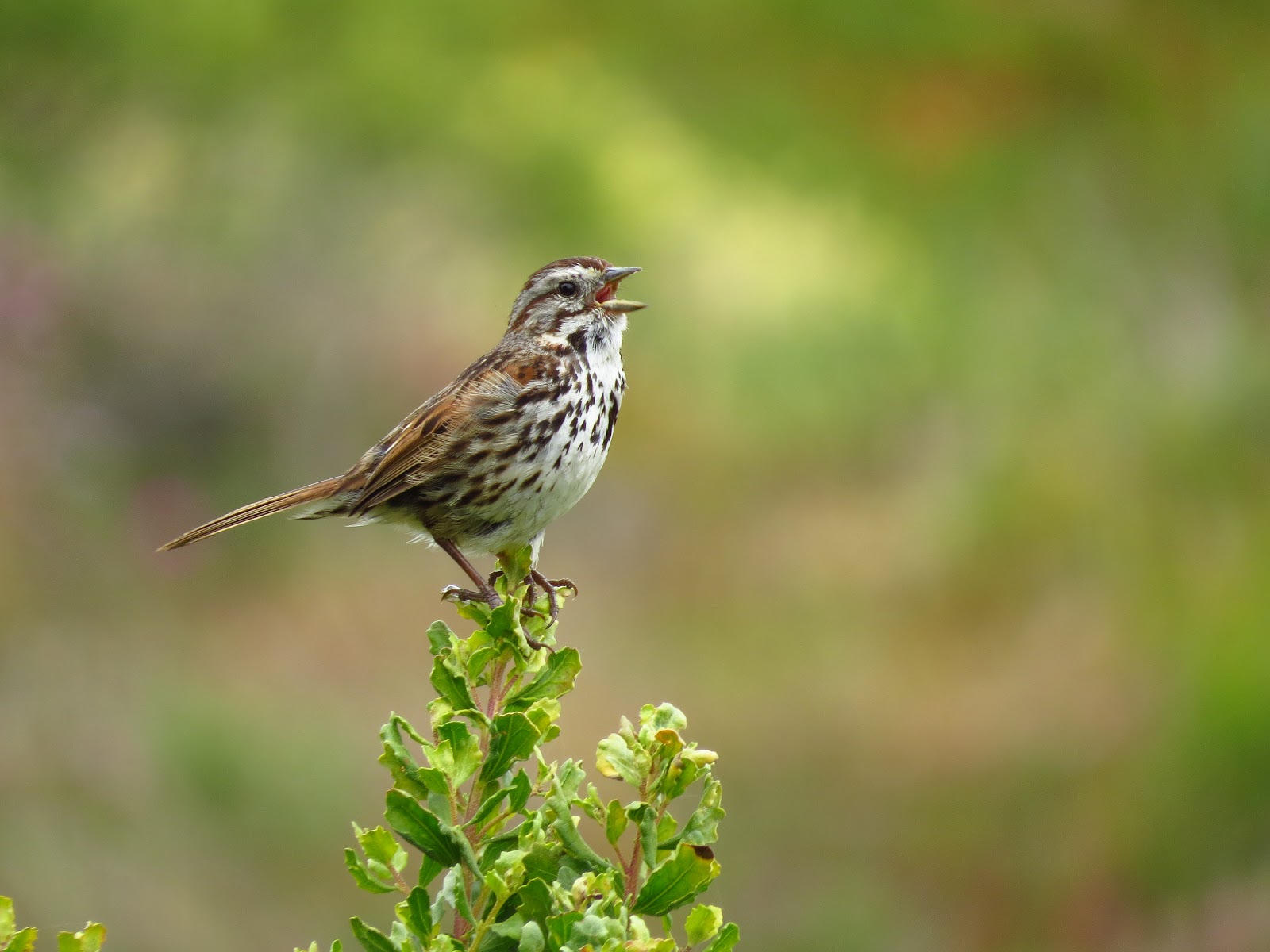
Song Sparrow
 It may be almost February in the rest of the world, but here on bird blog we're still processing the events (and birds) of 2018. That's right, it's time for the hotly anticipated annual 'year in review' post, now with less to review than ever before! But fewer blog posts doesn't necessarily make a not-as-good blog, as we'll hopefully see today.

American Robin

To start with, let's crunch some numbers. To start with, it should probably be acknowledged that only 26 posts were made last year, about half of the average from previous years. What happened? Well, I had a baby, and looking at the number of posts, you can probably tell precisely when. I talked a little bit about fatherhood on my first post-baby blog on the Nanday Parakeet, but my baby has been (shockingly) a slightly higher priority than birds these last few months.

Above: A Rock Wren, the first bird I got a good picture of while having a baby strapped to me
That's not to say we're looking at a permanent dip in blog productivity (or blogductivity [of blogducktivity, when I'm blogging about ducks specifically). I think we'll get better, in the coming year, and maybe get this bad boy back up to bi-weekly.

Great Egret

Birding Highlights 2018

But enough about boring stuff like new human life and having a complete shift of self and perspective, let's talk about the birds! Undoubtedly the highlight of my birding year was a trip down to LA and the nearby Channel Islands National Park. Did I see the Island Scrub Jay? Yes I did, and it was a peak birding experience for me that probably non-bird-people will not understand. Can't see this little guy anywhere else. That's where many of my most exciting birds came from this year, although there were also some cool leftovers from my November 2017 trip to Mexico that didn't get posted until this year.

Double-crested Cormorant

The most popular blog of the year was without a doubt the marginally topical If Birds Were Tracks on Kanye's College Drop Out, followed pretty quickly by the extremely nonsense-filled Bird Cup/World Cup Prediction post (spookily accurate though!) Another favorite of mine was the interest-combining The Birdchelor, which imagined birds as The Bachelor contestants. Did I perhaps cause someone to start a new twitter account with my constant #birdingthebachelor tweets or was it just fortuitous timing? We'll probably never know.

House Finch, my vote for 'bird most likely to be confused for something interesting on first glance'


The exciting thing about these blogs, which were some of my favorites of the year, is that they were ambitious and funny, and crucially did not rely heavily on me having good pictures of new birds. I talked about this last year a little, but it's been harder to find unique birds locally, and my travel perspectives are only looking more restrictive. These posts give me an ideal way forward, and I already have my idea for the next two posts of 2019. Also filed to good news is that the blog actually appears to be getting (slightly) (gradually) more popular, with each post getting a good deal more hits on average than in previous years. Shocking, but nice to see.

Red-shouldered Hawk (?Probably?)

What else do we do on this year review thing? Uhhh, pictures! Yes, those! I like my Wrentit pictures, which is a challenging bird to photograph, and took quite a lot of patience to get. I also was excited to get the Bullock's Oriole shot at Mount Burdall, which quickly joined Wetlands Edge as one of my favorite local birding spots. That's where a lot of the photos that accompany this essay are from, by the way. Wood Duck was good too. Some of my best pictures were in those Birdchelor and Kanye posts, actually, since they didn't have the restriction of needing to be pictures of new birds.

White-tailed Kite


Birding Resolutions

Lastly, let's talk resolutions. I'll start by saying I'm glad I set the bar really low for myself last year. The resolutions, in case you don't want to click the link, were 'find a new schedule that works for my changing life', and 'bird local'. And honestly, I think I kinda did both, sort of. Like, given the circumstances. For 2018 I give my self a B- for Effort! So what do I want to do this year?

American Kestrel


Well, as I've been alluding to, I want to get back up to 1. 2 posts per month, eventually. And for my other goal, let's try to 2. recommit to filling in the more common birds from my area that I still haven't posted here year. It's gonna mean squinting at some photos of gulls and sparrows, but I figure I'll have to do the work eventually. Jen Sanford has been making some really interesting points on Instagram (which I'm still not on) on the value and ethics of birding close to home, and I might try to go into it with that attitude (although maybe I'll go with more like a 20 mile radius). And I think that'll do it. Anything more ambitious would just be hubris.... although... I do really want to try and get that Snail Kite when I go to visit family in Florida this year. A blogger can dream, after all.

American Crow

See you all next month!

Thursday, November 29, 2018

Young Birds, Tricky IDs

Lately I've had this experience a lot, where I get a picture of a cool looking bird that I don't think I've gotten before, and wind up stumped. After lots of time intensive searching I discover that the bird doesn't match anything in my guides. Did I just discover a new bird? Well, no, of course not. I'd be lucky to discover that I've remembered to bring my camera with me these days. Mostly what I run into is juvenile birds. Let's go through a few examples, shall we?


Here's a guy who has fooled me twice lately. And you know what they say..
Yes, I know he's just a sparrow, but your amateurnithologist is so hard up for birds lately that even a new sparrow can be a source of excitement. It's going to happen one of these days. Anyway, you'd think the markings here are quite distinctive, and on the head too, which is really the sweet spot for sparrow identification. Rufous streaks on either side of the crown and behind the eyes. Simple as that. Well, turns out this guy is actually a White-crowned Sparrow, who kinda looks nothing like this in adulthood.


Do you see the resemblance? Nah, neither do I.

Here's another great example


Wow, now that is a cool bird! Check the distinctive coloration- and also of note, this guy is big, and a bird of prey to boot. Should be easy as can be to identify. Well, it actually sort of was, once I could do a little searching around. Turns out in their younger days White-tailed Kites are quite colorful. Actually got a picture of him sitting next to an adult, for contrast.


Hey bird? Where'd all your coloration go? Gosh.


So, like, what are you supposed to do about identifying these guys? Well, for me, the most important tip was paying attention to the other birds around them. In both cases, the adults of the family were nearby. Also, if you start to encounter something that looks truly unusual, just start google image searching for "juvenile ______", where the blank is birds that you know are in the area, and belong to the family of the mystery bird you've spotted. I know I'll be going to the juvenile well much more quickly in the future, after these misadventures in bird spotting.

In conclusion, birds are weird. I hope you've enjoyed these birds for what they are. They may not be new, but they look new, and in it's own way, isn't that almost the same thing as being new? The answer is 'no, not really', but a blogger can dream.

Saturday, June 23, 2018

If Birds Were Tracks on Kanye's College Drop Out

Hi, hello, bird blog readers. This might surprise some of you, but once upon a time, and briefly, I wrote a rap blog. What can I say, I've always enjoyed writing about things that I care about. Even though the rap blog is not something I'm particularly interested in writing or showing off now, I did have fun with it. And so today, I'm mashin' up two of my long-time loves- birds and rap.

Today I'll be taking some birds I saw on a recent and fruitful hike to Mt. Burdell and asking the very normal question "What if they were songs from Kanye West's* 2004 instant classic, The College Drop Out?"


 *Aside- Kanye West is a complicated figure, especially lately. I'm not really interested in diving into the intersection between his mental health, political views, fame, ego, and all of that right here. Believe it or not that isn't a topic I want to blog about. I'll just leave it at saying that I am a fan of Kanye's music, even the newer stuff. Although I haven't been able to get myself to listen to Ye just yet.

And since that leaves no further questions about this premise or the sense that it makes, let's get to the birds!


Western Bluebird
College Drop Out Song: We Don't Care
The Western Bluebird to me is a sign that you're in for a special day of birding, just like We Don't Care delivers a clear message that you're about to hear something special. The triumphant tone and message of We Don't Care matches up well with the bluebird, who has long been a symbol of happiness, a light in dark times. There is also clearly a well-earned cynicism present in the track, and indeed this stands as a statement of purpose for the album as a whole. Much like the bluebird presents what's best about birding, this song shows off what's best about rap- it's ability to make statements. This is a strong opening bird and a strong opening track.


Wild Turkey
College Drop Out Song: Jesus Walks
This comparison goes beyond the fact that Turkeys mostly walk, rather than fly like most birds. This bird is bombastic and overstuffed in a way that reminds me of the epic tone struck by the lyrics and beat of Jesus Walks. Jesus Walks is easily the smash hit off of College Drop Out, and it's hard to find a bird that's been more successful or is bigger. Although the Wild Turkey is really magnificent when you stop and consider it, it's been somewhat ruined by ubiquity. Just as I would often choose another bird over this Turkey, there are times when I skip Jesus Walks. I've just heard it enough times. Also, Jesus Walks being a Christianity-focused song works well with the Turkey, who some have argued is a singular representative of American values.


Mourning Doves
College Drop Out Song: Get Em High
My feeling is that Kanye's greatest talent has always been in his collaboration with others and in knowing when more is better. Get Em High absolutely packs in the star power in the guest verses, featuring both Common and Talib Kweli. A bird that relies heavily on its flock, the mourning dove sleeps and migrates communally, and raises young in bonded pairs, so it certainly understands Kanye's motivation here. There is strength in numbers. The Mourning Dove is one of the most abundant birds in North America, and although Get Em High was never a single, it might have the most widespread appeal of a track on the album, since it features several well-known and well-loved lyricists. Also worth noting- a lot of our urban birds are in the pigeon/dove family, and I'd argue that Mourning Doves are second only to Rock Doves as the most city-feeling bird, which makes them a perfect match of the dark, propulsive, urban production on Get Em High.


Ash-throated Flycatcher
College Drop Out Song: All Falls Down
The Lauryn Hill sample on this track mirrors the gentle, graceful swoops of this deft Flycatcher species. Although it's not anyone's favorite bird, it has longevity and you often forget that you've seen it a million times, giving it good replay value. Much like All Falls Down, Ash-throated Flycatcher doesn't overstay his welcome and never gets old. All Falls Down is a song that is about the pressures of living in a society that values material things over all else, and this bird is certainly 'self conscious' and flighty, rarely staying in the same place for long and occasionally showing up well outside of it's usual range. Almost like it's trying to run away from something. Flycatchers are also plucky, bold birds. Much like 2004 Kanye, this bird can take on animals much larger than it and walk away the victor.


Black Phoebe
College Drop Out Song: Through the Wire
Much like Kanye West after his car accident, the Black Phoebe can't really open his mouth wide enough to eat normal food, but instead of subsisting on protein drinks, he eats mostly bugs (the bird does). But that's not where the comparisons end- the chipmunk-voice vocals on Through the Wire are surprisingly reminiscent of the high-pitched squeak of the Black Phoebe, marking this bird as a possible inspiration or co-creator. Aside from this, Through the Wire highlights another trademark of Kanye's early music, a contrast between serious content and light production elements. The track is effervescent and energetic, over Kanye talking about one of the most traumatic experiences of his life. This pitch-black bird flits and bobs engagingly from branch to branch in a way that is inarguably reminiscent. This bird also frequently alights on wires, as if those other similarities weren't enough!

Well, that's our Last Call for today. What did you think? Would you have chosen different songs off of College Drop Out for these birds? Which bird would be Never Let Me Down (one of my favorite tracks off the album)? What album would you like to see me bird-itize next? Sound off in the comments or send me and e-mail or something, I guess.