Saturday, August 22, 2020

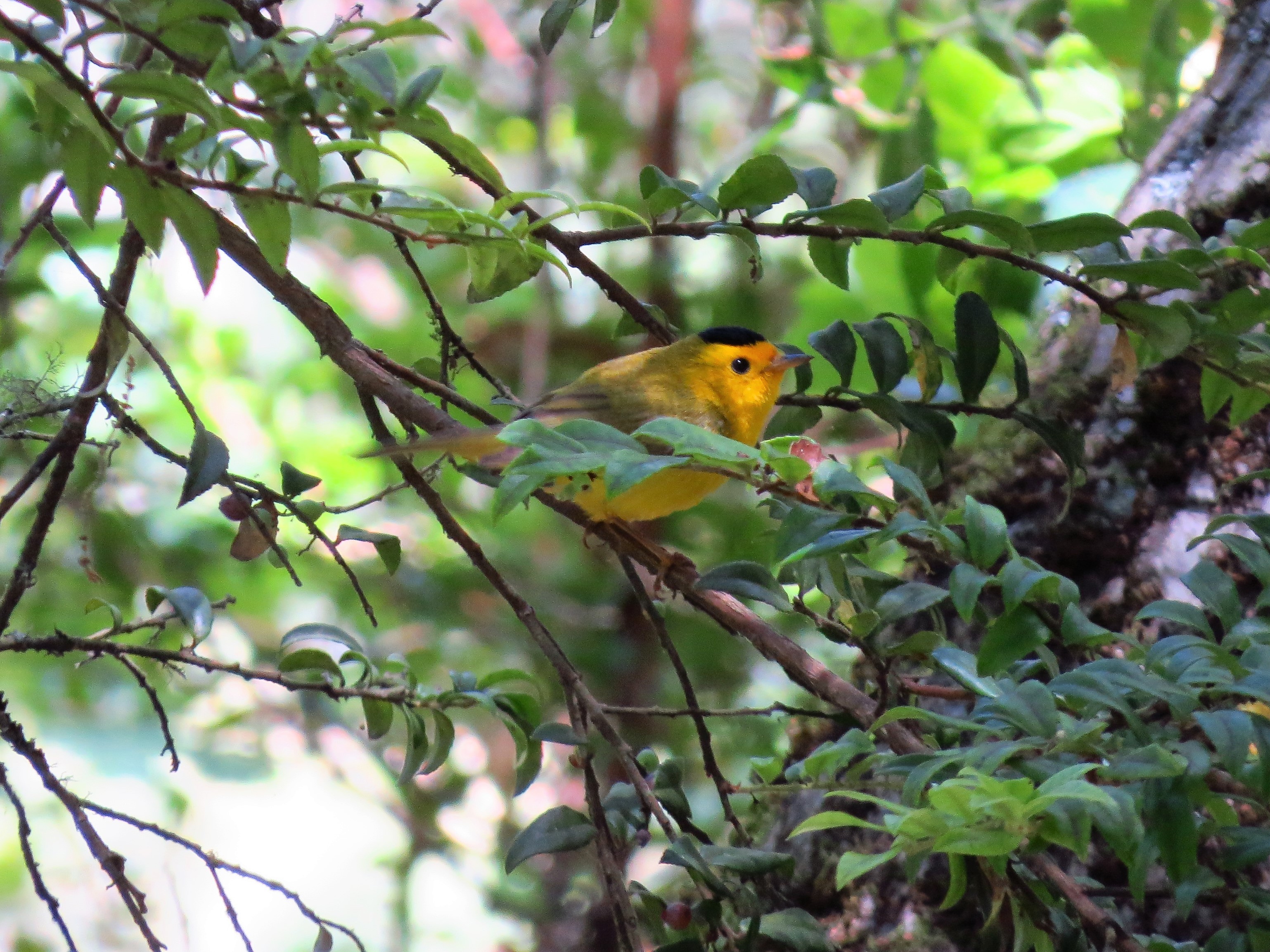
Wilson's Warbler

Wilson's Warbler
Huckleberry Botanic Regional Preserve, Oakland, California, USA
June 2020
Member of the Wood Warbler Family
§A Confusion of Warblers§

~True Bird Fact~ Most songbirds leave the nest for good once they've fledged. Wilson's Warblers, on the other hand, often return for a night or two. Failure to launch? 


Named for and by:


Alexander Wilson
(1766 – 1813)

Called The Father of American Ornithology, and the second only to Audubon in terms of American Ornithology Importance, and that's just in the first sentence of his wikipedia page! Wilson was born in Scotland and his first profession was as a weaver. He took an early interest in poetry and wrote ballads, pastoral pieces, and satirical works about the plight of weavers. These satirical poems were evidently so biting, that he was arrested for a 'libelous and inflammatory' poem about a mill owner. Here's an excerpt, in the original Scots:

Wha cou’d believe a chiel sae trig
|Wad cheat us o’ a bodle?
Or that sae fair a gowden wig
Contained sae black a noddle?
But Shark beneath a sleekest smile
Conceals his fiercest girning;
And, like his neighbours of the Nile,
Devours wi’ little warning
By night or day.

I guess you had to be there. He was also, it should be noted, that he was a very bad weaver, and eventually quit and moved to America, after languishing in poverty.

His career turned to teaching, and eventually he met the naturalist William Bartram, who awakened his true passion. Birds! He resolved to publish illustrations of every bird in North America. He did pretty good at this task, at least better than his weaving, traveling widely, and eventually publishing a nine volume work, including 268 birds, 26 of which were new to his audience of western naturalists. He died young from, and I quote "dysentery, overwork, and chronic poverty." He seems like he was a pretty cool dude, and has a lot of birds named after him. He also seems to have been a direct inspiration for Audubon himself, both in his style of illustrating and his publication.


Wilson's illustration of Red-bellied, Pileated, and... Ivory-billed Woodpeckers

However, bird fans, I am not content to let this topic rest here. There's been a lot of debate in the bird world lately about eponyms and honorifics, and whether birds should really be named for their 'discoverers'. I try to make a little point of this each time I profile a naturalist- that these birds were not truly "discovered", only given new, western names. There were people here before them, and the birds were plenty discovered already. And some of the people who have birds named after them turn out to be truly heinous. There's a lot of overlap, it turns out, between ideas of discovery and exploration and ideas of colonialism and manifest destiny. This includes some naturalists I've written about here, and frankly, I didn't know how bad they were. This is my bad, but racism doesn't often make it into the wikipedia summary, it turns out.

There's been one major recent success for this movement, the renaming of McCown's Longspur to Thick-billed Longspur. This one was named after a confederate general (yikes emoji). So yes, some bird names might be changing, if they are named after particularly bad people. But you can also make the broader argument that it's much simpler to just keep bird names descriptive and do away with honorifics all together. The naming of species after a western discoverer is inherently a colonialist practice. And while we'll lose some potentially 'good ones' like Wilson here, his contributions to birding will not be erased if he no longer has the birds directly named after him. (Although again, who knows, about Wilson. I'm not about to read a whole biography looking for problematic elements). If you agree with this view point, there's a petition that you can sign. I have. Maybe in the future we'll just call this bird the "green black-capt flycatcher", as Wilson originally called it in 1811. Well. Maybe we won't call it that. But something else. Stay tuned.

Friday, June 19, 2020

9 Black Birders to Watch

Hi, hello, hey! You may have noticed that there are some things going on in "The World". You know, that place that birds live? Granted, there are actually quite a few things happening right now. Today, specifically, I'm talking today about the police murder of George Floyd, and the subsequent protests and social uprisings that have ensued in it's wake. In fact, the killing of George Floyd is nothing new, reminding us all of similar killings that have happened, really, as long as a militarized United States police force has existed and interacted with Black people. This most recent one, though, kicked off waves of both political action, and increased scrutiny on the racism that Black people face across multiple fields and interests. This, as you might assume, has extended to birding as well.


Black bird watchers have always faced increased barriers to participation in our wonderful hobby- from condescension and racism from enfranchised birders, to racist bird names, to the outright threats to life and limb that they experience just by being outside in public spaces. Birding's big moment of racial introspection actually started on May 25th, the same day that George Floyd was murdered. Christian Cooper, a highly regarded birdwatcher, was harassed by a white woman while he was birdwatching in Central Park. He asked her to leash her dog, as is the rule in that section of the park, and the woman, Amy Cooper, threatened to, and then did, call the police on him, telling them that there was "an African American man threatening her." Given what would happen later that day in Minneapolis, and what has happened for decades, it's easy to see that a phone call like that amounts to a serious attempt to physically harm. Fortunately, Chris recorded the exchange, and it went viral.

Here's the tweet, by his sister, that kicked things off

And here's a good article about what happened next

What's really interesting, however, is how the Black birding community responded. Very quickly, a couple of key figures (who we'll talk about in a moment), organized a series of online events designated #BlackBirdersWeek

Participation was enormous. There are many articles, some of which were written by Black participants in the event, which I'll link to at the end of the post, if you want to read more about how it went. It was a week that, for me, was inspiring and encouraging. At a time when every day seemed to bring a new piece of bad news for the non-white people of America, it was a relief to be able to log in to Twitter and see people sharing their love and passion for birds, even despite all the obstacles they have faced to do so. It was also a week where I got a lot of awesome new people to follow. And that's what today's blog is about- I'll be recommending some Black birders to follow on twitter, although I'll link to their content elsewhere as well. Some I've known about for a long time, and some I was only just exposed to through this recent online event. Either way, they produce some incredible bird content.


@Tykee_James
One of the co-organizers of Black Birders Week. Here here is talking about it for The Franklin Institute He also hosts a podcast on the Anchor network called On Word for Wildlife.


@ChidiPaige
Scientist and board game designer. Has a bird identification based game called Bird Wiser


@Kitundu
Incredible photographer, instrument maker, and artist.  This a premium follow if you like beautiful images. Bay Area local as well. Check out his webpage


@AlHendiify
One of the greatest display names, just a good poster.
 
@Ranger_Bri
One of the co-organizers. Naturalist and science educator


@bellzisbirding
Another one of the co-organizers, another one of the all time great display names . Wildlife biologist


@hood_naturalist
Corina Newsome, one of the co-organizers. Quite a few publications on her website, so check that out. Here's a great interview with her from The Cut, Black Birding is About Hope


@1blackbirder
J. Drew Lanham. Writer, poet, and academic. Check out his books, and his many articles across the internet. 9 Rules for the Black Birdwatcher for Orion Magazine, from 2013. Drew has a number of good articles on this topic, here are a few more.


@JeffreyMWard
Jeffrey Ward, one of our birding celebrities. In fact, Jeffrey is famous enough that I have made a .gif of him. You know who else this is true for? David Attenborough only.
So there you go. It's not a complete list, or a perfect list, but it's a place to start. I hope you'll join me in working to make birding a more inclusive hobby. If you're white, like I am, it's worth taking the time to reflect on your privledge, and what you can do to include anti-racist action both in your life, and in your hobbies and interests.

Additional Readings

The Realities of Being a Black Birdwatcher on CNN, which quotes many of the people mentioned above

Chris talks about his experience on NPR

Sandra Guzman on the dangers of birding while Black

9 Rules for the Black Birdwatcher by J. Drew Lanham for Orion Magazine, from 2013. Drew has a number of good articles on this topic, here are a few more.

Audubon's Report on Black Birders Week
Audubon also hosted a few sessions on Birding While Black on their Facebook page. Here's session1 and 2

Everyone Can Watch the Birds, in National Geographic, about Black Birders Week

Why Every Environmentalist Should Be Anti-Racist by Leah Thomas for Vogue
https://twitter.com/melodyMcooper/status/1264965252866641920?s=20

Update 2/16/21: A sad post-script on this blog. This list originally included Jason Ward, as I expect any list of this type would have at the time of publishing. Recently, credible allegations of sexual assault by him have come to light, largely care of Aisha White. She also has a twitter, and you can find ways to support her there. This is an incredibly sad and disappointing turn of events, as Jason was a very visible advocate for birds/birding, and turned out to be abusing his position, and actually making the hobby less safe. He's now removed from this (incredible insignificant) blog post because I no longer want to be directing people to his work/account.
https://twitter.com/melodyMcooper/status/1264965252866641920?s=20

Friday, May 15, 2020

Townsend's Warbler


Townsend's Warbler
Hilltop Lake Park, Richmond, California, USA
December 2019
Member of the Wood Warbler Family
§A Fall of Warblers§

~True Bird Fact~ When wintering in the south, mostly in Mexico, these Warblers thrive on a diet heavy with the secretions of 'scale insects', a sweet substance called 'honeydew'. This is such a good source of food that Warblers will set up and defend territories around trees and plants infected with the insects. Birds already eat bugs, so this is not really a step up in grossness, if you think about it, but still, I hate this fact. I think it's because I hate these bugs- I think they trigger my trypophobia (side note- why, when you search for a phobia, does google instantly show you a million image results of the thing you are phobic of??)


This is also a Proper Name Bird (PNB), so you know what that means- that's right, it's time for another.... Naturalist Profile


John Kirk Townsend
(1809 - 1851)

Like many creature-discoverers from this time, John was not a trained biologist. He was a physician and pharmacist who just knew the right people. He discovered (normal disclaimer that these animals were all plenty 'discovered' already by the native people who lived in this country) this bird and many other animals on an expedition from Pennsylvania over the Rocky Mountains to the Pacific. It sounds like a great trip, tbh, especially right now. While he got some good birds, like this guy, and the Townsend's Solitaire, he seemed to focus on small mammals and has like 7 named after him. Can I interest you in a Townsend's pocket gopher, a Townsend's chipmunk, or a Townsend's mole or vole?
His sisters wrote a book called The Anti-Slavery Alphabet, so it's safe to say that he was from a pretty cool family. He died quite young, as you'll notice, from arsenic poisoning. This was due to his development of his own 'secret formula' for taxidermy which included, big shocker, arsenic.

Let's also do a brief [Etymology Corner], cause I want to get more into the naming of birds-
Let's return to another real one, Thomas Nuttal. Remember him? From this woodpecker? Well he was the one who invited Townsend on this expedition, which, again, I want to say I would like to very much do. At the time I covered him I noted that his woodpecker was named in his honor by one of his friends, William Gambel, of eponymous quail fame. So in researching Townsend I learned that this bird was named in his honor by Nuttal. Digging a little deeper, it seems like this group of guys circumvented the norm against naming animals for yourself by naming them all after each other. In modern terms, I think you could say this was a group of real Ornithological Bad Boys who play by their own rules. Is there a movie in this?

Saturday, February 29, 2020

Northern Harrier


Northern Harrier
Kennedy Park, Napa, California, USA
December 2018
Member of the Kites, Eagles, and Hawks Family
§A Swarm of Harriers§


[Etymology Corner] What's a harrier? Well, it's derived from the Old English word herigan, which is harasser or plunderer. Not entirely inappropriate for this bird, as it does sometimes harass other birds of prey until they drop their own catch. This is as good a time as any to mention that farmers sometimes call these birds "Good Hawks" because they don't pose a threat to poultry, like other raptors, but do eat mice, which is good. For the farmers, not the mice.


~True Bird Fact~ You might (and this is a big might with this picture) notice that this bird has kind of an unusual face. Sort of short and owl-like. Well, this is because it is owl-like. Northern Harriers have face-disks, a feature they share with owls. And just like with owls, this gives them really good hearing. This is distinct to them, among hawks. They use this to hunt for prey. Obviously. I mean they don't use it to listen to music or whatever. Unless...